
A data discovery scan finds customer details in a relational database with defined fields and the same details scattered across email messages, PDF reports, and slide decks on file shares. Which statement BEST describes the difference in protecting these two data types?
Select an answer to reveal the explanation.
Short Explanation
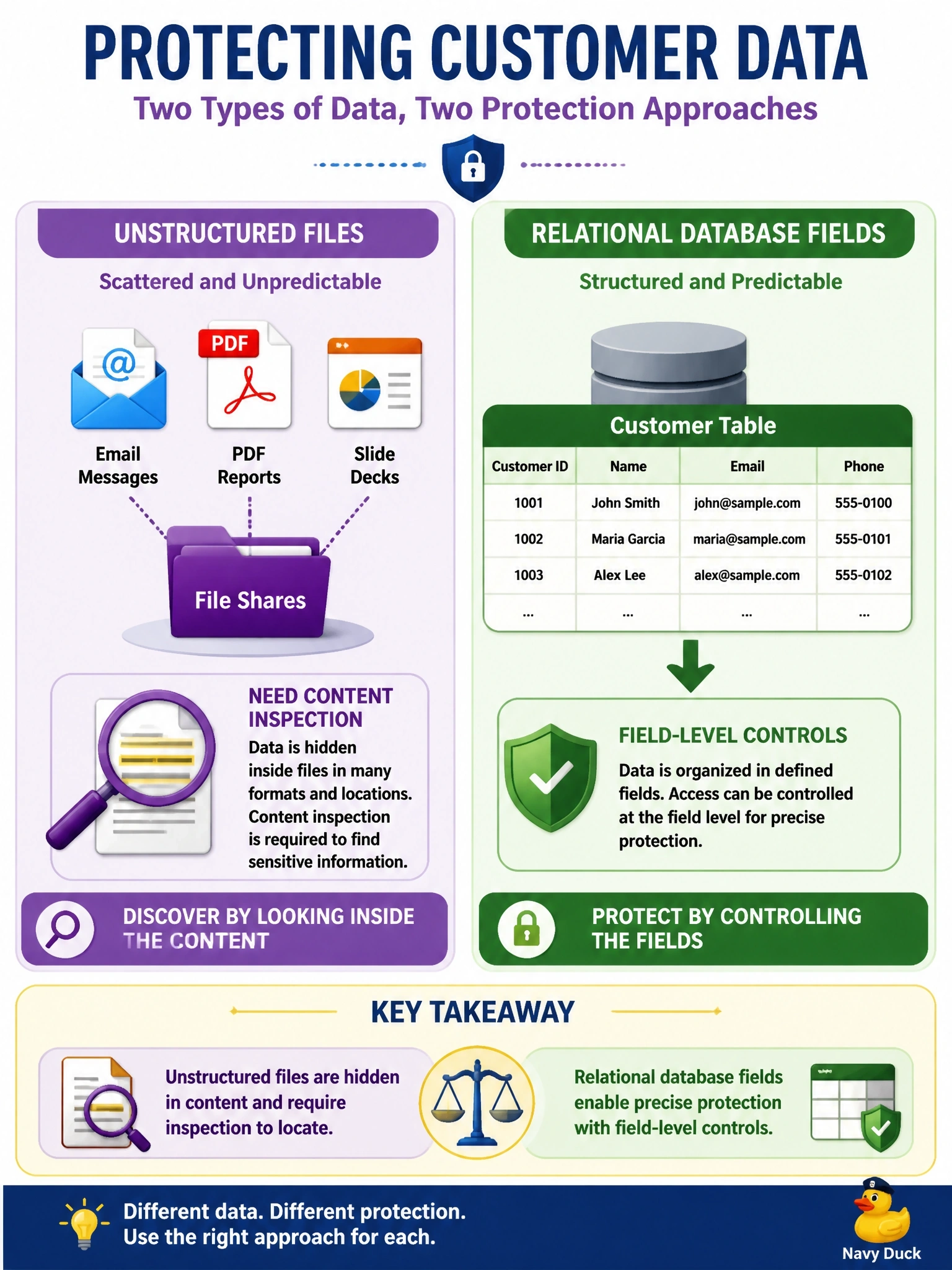
Structured data is a filing cabinet with labeled drawers; unstructured data is a pile of papers on the floor. You can lock a specific drawer in the database, but you've got to read through the pile to even find the sensitive stuff in emails and documents. Don't let email headers fool you; the body's still free text.
Full Explanation
Structured data is organized according to a defined schema, such as rows and columns in a relational database, so sensitive fields are known in advance and can be protected with field-level controls like column encryption, masking, tokenization, and granular access permissions. Unstructured data, including email bodies, PDFs, presentations, and free-form documents, has no fixed schema, so sensitive information can appear anywhere within the content. Locating and protecting it requires content inspection, such as data loss prevention and discovery tools that use pattern matching, fingerprinting, or classification,. Treating email as structured because of its headers overlooks that the sensitive content sits in free-text bodies and attachments; header fields describe routing, not the customer details. Exempting unstructured files from classification inverts the risk, because sensitive data in uncontrolled files is often more exposed than data in a governed database. Claiming structured data cannot be masked or tokenized is false; defined fields are precisely what make masking and tokenization straightforward to apply. Exam caveat: discovery and labeling programs focus heavily on file shares and email because so much sensitive data ends up there. Operational check: run content discovery across file shares and mailboxes, label files containing customer details, apply DLP policies to them, and confirm database fields have appropriate field-level protection.