
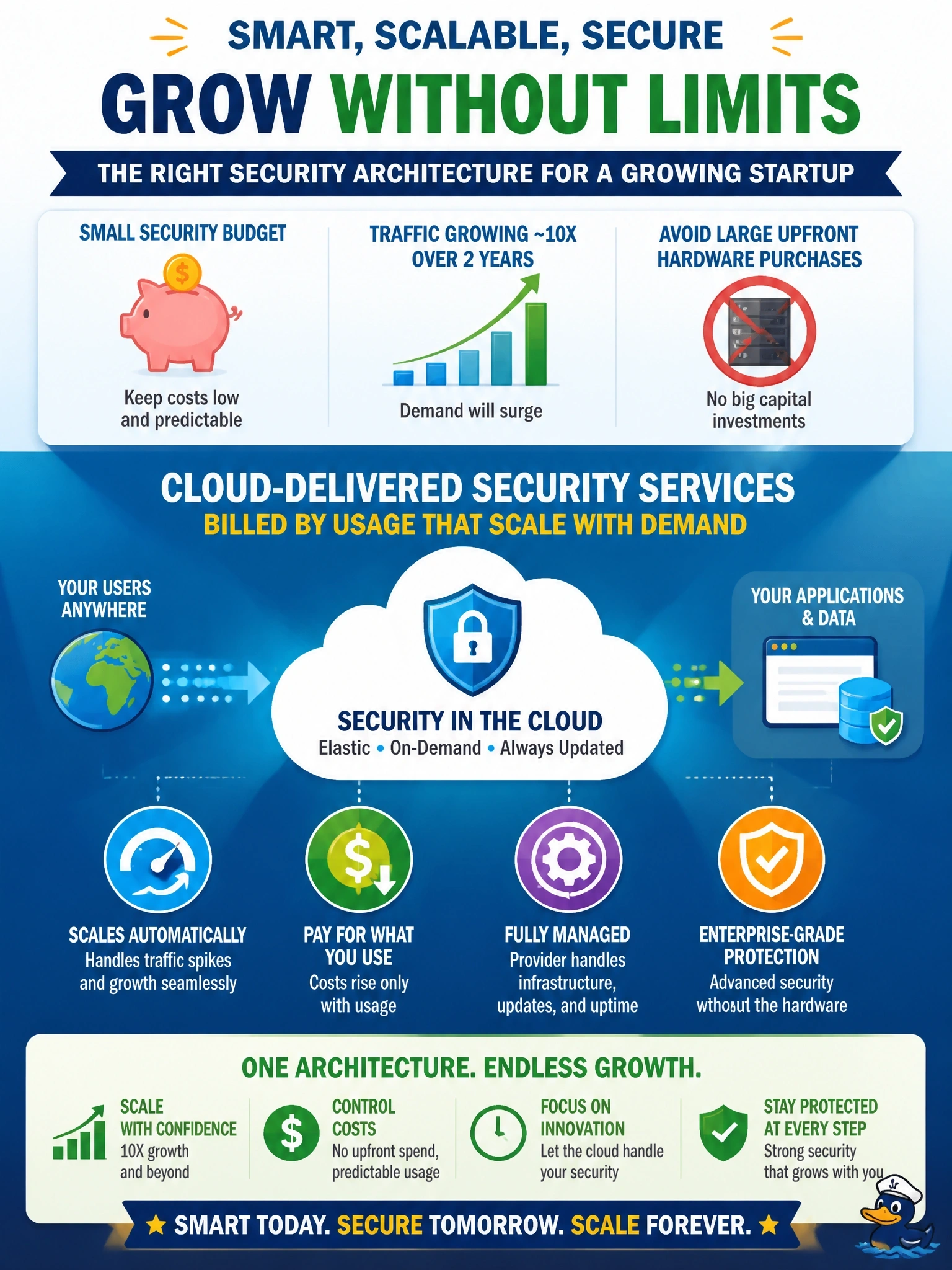
A startup with a small security budget expects its customer traffic to grow roughly tenfold over the next two years and wants to avoid large upfront hardware purchases. Which approach to its security architecture BEST balances cost and scalability?
Select an answer to reveal the explanation.
Short Explanation
Why buy a bus when you can rent seats as more riders show up? Usage-based cloud security grows with you and doesn't need a big check up front. The trap is the 'buy big now' answer; it sounds safe, but it burns your budget on capacity you won't use for years.
Full Explanation
Business considerations such as cost, scalability, and risk often determine which security architecture is appropriate. Cloud-delivered security services, such as hosted web application firewalls, secure web gateways, or managed identity services, are typically billed by usage or subscription and scale capacity on demand, which converts a large capital expense into an operating expense that grows with the business. That matches both constraints in the scenario. Buying appliances sized for full future growth meets scalability but contradicts the requirement to avoid large upfront purchases, and it ties up a small budget in capacity that will sit idle for a long time. A single firewall sized for current traffic is affordable but does not scale; it becomes a bottleneck as traffic grows and forces an unplanned replacement, and as a single device it also creates a point of failure. Postponing security controls until revenue arrives accepts unmanaged risk during a period when the startup is already handling customer data, which is not a balanced approach to cost. Exam caveat: usage-based services shift cost risk rather than eliminating it, so monitoring consumption and understanding pricing tiers are part of the decision. Operational check: compare total cost of ownership for each option over the growth period, confirm the chosen services can scale without redesign, and set budget alerts on usage.