
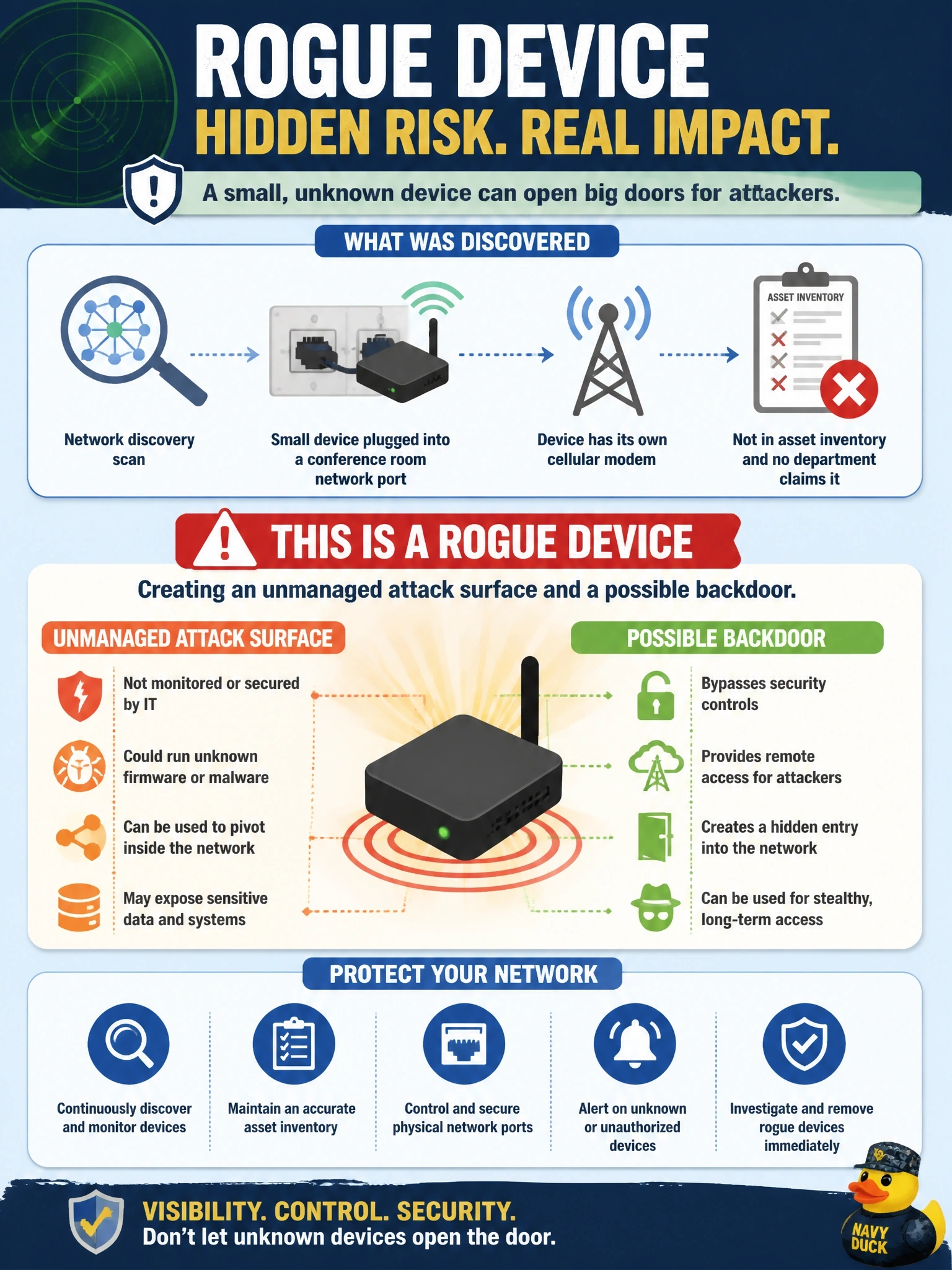
A network discovery scan finds a small device with its own cellular modem plugged into a conference room network port. It is not in the asset inventory and no department claims it. How is this device best described?
Select an answer to reveal the explanation.
Short Explanation
Picture finding a stranger's key cut for your back door taped under the conference table. A device nobody owns, plugged into your network, with its own cellular link out, is a rogue device -- and that modem means it can bypass every firewall you've got. You pull it, preserve it and find out who put it there.
Full Explanation
Rogue devices are hardware connected to the network without authorization or inventory, and unmanaged systems are assets that the organization does not patch, monitor or configure. Both expand the attack surface because they sit outside normal controls. A device with its own cellular modem is especially dangerous because it can provide an out-of-band channel that bypasses perimeter firewalls and monitoring, effectively acting as a backdoor into the internal network. Describing it as shadow IT confuses the concept: shadow IT refers to systems or services adopted by staff without IT approval, usually for legitimate work, whereas here no department claims the hardware and its purpose is unknown. A zero-day vulnerability is an undisclosed software flaw, but the issue is an unauthorized device, not a defect in the switch. An obsolete system is a known asset that has passed end of support, which presumes the device was ever approved and inventoried. Exam caveat: network access control and port security help prevent unknown devices from obtaining a connection in the first place. Operational check: disable the switch port, photograph and collect the device as evidence while maintaining chain of custody, review switch logs for when it connected, and enforce port-based authentication on meeting room ports.