
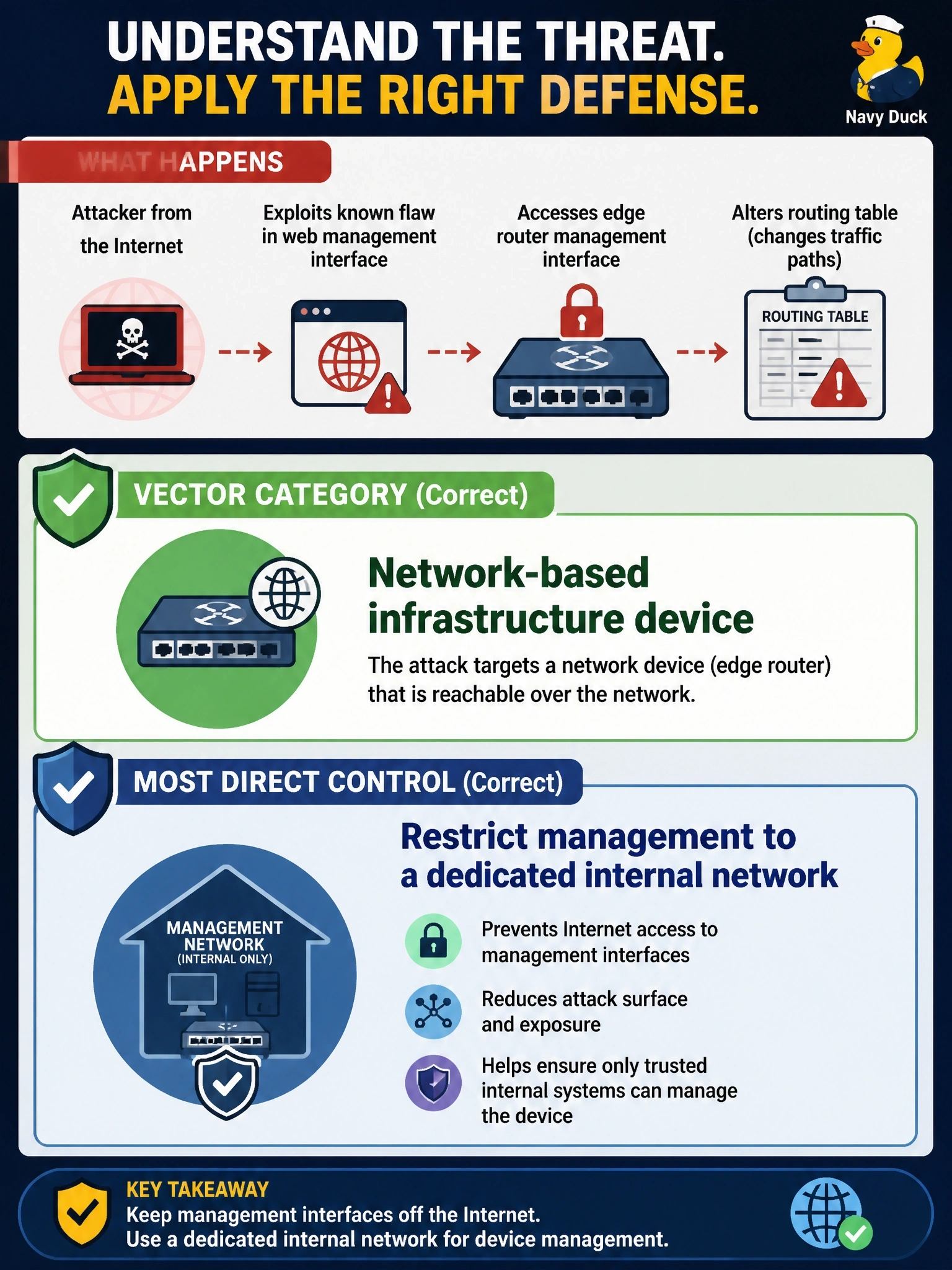
Attackers exploit a known flaw in the web management interface of an edge router that is reachable from the internet, then alter its routing table. Which vector category applies, and which control most directly addresses it?
Select an answer to reveal the explanation.
Short Explanation
Think of the router's management page as the master control panel for your traffic -- it should never face the street. When attackers hit an infrastructure device directly, that's a network-based vector. You fix it by patching and pulling the management interface off the internet.
Full Explanation
Network-based threat vectors include infrastructure devices such as routers, switches and firewalls, virtualized network devices and session keys. An edge router whose management interface is reachable from the internet presents a high-value target, because compromising it lets an attacker redirect, intercept or block traffic for the whole organization. The most direct control is to restrict management access to a dedicated internal management network or out-of-band path, combined with prompt patching of the known flaw. Classifying the event as endpoint-based misplaces the target; the router is network infrastructure, and endpoint agents on laptops would neither see nor stop an attack against its management interface. A supply chain-based logistics vector would involve tampering during shipping or delivery, but the router was exploited through a known software flaw after deployment. A human-based impersonation vector depends on tricking a person, while this attack exploited a technical weakness without any human interaction. Exam caveat: patching alone leaves the interface exposed to the next flaw, so reducing exposure is the durable fix. Operational check: confirm from an external address that the management interface is no longer reachable, apply the vendor fix, compare the routing table with the approved configuration, and rotate device credentials.