
An e-commerce platform runs 24x7 and must apply operating system patches that require a reboot. Which approach BEST balances security and business impact?
Select an answer to reveal the explanation.
Short Explanation
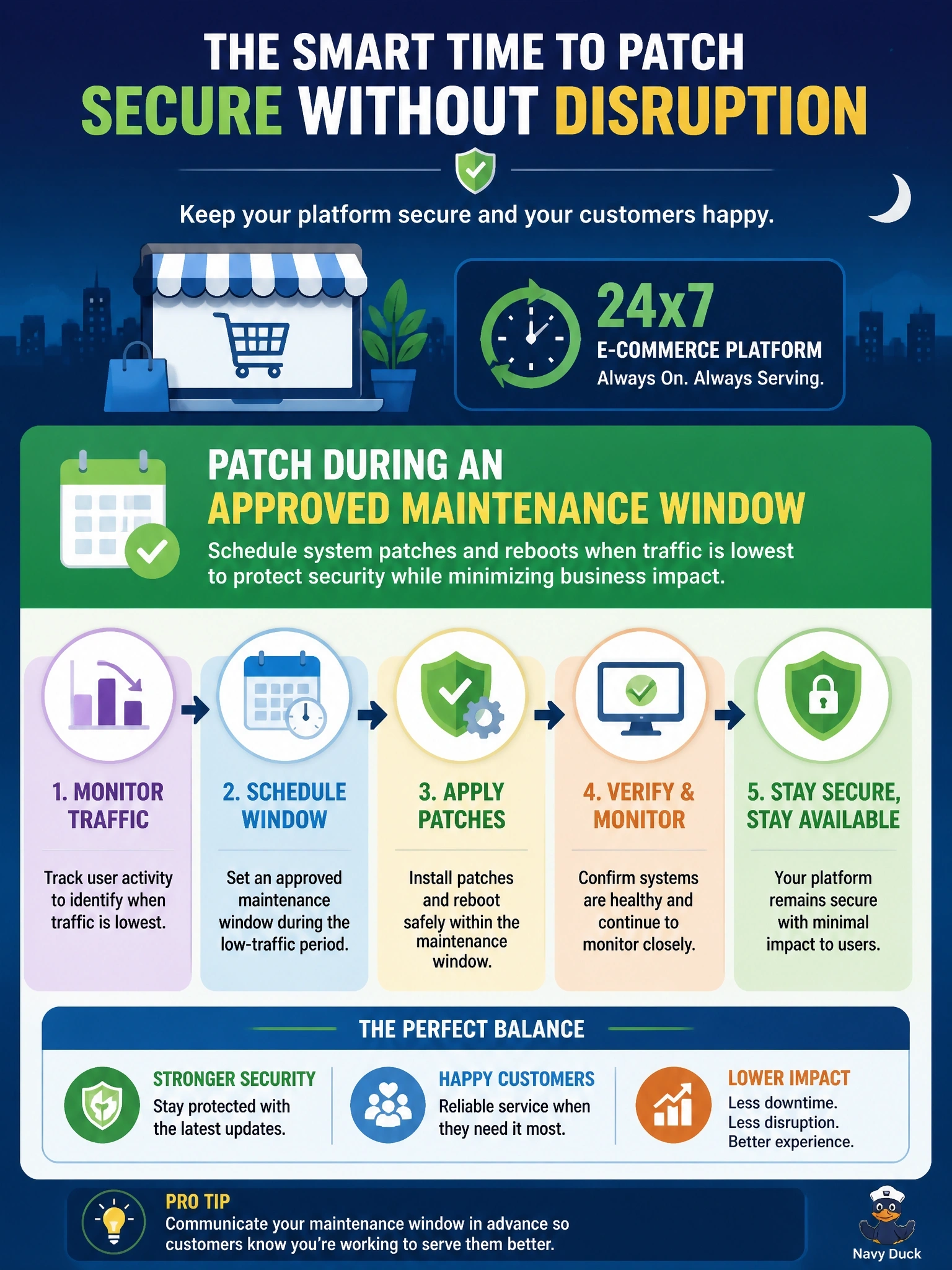
Even a store that never closes has a slow hour, and that's when you restock the shelves. A maintenance window gives you patching without wrecking peak sales. Waiting a year or patching at rush hour are both bad trades.
Full Explanation
A maintenance window is a pre-approved period, chosen with business stakeholders, when changes that may cause disruption can be applied. Even round-the-clock platforms have periods of lower demand, and scheduling reboots then, often with rolling restarts across load-balanced nodes, keeps the platform patched while minimizing customer impact. Patching immediately during business hours exposes peak revenue periods to unexpected reboots or failures, and finding issues quickly does not justify avoidable disruption when a window exists. Deferring patches until an annual refresh leaves known vulnerabilities open for months, which is an unacceptable security risk for an internet-facing platform. Patching only systems customers do not touch leaves the most exposed servers, those facing the internet, unpatched, which inverts the risk priority. Exam caveat: the maintenance window answers the timing question in change management, while emergency changes may still be approved outside the window when a critical vulnerability is being actively exploited. Operational check: confirm the window is documented and agreed with business owners, verify that load balancers drain connections before each node reboots, and track patch compliance after the window to ensure every server received the update.