
Two switches in the same data-center rack need a short 10-gigabit copper link, and pulling fiber for that jump would be wasted. Which cable fits?
Select an answer to reveal the explanation.
Short Explanation
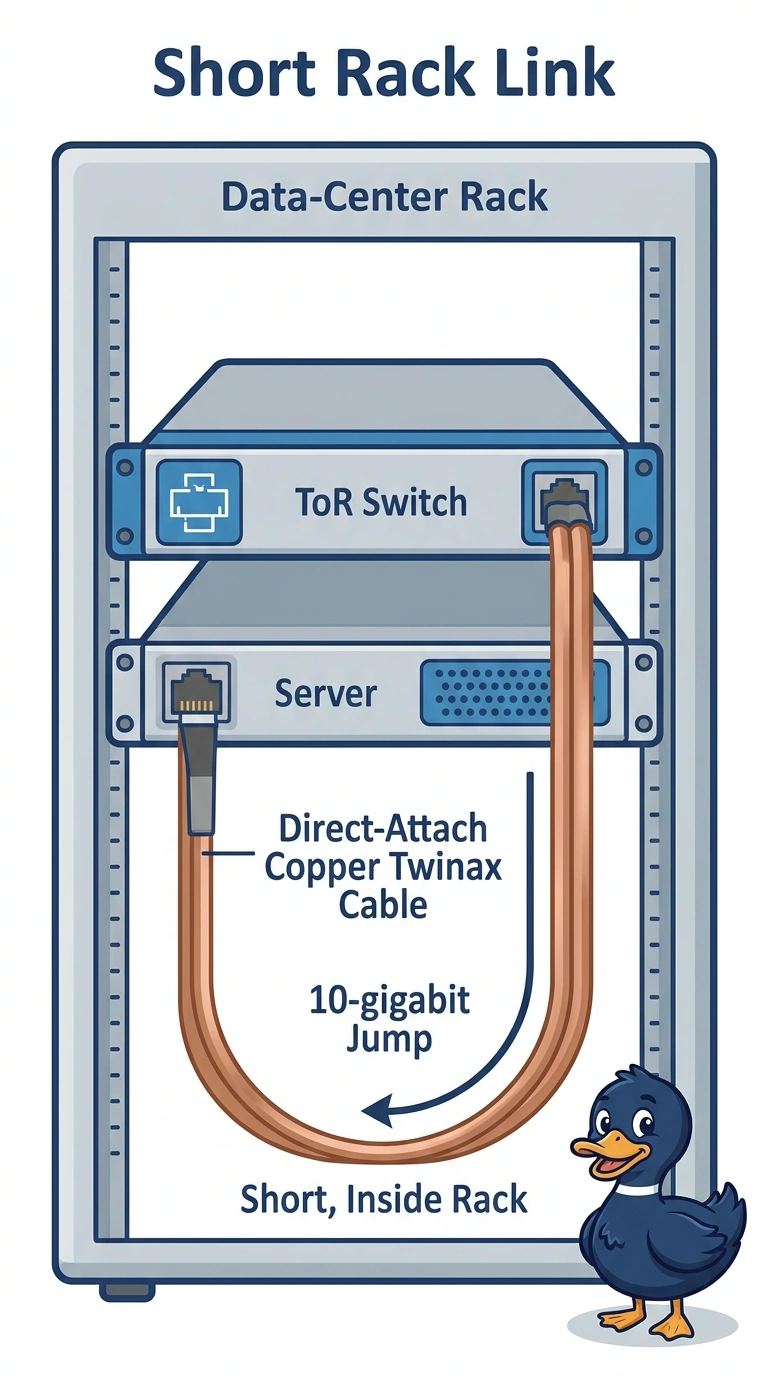
A two-seat hop inside one rack does not need a cable built to cross town. You use a direct-attach copper twinax cable for the short 10-gigabit link and you leave fiber for the runs that need it. Single-mode fiber, an active optical jumper, or a breakout into four links is a different job than this one copper jump.
Full Explanation
Direct-attach copper twinax is a short factory-terminated copper assembly. Inside one rack it gives the switches a 10-gigabit link without fiber or separate optics, which is what the designer wanted. Single-mode fiber works over kilometers and spends fiber on a two-meter jump. An active optical cable is the tempting twin because it is also a short factory-terminated jumper. It still uses optics, and the stem says pulling fiber would be wasted. A breakout turns one port into four 10-gigabit links. These two switches need one link between them. Exam caveat: twinax is short on purpose. It is not a horizontal run to another room. Operational check: seat the twinax in both 10-gigabit ports, confirm the link comes up at 10 gigabits, and confirm no fiber pair was used for this rack jump. Label the twinax with the two switch ports so the next change does not replace it with fiber out of habit. If the link comes up at a lower rate, reseat the twinax before you consider fiber. Confirm no fiber pair was pulled for this rack jump.