
A hotel suspects the internet circuit is delivering less than the contracted rate. From a front-desk PC, which test measures the throughput the PC actually gets?
Select an answer to reveal the explanation.
Short Explanation
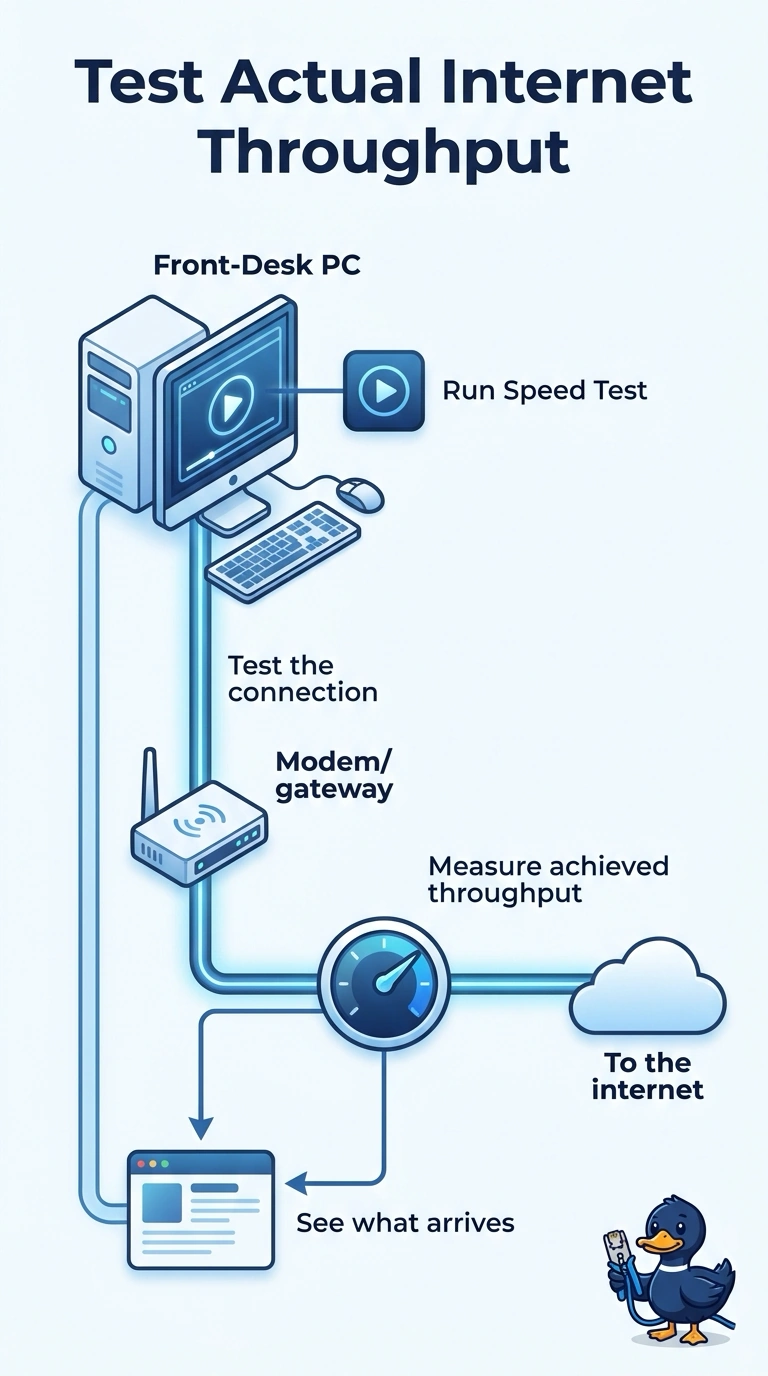
You want to know how fast water actually comes out of the tap, not whether the pipe in the wall was punched correctly, not which VLAN the tap is on, and not the name on the water bill. A speed test measures the throughput the PC gets to the internet. Run it when the hotel is seeing the complaint, and remember one test is a sample.
Full Explanation
A speed test measures achieved throughput over the internet path, which is what the hotel needs to compare with the contracted rate from a front-desk PC. A cable certifier tests a copper or fiber run against a category standard. It does not measure internet throughput on a provider circuit. The VLAN display lists VLAN membership. It does not report a contracted rate or a download speed. A reverse DNS lookup returns a name for an address. It does not measure download speed. Exam caveat: a speed test shares the circuit with everyone else, and the far server can be the limit. Compare more than one sample with the interface utilization before you accuse the provider. Operational check: run the test from the front desk, note the time, and set it next to the circuit's utilization and the contracted rate. Run more than one sample and set the numbers next to the circuit utilization. If the samples stay far below the contract while utilization is low, then open the ticket with the provider.