
A warehouse change that should fix the uplink was just applied on the production switch. The user has not retried the application. Which methodology step comes next?
Select an answer to reveal the explanation.
Short Explanation
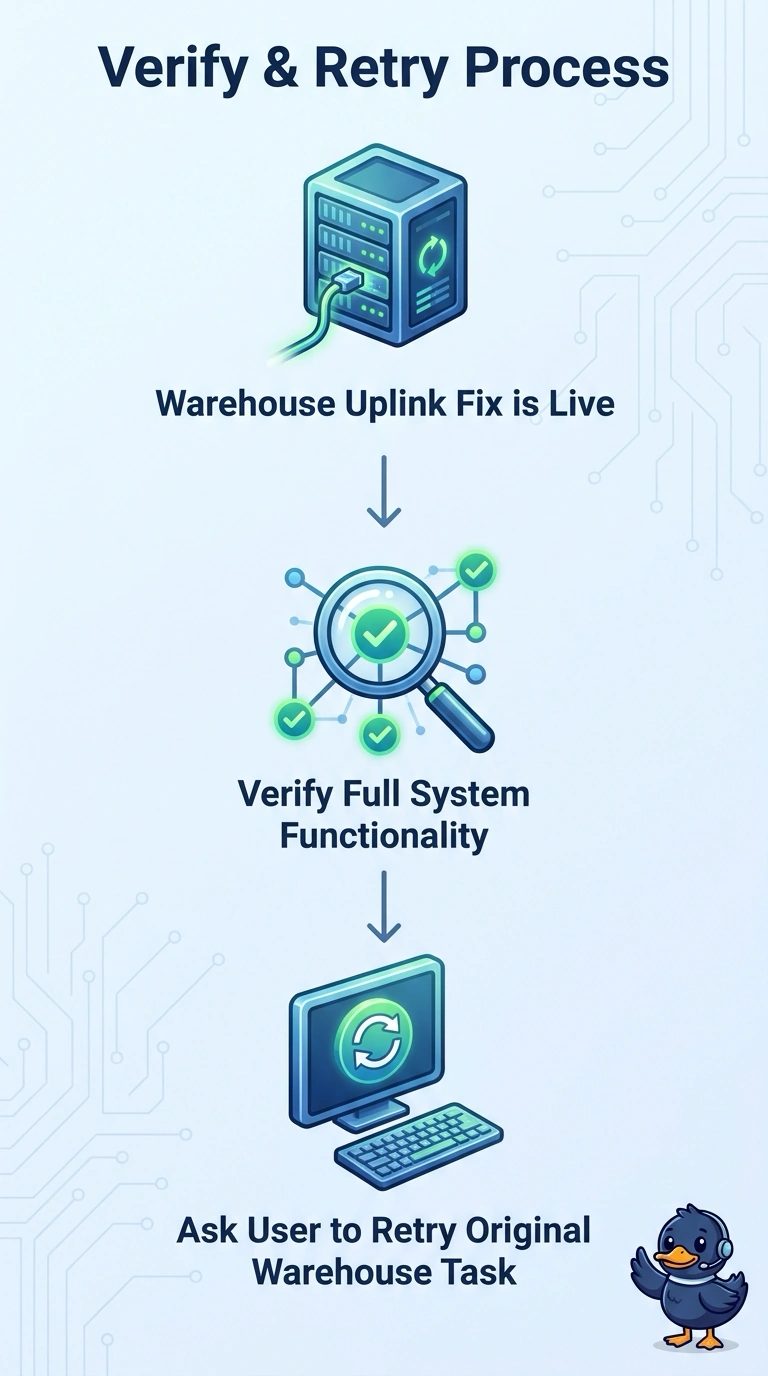
You turned the wrench, and you have not yet asked whether the machine runs. The next step is to verify: have the user retry the original task and confirm the whole path works. Writing a success story early, swapping the core, or throwing out the change before a test skips that check.
Full Explanation
After a change is implemented, the methodology says to verify full system functionality. The warehouse uplink change is in place and the user has not retried, so the next step is to have the user attempt the original task and confirm the symptom is gone and nothing else broke. Documenting findings, actions, and outcomes comes after that verification. A document that claims success before the test is a record of a guess. Replacing the core router is a new, larger change with no evidence that the core failed. Abandoning a change you have not tested throws away the chance to learn whether the confirmed theory was right in production. Exam caveat: verification includes the original symptom and a quick check that related functions still work, not only a ping. Operational check: have the user retry, watch the uplink counters, and only then write the ticket with what changed and what the user observed. If the uplink counters look healthy and the user still fails, the verification failed and you return to a new theory instead of closing the ticket.