
A branch hotel can reach every internal subnet in its routing table, and the internet fails. The default route is present and points at a next hop that is down. Which repair fits?
Select an answer to reveal the explanation.
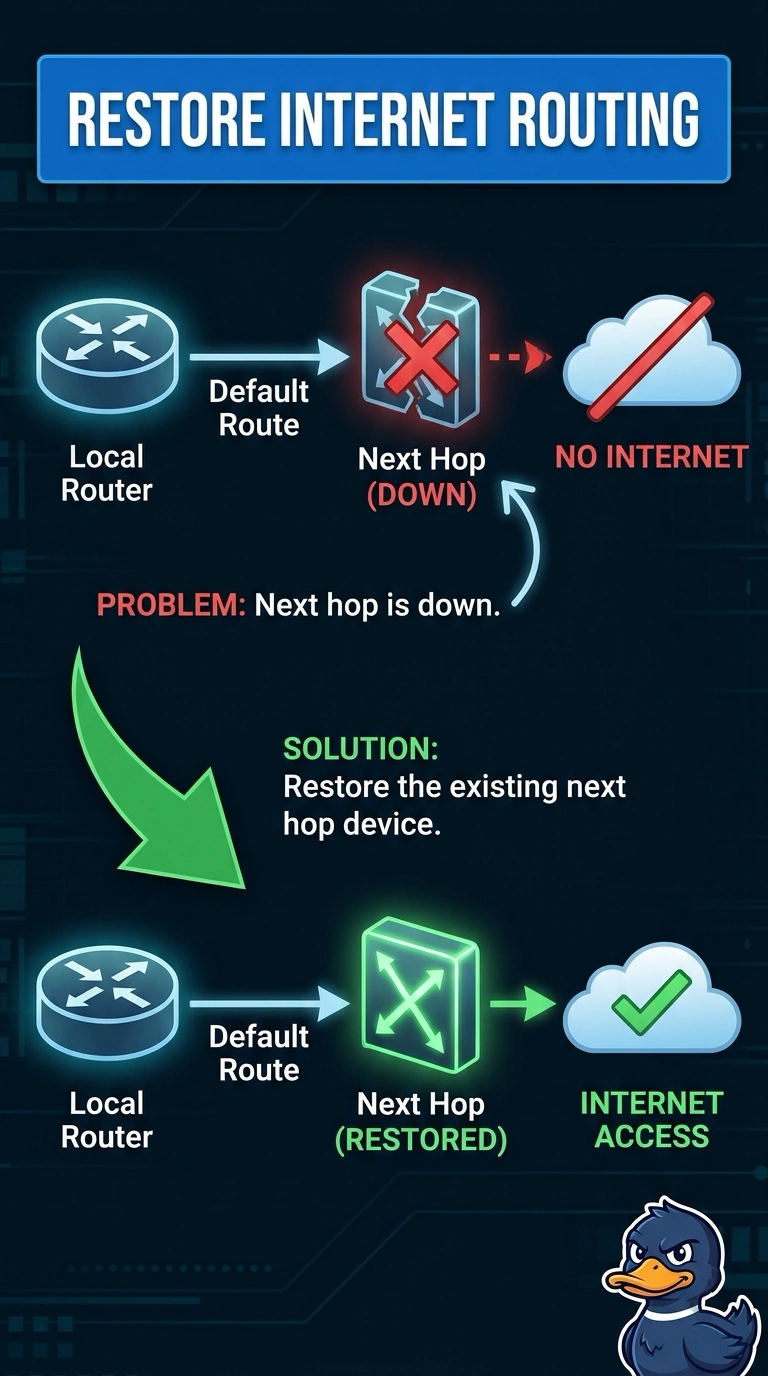
Short Explanation
You’ve found the road out: the default route is there, but the next hop it names is down. Restore that next hop, and you can keep reaching internal subnets while internet traffic has a working path. Clearing a duplicate address on the front-desk PC, moving the phones into a voice VLAN, or changing the cable’s plenum rating won’t restore it.
Full Explanation
A default route is how the branch sends traffic for destinations it does not list specifically, including the internet. The hotel’s routing table already contains that route, and every internal subnet in the table is reachable, so the router can forward traffic for those known internal prefixes. Internet access fails because the next hop named by the default route is down; restoring that existing next hop repairs the path the route already specifies. Clearing a duplicate address on a front-desk PC does not bring the next hop back. Two hosts sharing an address can fight over it and cause intermittent reachability to that address, but that does not explain why the default-route next hop is down while internal subnets remain reachable. Moving front-desk phones into a voice VLAN separates phone traffic from data traffic on a switch; it does not change whether the router’s internet next hop is up. Replacing the closet cable with plenum-rated cable addresses the jacket’s fire behavior for air-handling spaces, not routing or a down next hop. Exam caveat: a next hop that appears restored may still lack upstream internet connectivity. Practical check: restore the named next hop, confirm the existing default route points to it, and verify that an internet address answers while internal subnets remain reachable.