
At a retail store the fix is already in place, the user confirms the application works, and preventive steps have been noted. Which methodology step should the technician complete now?
Select an answer to reveal the explanation.
Short Explanation
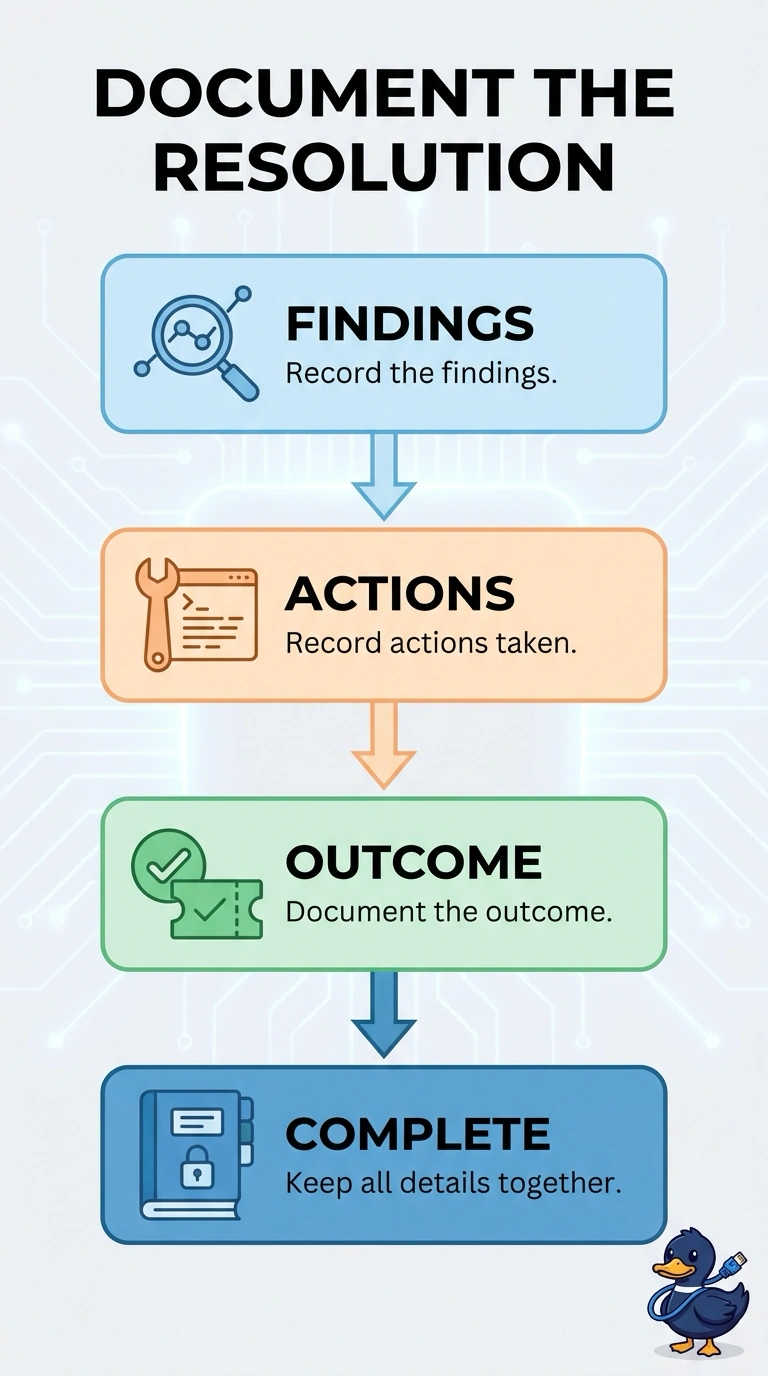
Once the customer says the application works, you write down what you found, what you changed, and how you know it is fixed. That documentation is the step in front of you, including the preventive steps you already noted. Planning another change, or retesting a theory the user already confirmed, reopens a finished job.
Full Explanation
The troubleshooting flow documents findings, actions, and outcomes after the fix has been verified. The fix is in place, the user confirms the application works, and preventive steps have been noted. The write-up has to capture the symptom, the cause, the change, the proof, and what will keep it from returning. Establishing a new plan belongs before implementation. The plan was already carried out. Testing the original theory again is the step that produces verification, and the user has already supplied that confirmation. A second fix before the notes are written changes a working system and leaves the record describing two changes instead of the one that worked. Exam caveat: documentation is not a substitute for verification. Verification has already happened, so writing it down is the remaining step. Operational check: record the symptom, the cause, the change, the user's confirmation, and the preventive steps, then close the ticket only after that record is stored where the next technician can read it.