
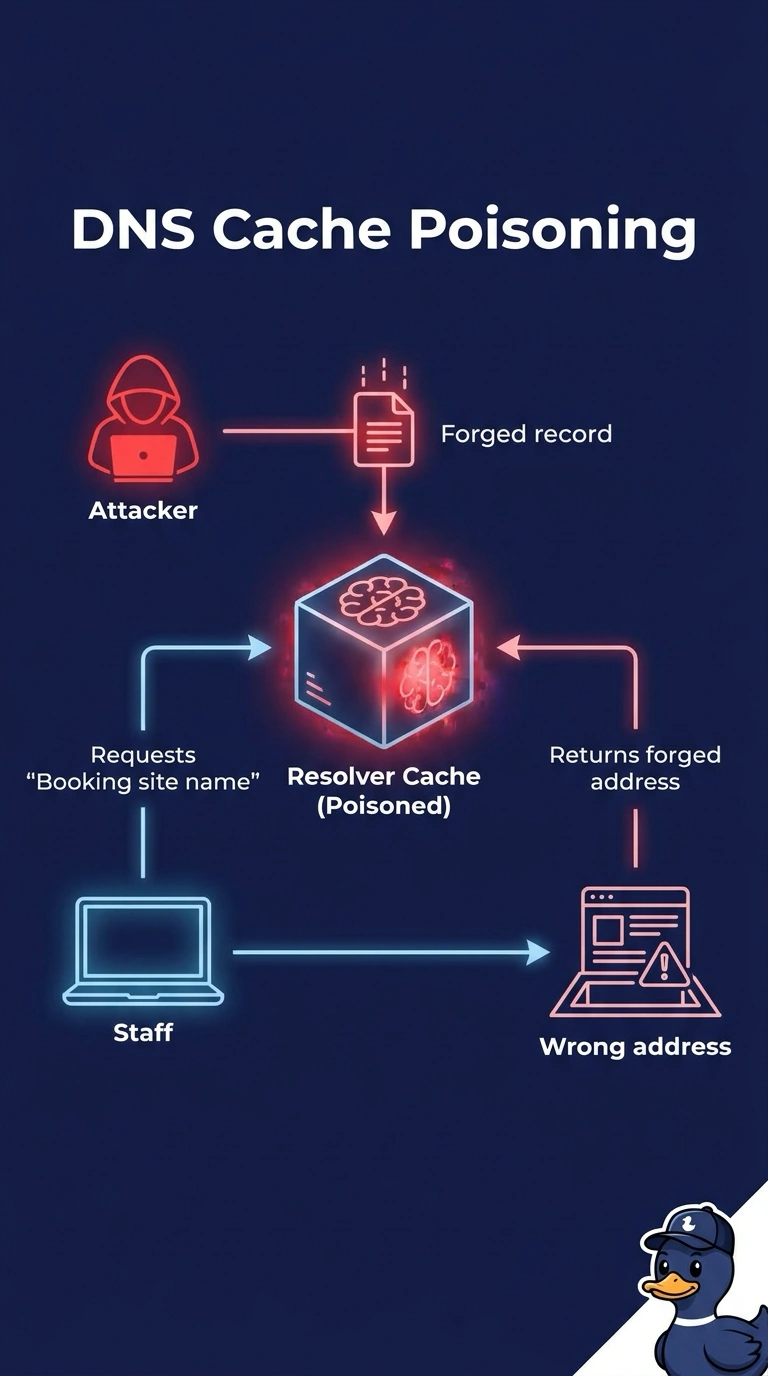
Staff at a hotel are sent to the wrong address when they use the real name of the booking site. The resolver's cache holds a forged record for that name. Which attack is this?
Select an answer to reveal the explanation.
Short Explanation
The phone book the whole hotel shares has a fake number written next to a real name, so when you look up that name you get the wrong destination. That forged entry in the resolver cache is DNS cache poisoning. Fooling a local ARP table, cloning a wireless name, or sending a tricky email can be nearby attacks, and none of them is what changed this cache.
Full Explanation
DNS cache poisoning inserts a forged name-to-address mapping into a resolver's cache. Later lookups for the real name are answered with the attacker's address until the record expires. The hotel staff use the genuine name and arrive at the wrong address because the cache holds that forged record. ARP poisoning forges the mapping between an IP address and a MAC address on the local network. It does not write a DNS cache record, even though both attacks forge a mapping. An evil twin copies a legitimate SSID so wireless clients join the attacker's access point. Copying a network name does not poison a resolver cache. Phishing tricks a person into acting on a fraudulent message. A resolver can cache a forged record without anyone opening an email. Exam caveat: DNSSEC is the control that lets a resolver detect forged signed data. It is not the name of this attack. Operational check: query the resolver for the name, compare the answer with a known-good resolver, flush the poisoned cache, and then find how the forged record was accepted.