
At an office building, a person without a badge follows an employee through a door that locks after each badge read, pretending to carry boxes. The employee holds the door. Which attack is this?
Select an answer to reveal the explanation.
Short Explanation
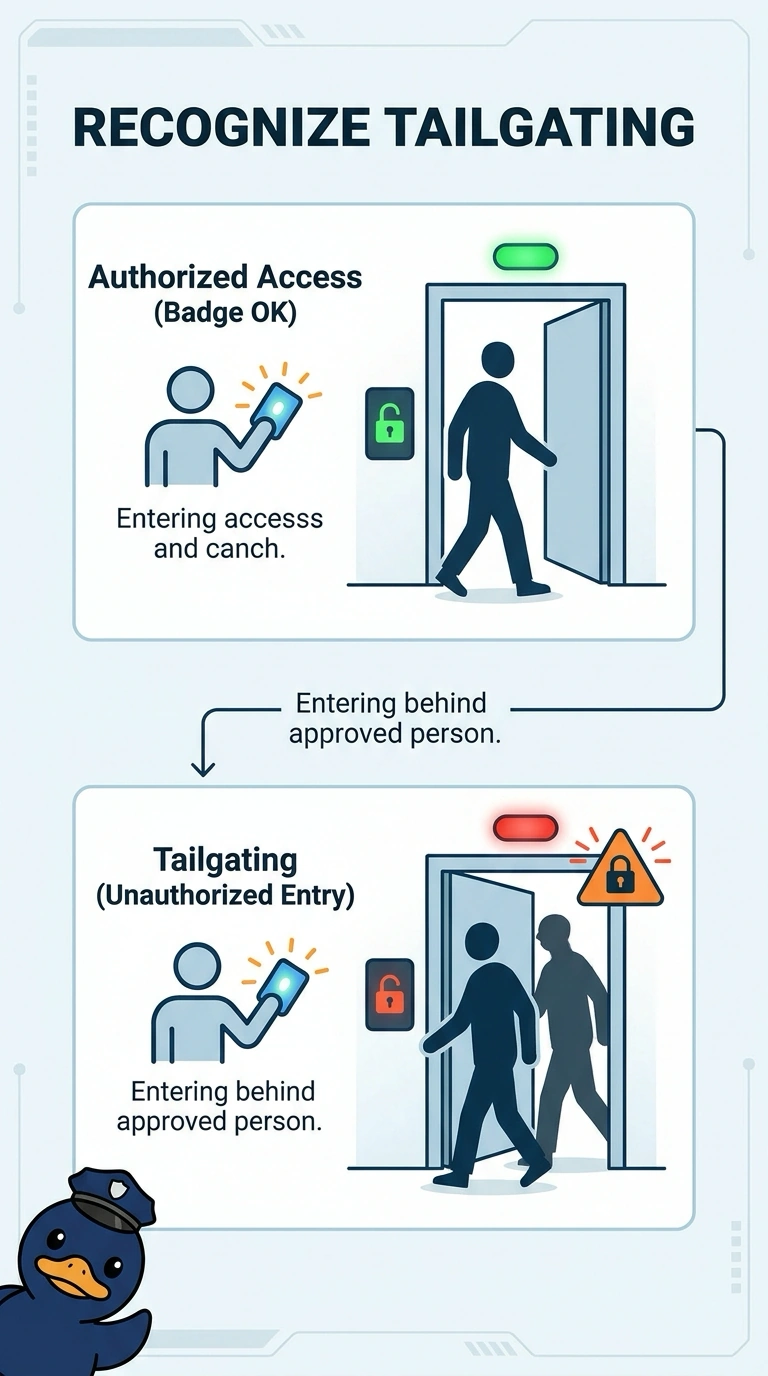
The locked door did its job, and then a person walked through on someone else's badge, which is tailgating. You are not watching a screen over a shoulder, reading a fake message, or digging through the trash. The control that failed is the one person, one entry rule at a door that already locks.
Full Explanation
Tailgating is a social-engineering attack that gets an unauthorized person through a physical control by following someone who authenticated. The office door locks after each badge read, and the person without a badge entered behind the employee who held it. That is tailgating, whatever story the boxes supported. Shoulder surfing watches a screen or keypad to steal information in plain sight. Nobody in this incident is reading a display. Phishing uses a fraudulent message to trick someone into revealing information. There is no message here. Dumpster diving searches discarded paper for useful information. It can reveal how badges are programmed, and it does not move a person through a locked door. The three are the other social-engineering names on this objective, and each one fails because the action in the stem is a follow-through at a door. Exam caveat: the fix is both physical and procedural. A mantrap or a one-person turnstile resists tailgating better than a policy alone, and the policy still has to tell the employee not to hold the door. Operational check: review the door's badge log against camera footage for entries that have no matching badge, and coach staff to refuse a follow-through even when the person is carrying boxes.