
A campus team tracks the average time required to repair a failed access switch and restore service. Which measure is that average?
Select an answer to reveal the explanation.
Short Explanation
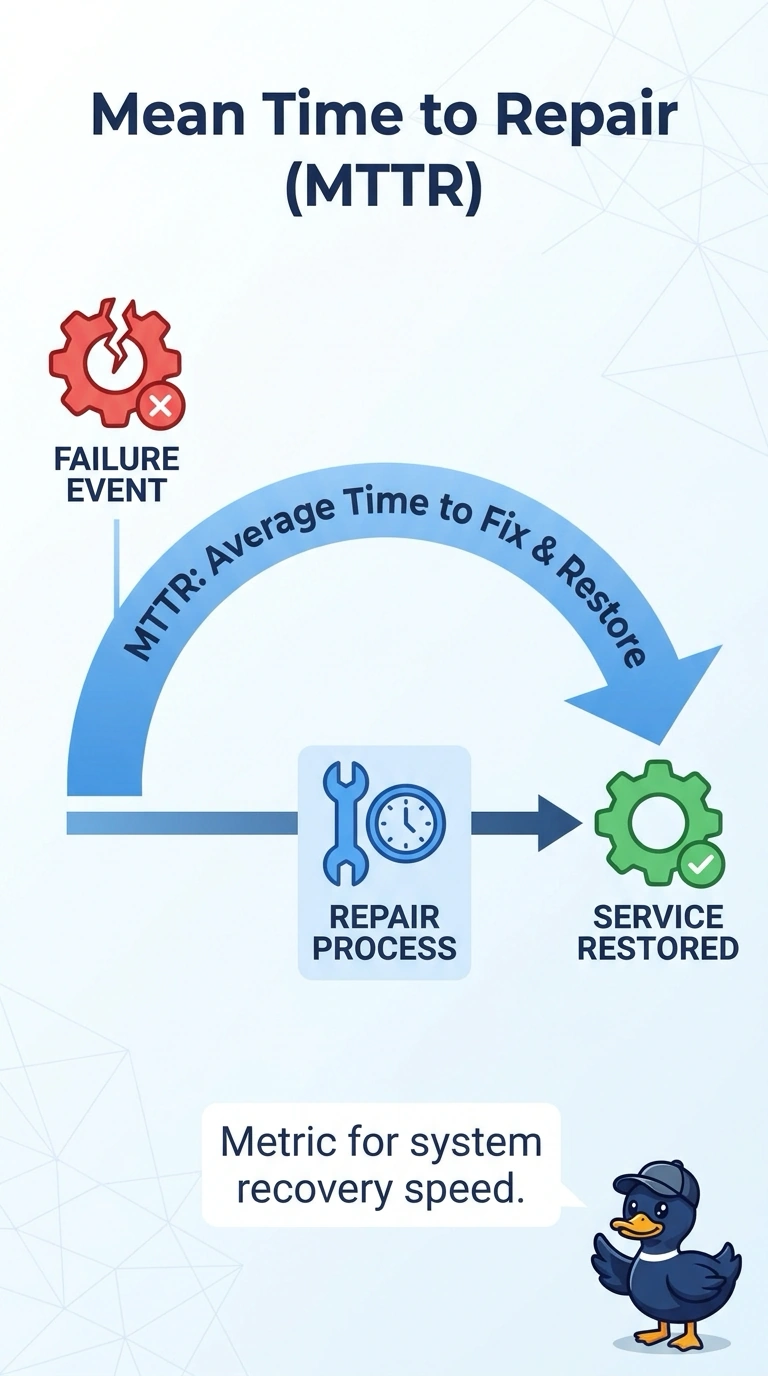
You are timing the repair, not timing how long the switch usually lives, and not deciding how much data you can stand to lose. The average time to fix it and bring service back is mean time to repair. A lease timer and a data-loss target answer different questions you were not asked.
Full Explanation
Mean time to repair is the average time from a failure until the device or service is restored. The campus team tracks how long it takes to repair a failed access switch and restore service, so the measure is mean time to repair. Mean time between failures is the average time a device runs between failures. It describes how rarely something breaks, not how long the repair takes, and the distractor swaps the two definitions. A recovery point objective is how much data loss is acceptable, usually expressed as time back to the last good copy. It is not a technician's average repair duration. A DHCP lease time controls how long an address assignment lasts. It has nothing to do with switch repair. Exam caveat: a low mean time to repair does not mean failures are rare. You can repair quickly and still fail often. Operational check: record the start of each switch outage and the time service returns, average those intervals, and keep that number next to the mean time between failures so the two are not mixed.