
Handheld scanners at a warehouse cannot use WPA3, and the site has no RADIUS server. The wireless link still needs a passphrase. Which security choice fits?
Select an answer to reveal the explanation.
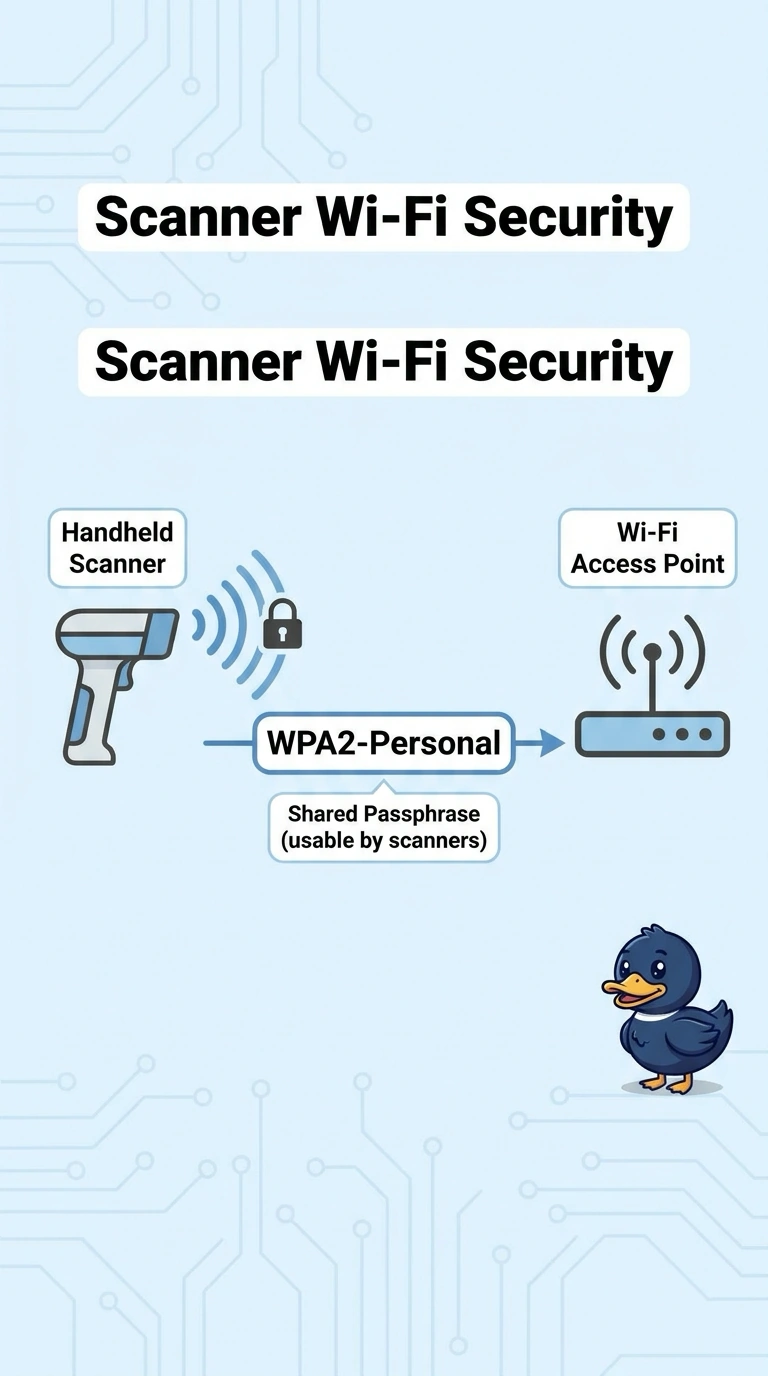
Short Explanation
The scanners cannot speak the newest handshake, and you have no server to check individual logons, but you still refuse to leave the door open. A shared WPA2 passphrase is the fit. Enterprise authentication, an open network, and a retired cipher that belongs in a museum do not match the gear you have.
Full Explanation
WPA2-Personal uses a pre-shared key and does not need a RADIUS server. The scanners cannot do WPA3, and the warehouse has no RADIUS server, while the link still needs a passphrase, so WPA2-Personal is the choice that fits the devices you have. WPA3-Enterprise needs both WPA3 and an authentication server. The scanners support neither half of that requirement. An open network has no passphrase, which contradicts the requirement that the link use one. WEP is an obsolete cipher with well-known weaknesses. It is not the current fallback when WPA3 is unavailable. Exam caveat: a shared passphrase cannot be revoked for one scanner without changing it for all of them. Personal mode is the fit for this constraint, not the strongest design if RADIUS later becomes available. Operational check: configure WPA2-Personal, join a scanner, and confirm an unknown device without the passphrase cannot associate. Join a scanner and confirm an unknown device without the passphrase cannot associate. Rotate the passphrase when a scanner is lost, and remember that every remaining scanner needs the new key.