
A retail closet goes dark the instant utility power drops, even though the rack's metered power strip still has spare outlets and contains no batteries. Which device is missing if the switches must stay up long enough to shut down cleanly?
Select an answer to reveal the explanation.
Short Explanation
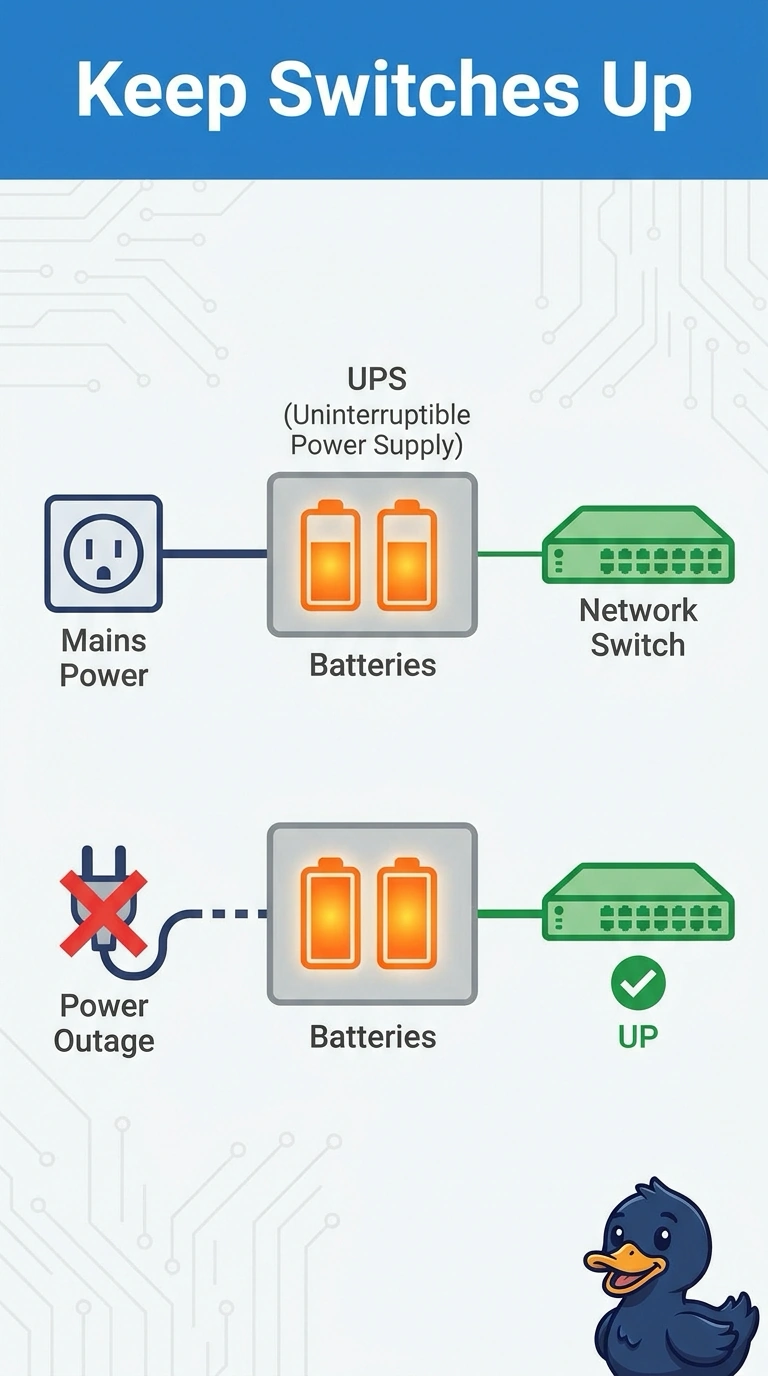
A power strip only shares whatever electricity shows up. When the utility feed dies, you want a battery in the path, and that device is the uninterruptible power supply. A second strip on the same dead feeder stores nothing, and a generator that is still cranking leaves a gap the switches cannot cross.
Full Explanation
An uninterruptible power supply sits between the feed and the load and uses batteries to keep equipment powered when utility power fails. That runtime is what lets a switch shut down cleanly or stay up until a generator stabilizes. The device in the rack is a metered power distribution unit. It divides a feed across outlets and can measure the load, and the stem says it has no batteries, so its outlets go dead with the feed. A second distribution unit on the same feeder is the tempting purchase, because the strip still has spare outlets, and those outlets die with the feed. A standby generator can carry the closet for hours, and without a battery ahead of it the switches are already dark during the start. The stem asks for the device that keeps them up through the outage long enough to shut down. Lowering the posted load figure changes a label. It does not store energy. Exam caveat: a UPS has a finite runtime and a rated load. Sizing it requires the switches' draw and the minutes the site actually needs. Operational check: read the UPS load percentage during a planned battery test and confirm the switches remain powered long enough to complete their shutdown or to transfer to generator.