
A telecom team can package a scoring service as a container on the current hosts or as a virtual machine. They need the difference in how those two packages handle the kernel. Which statement is correct?
Select an answer to reveal the explanation.
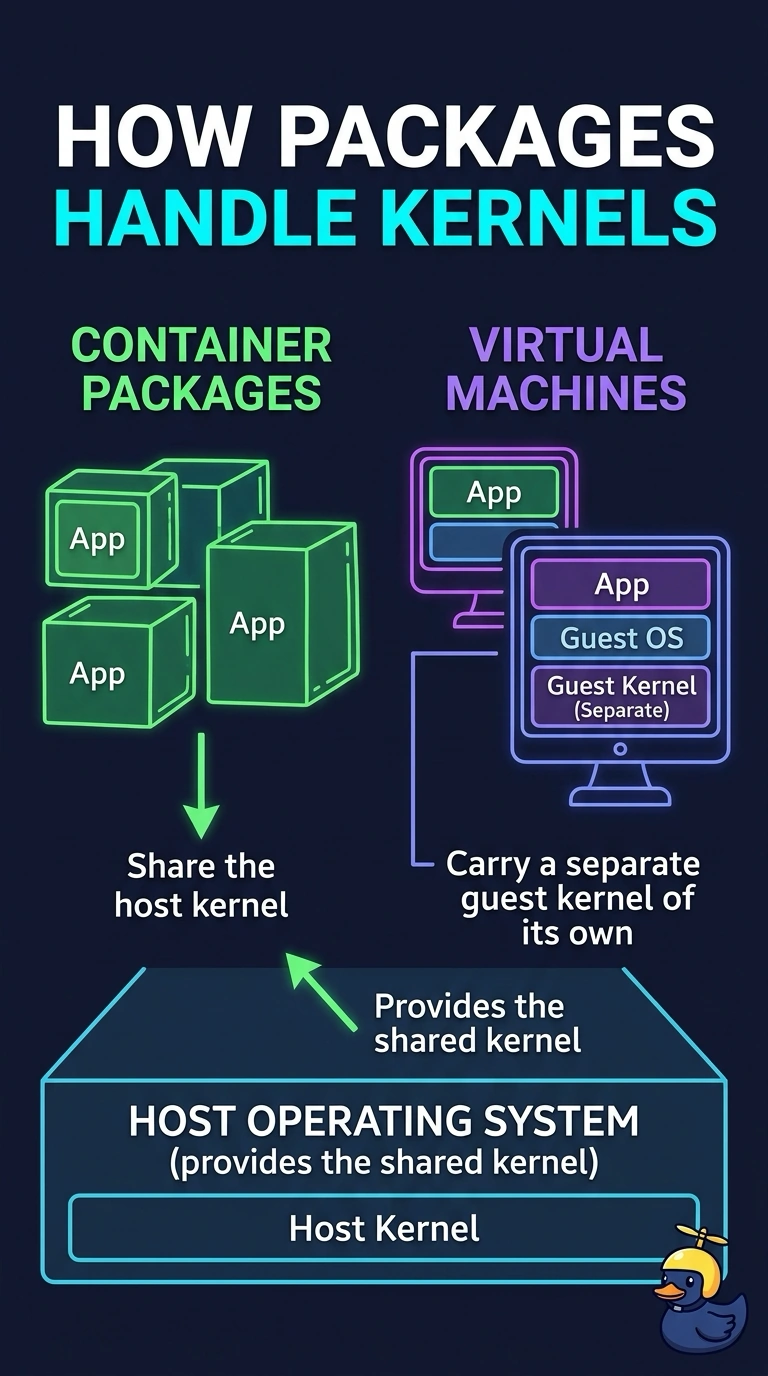
Short Explanation
Renting a room in the house is not the same as putting a second house on the lot. You are comparing a container, which shares the host kernel, with a virtual machine that brings its own kernel. The trap is reversing which package carries the kernel.
Full Explanation
A container runs as an isolated process on the host and uses the host operating kernel. A virtual machine includes its own guest operating system, so it carries its own kernel rather than sharing the host kernel. A container image does not ship a second kernel, while a virtual-machine image boots one. That kernel split is the difference the telecom team asked for. Reversing it, and saying the container brings the guest kernel while the virtual machine shares the host kernel, swaps the two packages. Saying both include a private guest kernel erases the container's dependence on the host kernel and reduces the difference to a file format. Saying both share the host kernel erases the guest kernel inside the virtual machine and reduces the difference to a network address. Exam caveat: a shared kernel means a container is a weaker isolation boundary than a virtual machine even when the process is namespaced. Operational check: inspect the scoring runtime and confirm the container process uses the host kernel while the virtual machine boots a guest kernel.