
A bank fraud model trains only while one analyst's notebook session stays open. When that session closes, the job dies and a colleague cannot rerun it the same way. Which change isolates this training code from that session?
Select an answer to reveal the explanation.
Short Explanation
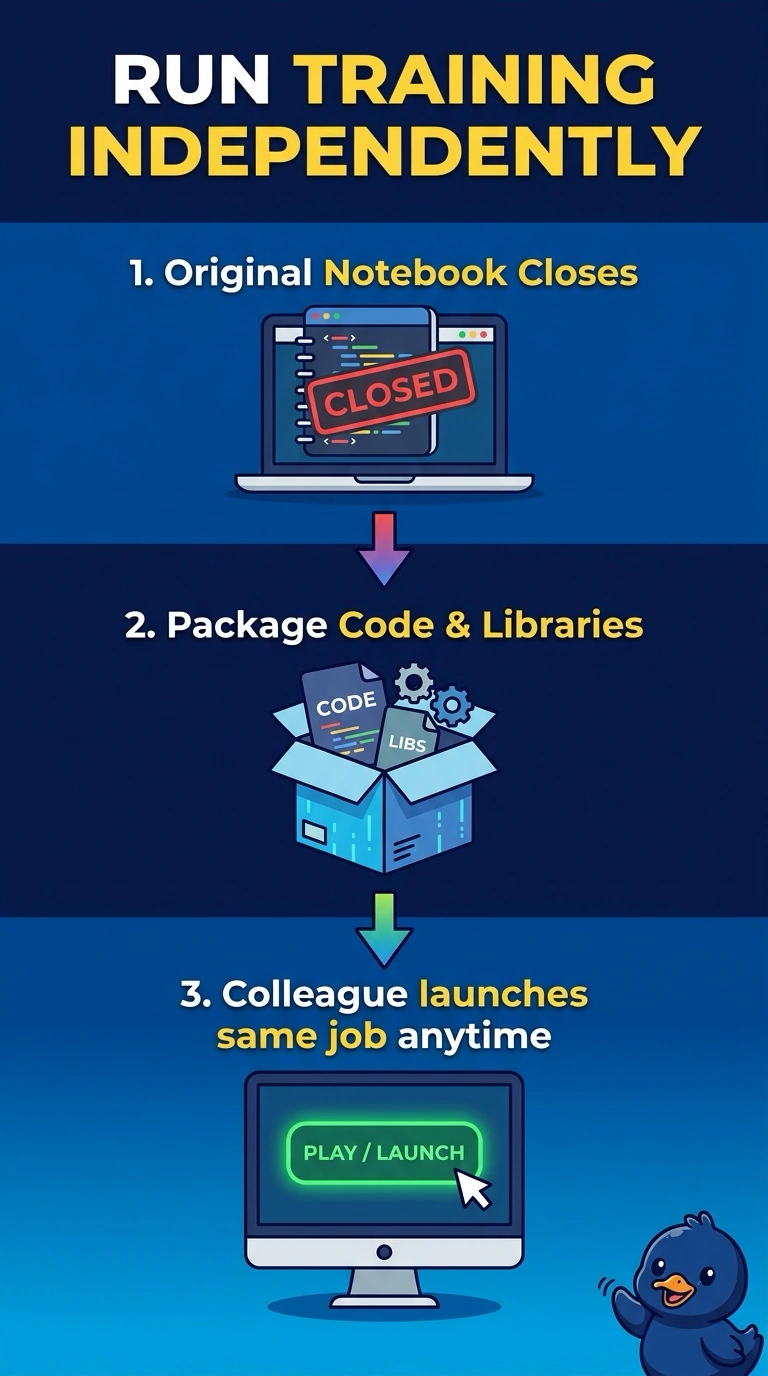
A recipe that lives only in one cook's head stops when that cook clocks out. You isolate the training job by packaging the code and libraries so it still runs after the notebook session closes. Copying the table or watching live scores does not free the job from that session.
Full Explanation
Code isolation means the training job does not depend on one person's interactive session. Packaging the training code and its libraries lets a colleague launch the same job after the original notebook is closed, because the run carries its own instructions instead of borrowing an open kernel. A second live copy of the transaction store protects reading if the primary database is down, which is replication of data, not independence from the analyst's session. An orchestrator that restarts and multiplies scoring copies operates the serving tier after promotion and does not make the training job rerunnable. Comparing a champion with a challenger on live applications is an online check of decisions, and it leaves the training job tied to the notebook that started it. Exam caveat: a packaged job can still fail if the data snapshot or the credentials are not available to the second person. Operational check: have a colleague start the training job from a fresh session that is not the original notebook and confirm the run completes.