
A mortgage bank keeps loan packets as PDFs, photos of checks, and recordings of applicant calls. The objects do not share one set of columns, and staff fetch each object by an identifier. Which store fits these objects?
Select an answer to reveal the explanation.
Short Explanation
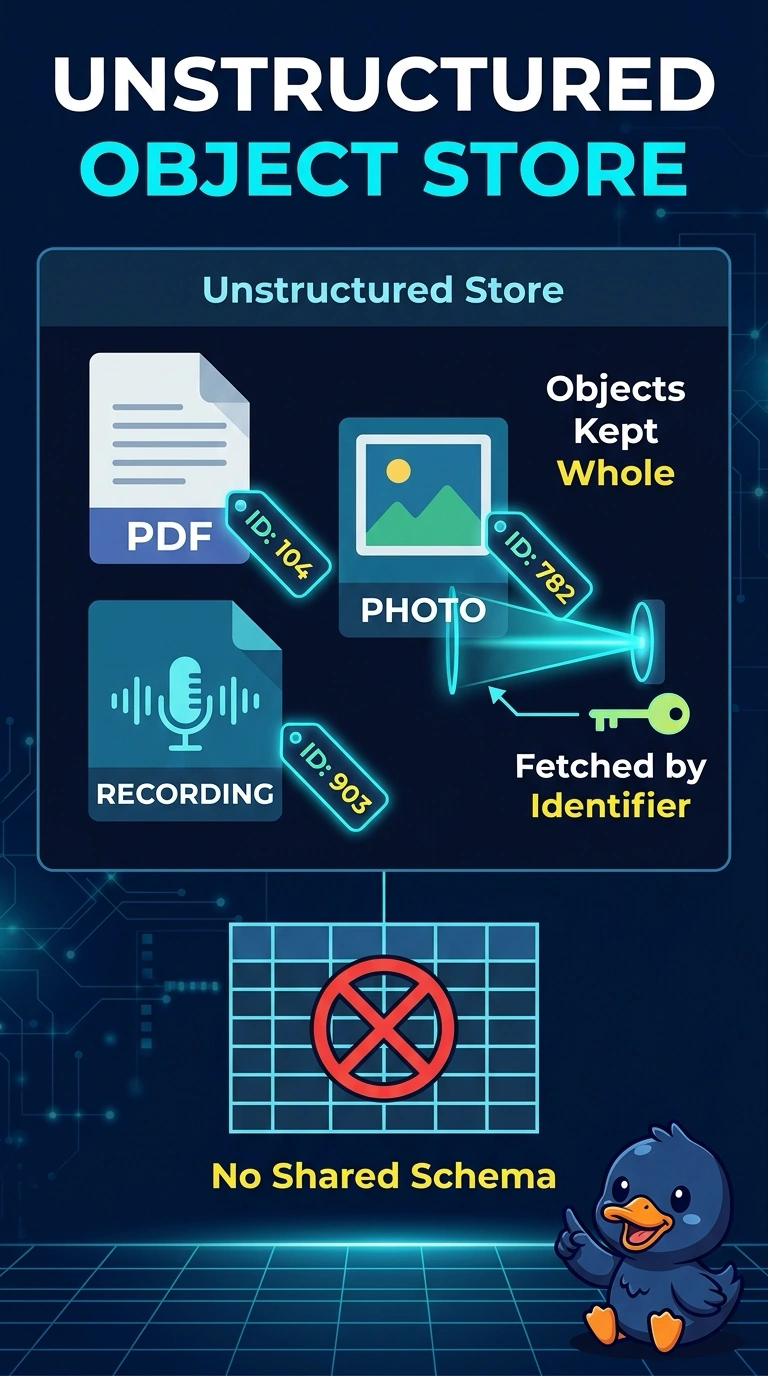
Loan photos and call recordings are like a closet of odd-shaped parcels, not rows in one spreadsheet. An unstructured store keeps those objects without forcing them into a shared table schema, which is what you have. The trap is a relational warehouse, which demands the same columns before it will take the file.
Full Explanation
Unstructured storage holds objects such as documents, images, and recordings that do not share one table schema. The mortgage packets are fetched by identifier and stay whole, which matches a store built for those objects rather than for uniform rows. A fully normalized relational schema expects the same typed columns and rejects a file that does not fit, the opposite of storing PDFs, photos, and call recordings that share no column layout. Staff still need a durable object, not a temporary token and not a row that exists only when every packet shares the same fields. A columnar analytics table is aimed at scans of well-defined fields and is a poor home for raw recordings with no common layout. A short-lived key-value cache keeps brief session tokens, not the durable loan packets staff must open later. Exam caveat: a side table of identifiers and filenames can still be structured; that catalog does not turn the objects themselves into one shared row schema. Operational check: store a sample PDF, check image, and call recording under identifiers, fetch each by that identifier, and confirm nothing required the three objects to share a column layout.