
A telecom analyst builds one row per customer day and places that day's call count in the same row as the churn rate for the entire month. The model then treats the two numbers as facts about the same grain. What is wrong with that row?
Select an answer to reveal the explanation.
Short Explanation
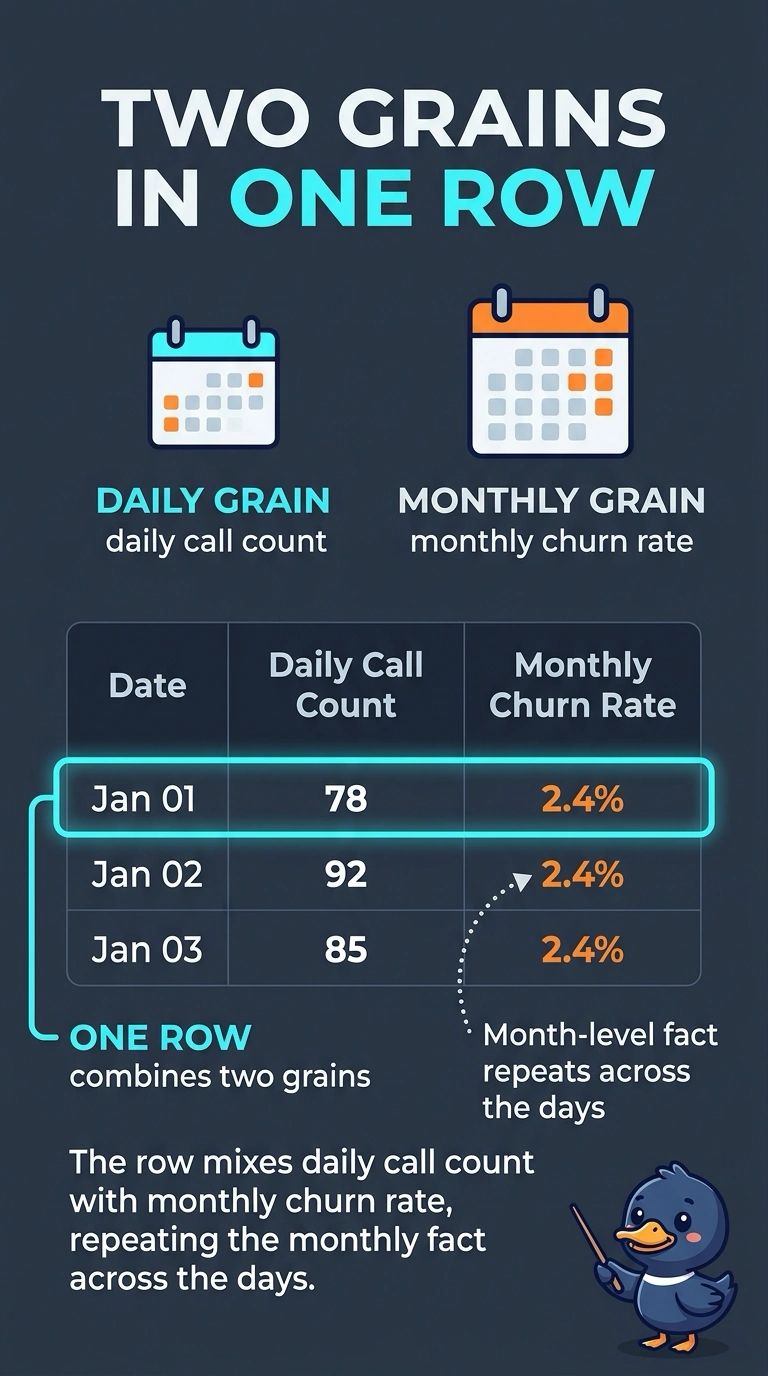
You would not staple a single day's receipt to a whole month's bill and pretend they are the same line item. This row does that: a daily call count sits beside a monthly churn rate, so the month fact is copied onto many days. The trap is calling that copy a seasonal cycle or a missing value.
Full Explanation
Grain is the unit one fact describes. The call count describes one customer day, and the churn rate describes one customer month. Putting both on a customer-day row repeats the same month-level rate on every day of that month and asks the model to treat mismatched units as if they were aligned. A seasonal pair would be a repeating calendar pattern in a single series, and nothing in this row establishes that the two fields are that pattern. The two fields are not copies of one measurement, so dropping a column for multicollinearity does not repair the mismatched unit. The monthly rate is present, not missing, and imputing it from one day's calls would invent a day-level fact the source never stored. Exam caveat: the failure is the mixed grain inside the row, whether or not the two numbers happen to be correlated. Operational check: label each column with its unit, customer-day or customer-month, and confirm the churn rate is constant across the day rows of a month before any model is fit.