
A regulation states that national identification numbers must never be stored in the company's analytics platform, not even temporarily in staging tables. A new feed contains those numbers alongside the sales data analysts need. Which integration approach meets the requirement?
Select an answer to reveal the explanation.
Short Explanation
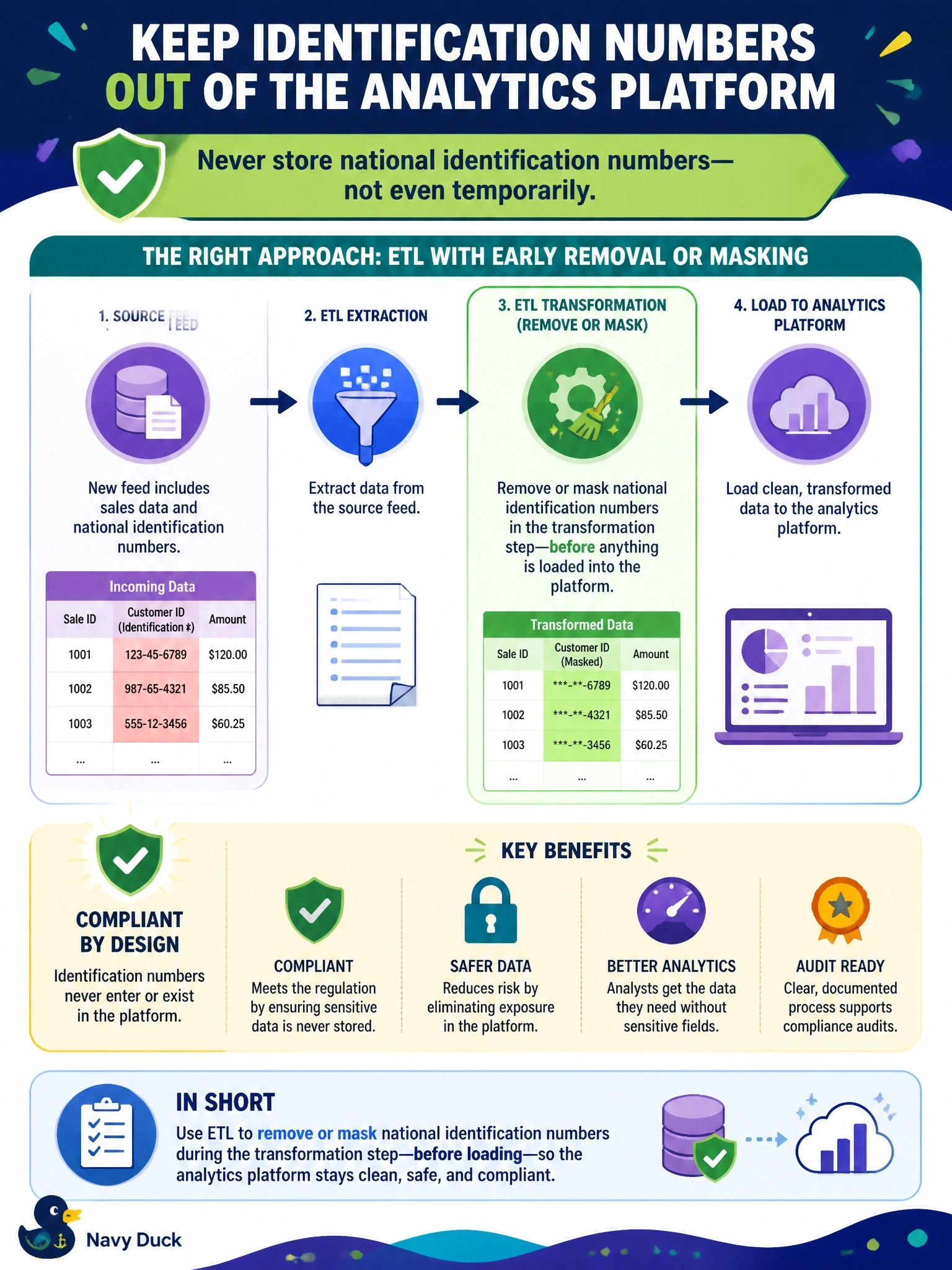
The rule says "never, not even for a second," so you've got to scrub the data before it walks through the door. That's ETL: transform first, load second. Any option that lands the raw numbers and cleans up afterward breaks the rule, no matter how quickly the cleanup runs.
Full Explanation
Extract, transform, load (ETL) performs transformation in an intermediate step, outside the target, before any data is written. That ordering lets the pipeline drop, mask or tokenize the identification numbers while the records are in transit, so the analytics platform only ever receives the sales data and the cleaned fields. Because the regulation forbids storing the numbers even temporarily, only an approach that transforms before loading can comply. ELT that loads raw records into staging and removes the numbers with SQL afterward places the regulated values in the platform, however briefly, and copies may also persist in the platform's logs, backups or snapshots. Restricting the staging schema to the integration account reduces who can see the data but still stores it in the platform, which the regulation prohibits outright; access control is not a substitute for not storing data. A full raw load followed by a nightly purge leaves the numbers in the platform for up to a day and is the weakest of the three. Exam caveat: the choice between ETL and ELT often turns on where sensitive data may legally reside, not only on performance. Operational check: run a query against every staging and target table in the platform for columns or patterns matching the identification number format and confirm none are found after a test load.