
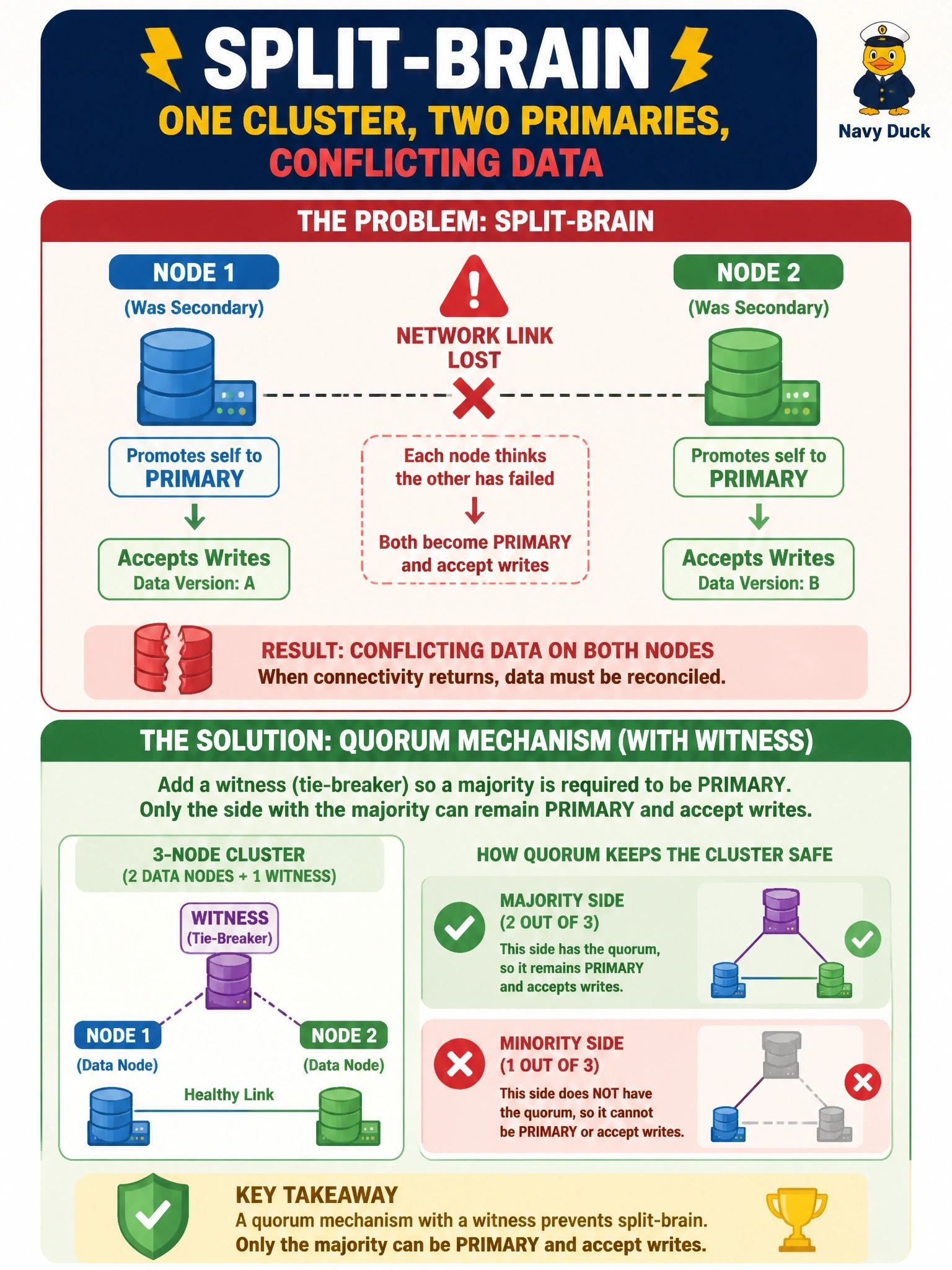
A two-node database cluster loses the network link between its nodes. Each node concludes the other has failed, promotes itself to primary and accepts application writes, leaving conflicting data on the two nodes. What is this condition called, and what design element prevents it?
Select an answer to reveal the explanation.
Short Explanation
Imagine two captains on one ship who can't hear each other, so each grabs the wheel. That's split-brain, and the fix you want is a tie-breaker: a witness or quorum vote that says only the side with the majority keeps steering. The trap is calling it lag or a deadlock, which are different problems entirely.
Full Explanation
Split-brain occurs when cluster members lose communication and each independently decides it is the sole survivor. If both promote themselves and accept writes, the data diverges, and reconciling the two histories later is painful or impossible without losing transactions. The standard prevention is quorum: a node may act as primary only if it can reach a majority of voting members. In a two-node cluster, a third vote is added through a witness server, file share or disk, so after a partition only the side that still reaches the witness has a majority, and the other side stops serving. Replication lag describes a replica trailing the primary; switching to asynchronous mode would make lag more likely, not prevent two primaries. A deadlock is two transactions each waiting for locks the other holds on a single server; lock timeouts and deadlock monitoring address that, not cluster membership. Failback is the planned return of service to the original primary after recovery; it is a normal operation, and rushing it does nothing to stop both nodes from accepting writes during the partition. Exam caveat: many clusters also use fencing, which forcibly isolates the losing node, alongside quorum. Operational check: confirm the cluster shows a configured witness or odd number of votes, and test a simulated link failure to verify that only one node stays primary.