
A healthcare company is securing a database that stores patient records. The security architect insists on defense in depth rather than relying on one strong control. Which design best reflects that principle?
Select an answer to reveal the explanation.
Short Explanation
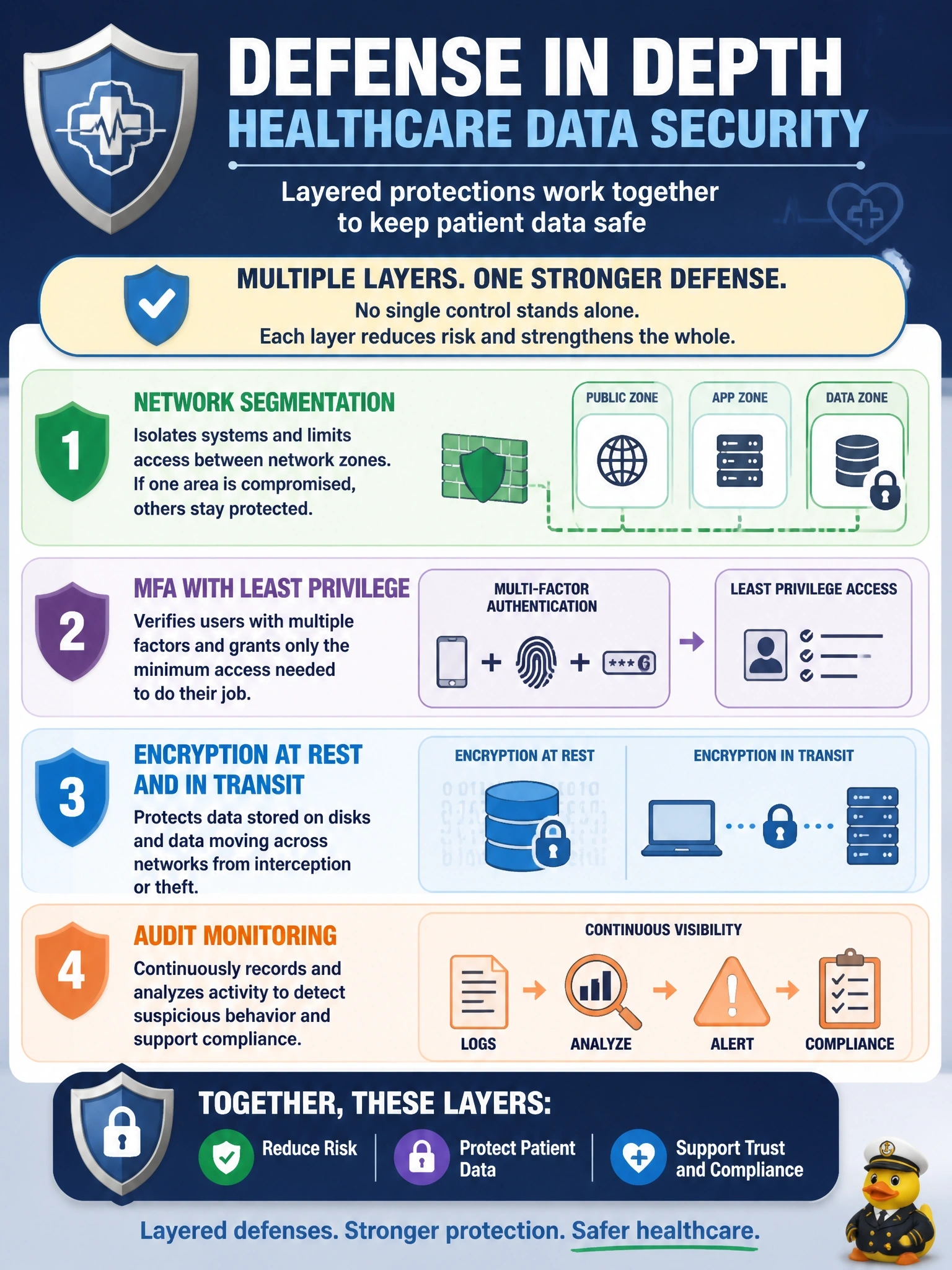
Defense in depth is the castle with a moat, walls, guards and a locked vault; if one layer fails, the next one's still standing. You stack network, identity, encryption and monitoring controls so no single slip exposes the data. Each one-control answer sounds strong, and that's the trap: one layer is a single point of failure.
Full Explanation
Defense in depth layers independent controls so that a failure or bypass of one does not expose the asset. For a database holding protected health information, typical layers are network segmentation and firewalls that limit who can reach the server, strong authentication such as multifactor authentication combined with least-privilege authorization, encryption of data at rest and in transit, and auditing with active monitoring and alerting to detect misuse. Each layer addresses different attack paths, and together they provide prevention, containment and detection. Relying on a next-generation perimeter firewall leaves the database exposed to insiders, compromised internal hosts and stolen credentials, all of which arrive through allowed connections. Relying on encryption at rest protects stolen media but not data accessed through a valid session, because the database decrypts data for authenticated users. Relying on multifactor authentication alone strengthens sign-in but does nothing about over-privileged accounts, SQL injection through an application's trusted connection, unpatched vulnerabilities or undetected misuse. Exam caveat: when every option names a good control, the one that layers several complementary controls is the defense-in-depth answer. Operational check: map each layer to a threat, such as theft, insider misuse and network attack, and confirm at least two controls stand between each threat and the data.