
A customer in the European Union submits a request under the GDPR for the company to erase all personal data it holds about them. The data is spread across a CRM database, a data warehouse and nightly backups. What should the DBA do?
Select an answer to reveal the explanation.
Short Explanation
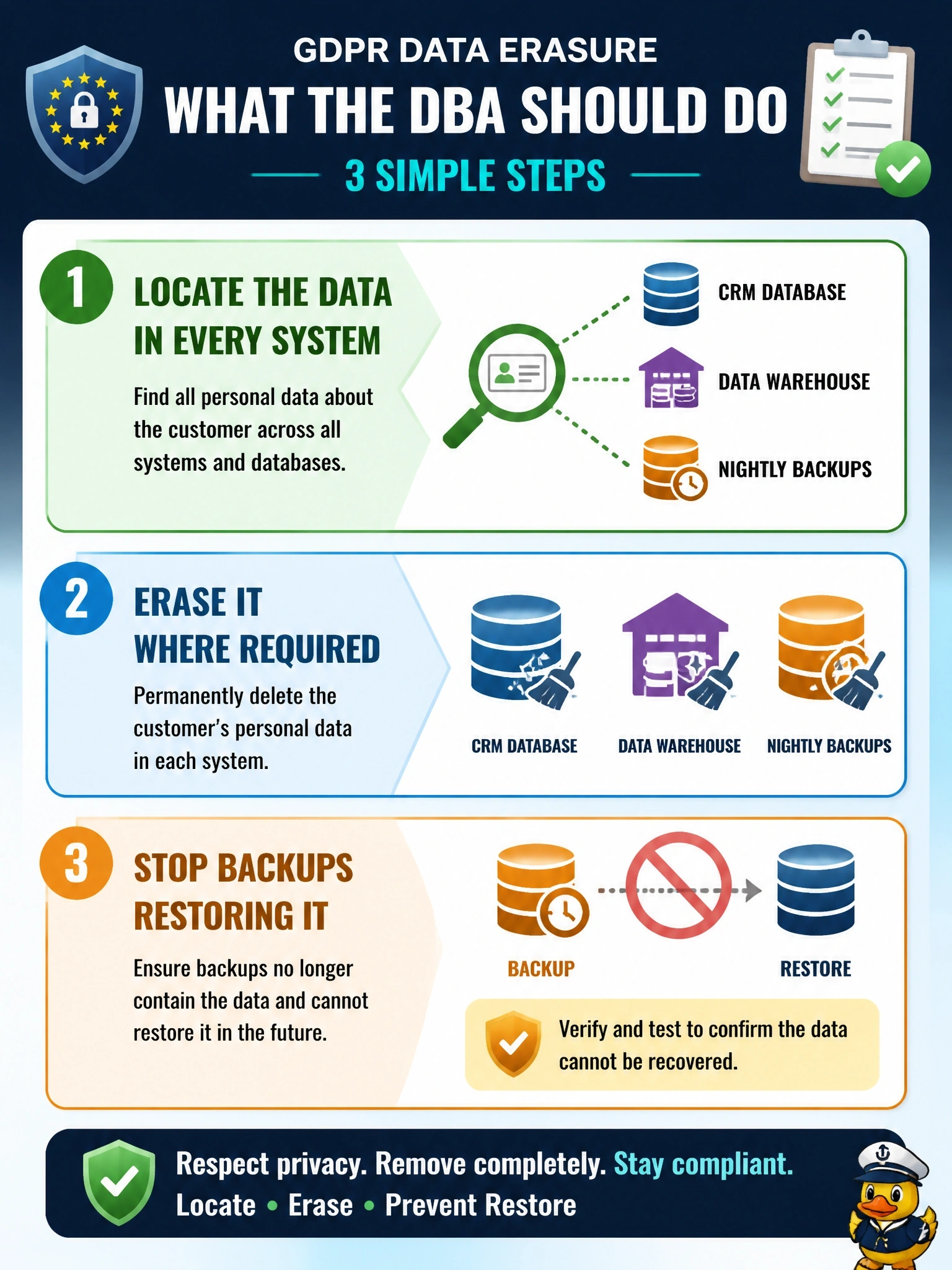
An erasure request is a scavenger hunt: you've got to find that person everywhere they live, not just in the obvious table. Erase them in each system, and make sure a restored backup can't quietly bring them back. Deleting just the CRM row is the trap; the warehouse copy is still sitting there.
Full Explanation
The GDPR gives individuals a right to erasure, under which a controller must delete personal data without undue delay when a valid request applies and no exemption, such as a legal obligation to retain the data, overrides it. Meeting it requires knowing where the person's data lives, which is why data inventories and lineage matter: the CRM, the data warehouse, derived tables, exports and logs all need to be searched. The DBA should erase or anonymize the data in each live system and handle backups in a documented way, commonly by keeping the data beyond use and ensuring that if a backup is ever restored, the erasure is reapplied before the data is used. Deleting only the CRM row leaves copies in the warehouse and elsewhere, so the request is not fulfilled. Refusing because backups exist is incorrect; backup handling is a recognized challenge, but it does not void the right. Masking names in reports changes presentation while the personal data remains stored and processable. Exam caveat: some data may legitimately be retained, such as invoices required by tax law, so legal or the data protection officer should confirm exemptions. Operational check: after processing, run searches on the customer's identifiers across every system and confirm no remaining personal data except documented, exempt records.