
A clinic's database stores patient names linked to diagnoses, treatment notes and insurance claim details. A new analyst requests full read access to build a scheduling dashboard. How should the DBA treat this data?
Select an answer to reveal the explanation.
Short Explanation
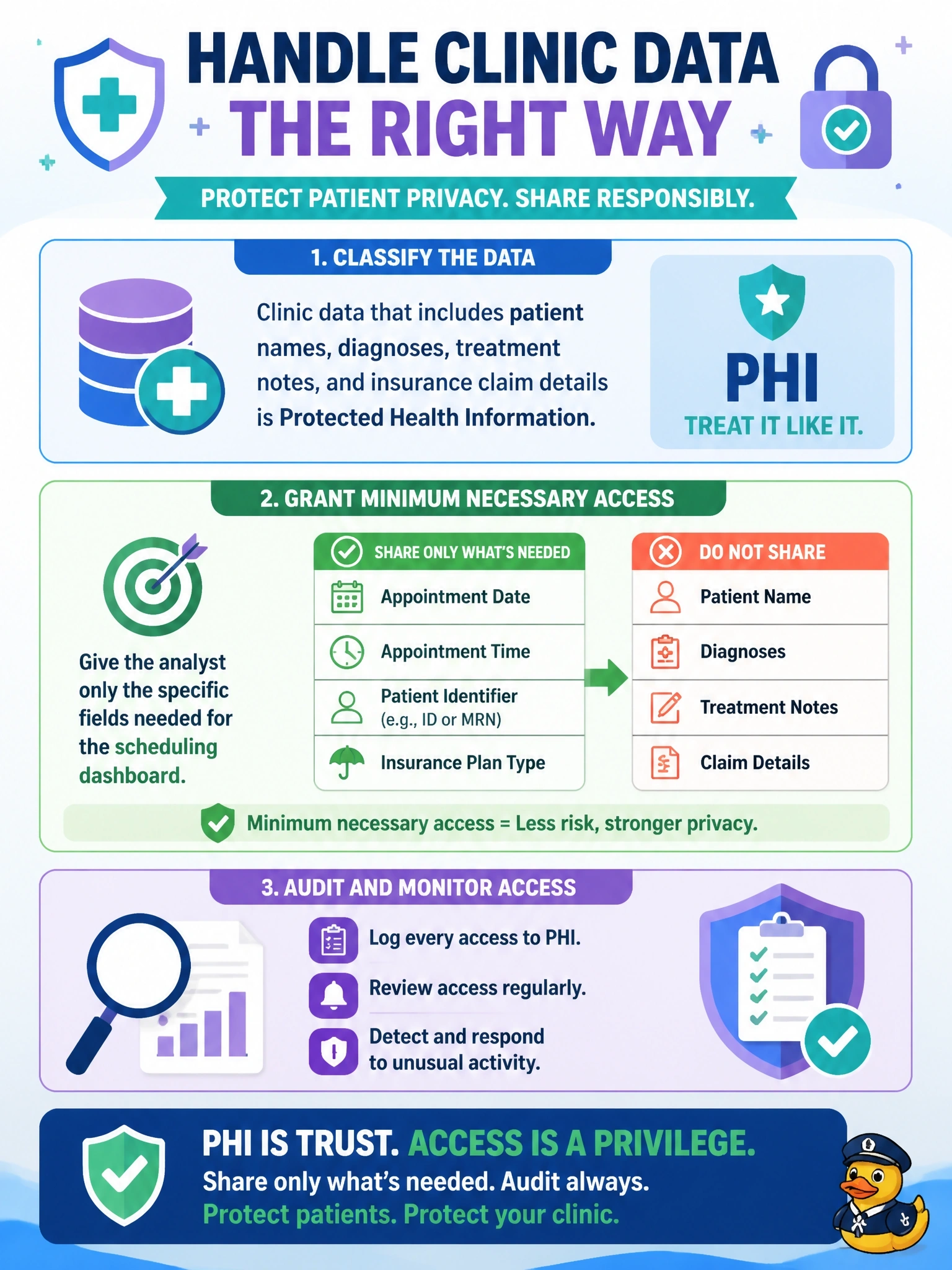
Health details tied to a name are PHI, and PHI gets the 'need to know' treatment. A scheduling dashboard doesn't need diagnoses or treatment notes, so you give the analyst only what the job requires. The trap is assuming that working inside the clinic means you get to see everything.
Full Explanation
Protected health information is individually identifiable information about a person's health condition, care or payment for care. Diagnoses, treatment notes and insurance claims linked to patient names are clearly PHI, which carries heightened protection obligations under health privacy regulations, including limiting use and disclosure to the minimum necessary for the task. A scheduling dashboard needs appointment times, providers and perhaps contact details, not diagnoses or clinical notes, so the DBA should grant access to only those fields, for example through a view or a role restricted to the required columns, and ensure access is logged and reviewed. Classifying the data as PII only understates it, because the health content raises sensitivity, and granting full access contradicts the minimum necessary principle. Describing diagnoses as anonymous once stored is simply incorrect; linked to names, they identify individuals. Granting full access because the analyst works at the clinic ignores that internal staff are authorized only for what their role requires. Exam caveat: PHI is a subset of personal data with sector-specific rules, so health data typically requires both general privacy controls and additional safeguards. Operational check: test the analyst's role against the clinical tables and confirm queries for diagnoses and notes are denied while the dashboard's fields remain accessible.