
A scheduled job purges customer records older than the retention period every month. The legal department has just placed a litigation hold on records for several customers involved in a lawsuit, some of which are due for purging this week. What should the DBA do?
Select an answer to reveal the explanation.
Short Explanation
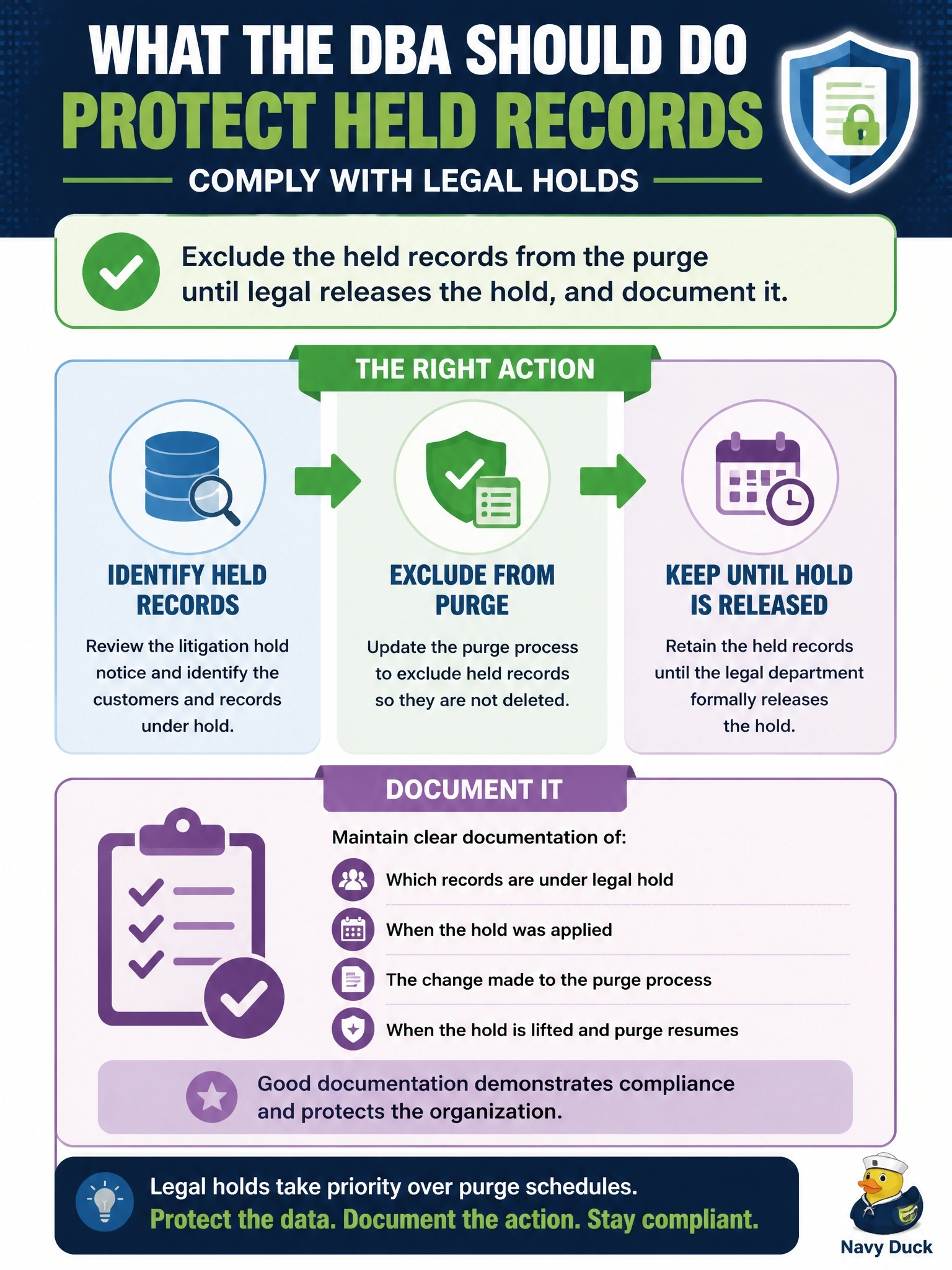
A legal hold is a big red 'do not touch' sticker that overrides the normal retention schedule. You pull those records out of the purge until legal says otherwise, and you write down what you did. Deleting them early or 'because the policy says so' is the trap, and it could land the company in court for destroying evidence.
Full Explanation
A legal hold, also called a litigation hold, requires an organization to preserve information relevant to pending or reasonably anticipated litigation, suspending normal deletion. It overrides the retention schedule for the specific records it covers. The DBA should modify the purge process so held records are excluded, for example by flagging them and filtering the purge on that flag, keep their backups as well, and document when the hold was applied and by whose instruction. When legal releases the hold, the records return to normal retention processing. Running the purge as scheduled destroys evidence the organization is legally obligated to keep, which can lead to sanctions; a retention policy does not take precedence over a legal hold. Purging early to avoid discovery is deliberate destruction of evidence and is never acceptable. Copying records to a spreadsheet and purging the originals loses metadata, related records and integrity guarantees, and it creates an uncontrolled copy of personal data outside governed systems. Exam caveat: holds apply to all copies within scope, which can include backups and archives, so coordinate with whoever manages backup rotation. Operational check: run the purge job in report-only mode and confirm none of the held records appear in the deletion set before allowing it to execute.