
A company's customer database keeps every record indefinitely, including accounts closed many years ago, because staff think the data might be useful someday. What should the DBA recommend to governance stakeholders?
Select an answer to reveal the explanation.
Short Explanation
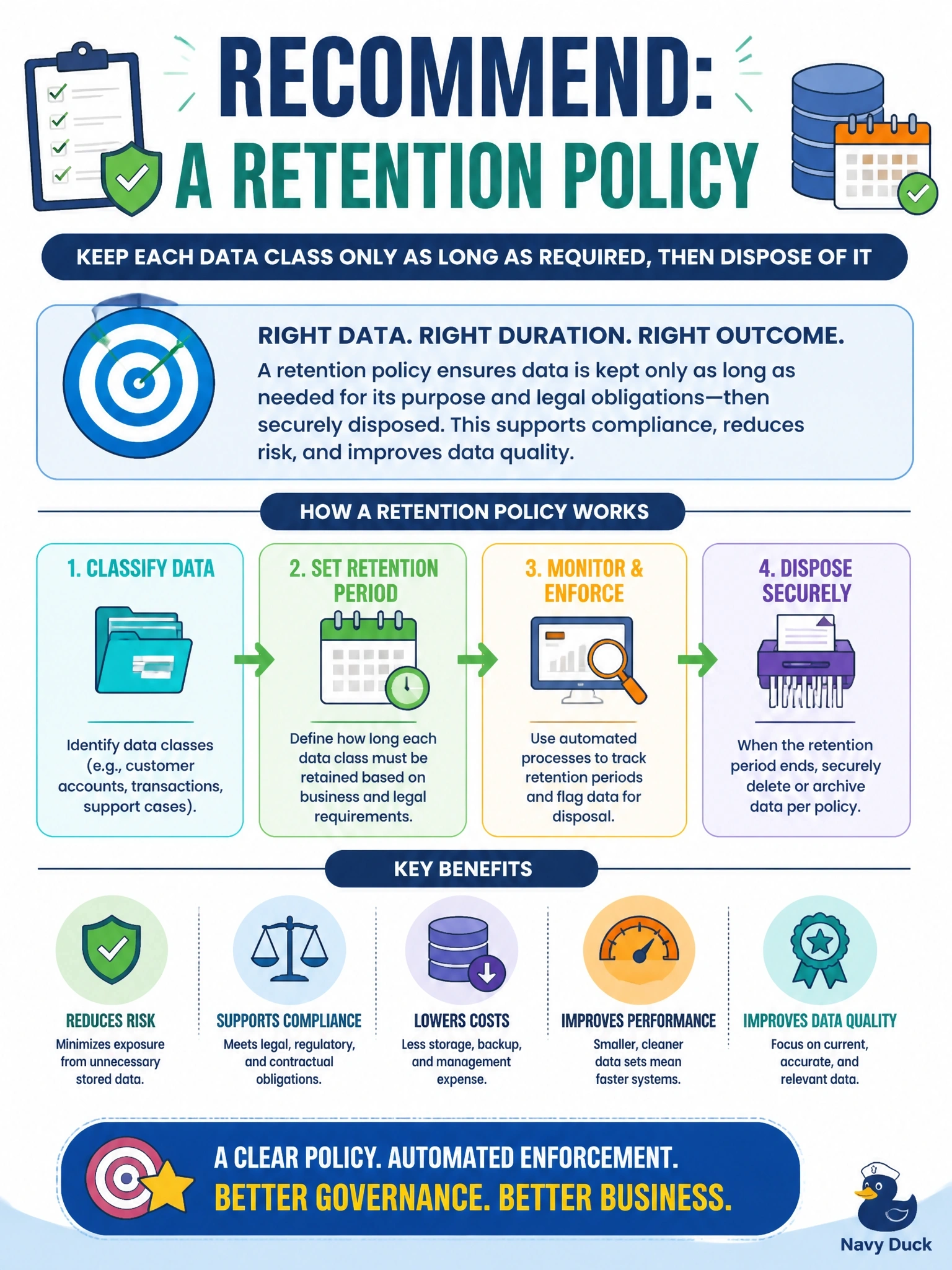
Keeping everything forever is like never cleaning out the garage: you can't find anything, and you're on the hook for whatever's in there. A retention policy says how long each type of data stays, then it goes. Cheaper archive storage is the trap; it's still kept forever, just somewhere else.
Full Explanation
A data retention policy defines, for each category of data, how long it must be kept to meet legal, regulatory, contractual and business needs, and what happens when that period ends, typically secure deletion or anonymization. Keeping personal data indefinitely increases breach impact, storage and backup costs, discovery obligations in litigation, and conflicts with privacy principles that data be held no longer than necessary. Governance stakeholders, including data owners and legal or compliance staff, set the periods; the DBA implements scheduled purges and documents them. Archiving everything permanently to cheaper storage lowers cost but keeps the same records, along with their legal and privacy exposure, without end. Encryption reduces the impact of unauthorized access but does not satisfy limits on how long data may be kept, and the organization can still be compelled to search and produce it. Moving closed accounts into a separate schema improves query performance and organization but still retains the data indefinitely. Exam caveat: retention schedules must allow exceptions such as legal holds, which suspend deletion for specific records. Operational check: after the policy is approved, run the purge in a test environment, confirm only records past their retention date are removed, and log each purge run for audit.