
A production database is four cumulative patches behind the vendor's current release. The team has skipped patches for a year because an earlier patch once broke an application. Which change to the team's practice is most appropriate?
Select an answer to reveal the explanation.
Short Explanation
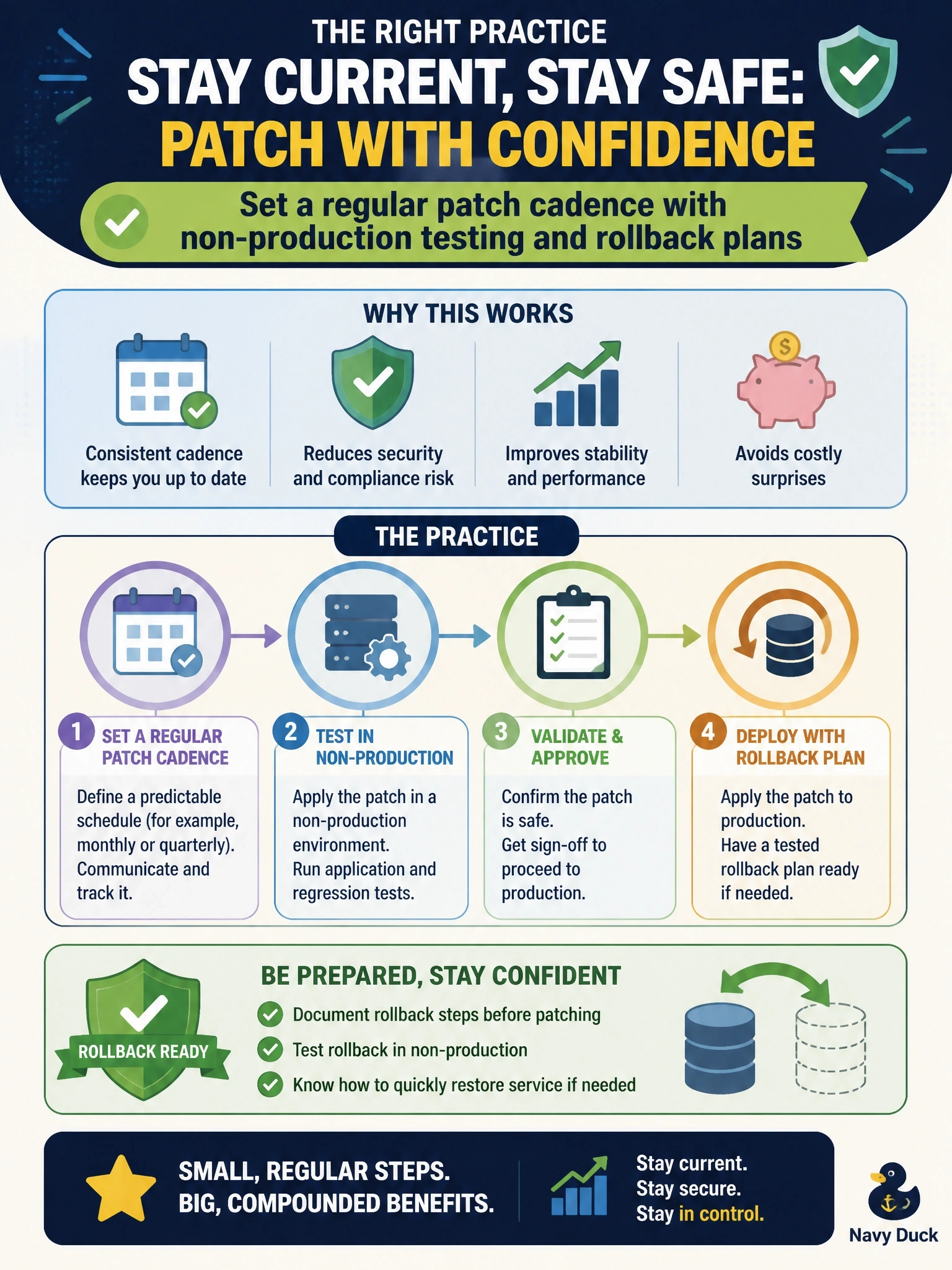
Skipping the dentist because one visit hurt just means the next visit hurts a lot more. You fix your fear of patches with a routine: test them in non-production, keep a rollback plan, and patch on a steady schedule. The trap is any answer that hides or postpones the risk instead of managing it.
Full Explanation
Falling behind on patches accumulates both security exposure and upgrade risk: the gap between the running version and the current one grows, more changes must be absorbed at once, and the system may eventually fall outside vendor support. The appropriate fix is a predictable patch cadence in which each patch is tested in a non-production environment that mirrors production, regression tests cover critical application functions, a verified backup or snapshot provides a rollback point, and the change is applied in an approved window with post-change verification. Regular, smaller changes are easier to test and roll back than large catch-up jumps. Freezing patching until a migration leaves known vulnerabilities open for a year or more, and migrations often slip. Patching only when vendor support insists makes security depend on a support case rather than on risk, and support escalations typically arise during incidents, the worst time to change software. Disabling notifications hides the problem from auditors and administrators without reducing any risk, and it undermines the accountability that change management is meant to provide. Exam caveat: the lesson from a failed patch is to strengthen testing and rollback, not to stop patching. Operational check: inventory the current version and missing patches, test the backlog in non-production, plan staged application, and document a recurring patch schedule in the team's SOP.