
After a database doubled in size over six months, the DBA notices the buffer cache hit ratio has fallen steadily and physical disk reads have risen, though the query mix and the server's RAM are unchanged. What is the most likely explanation?
Select an answer to reveal the explanation.
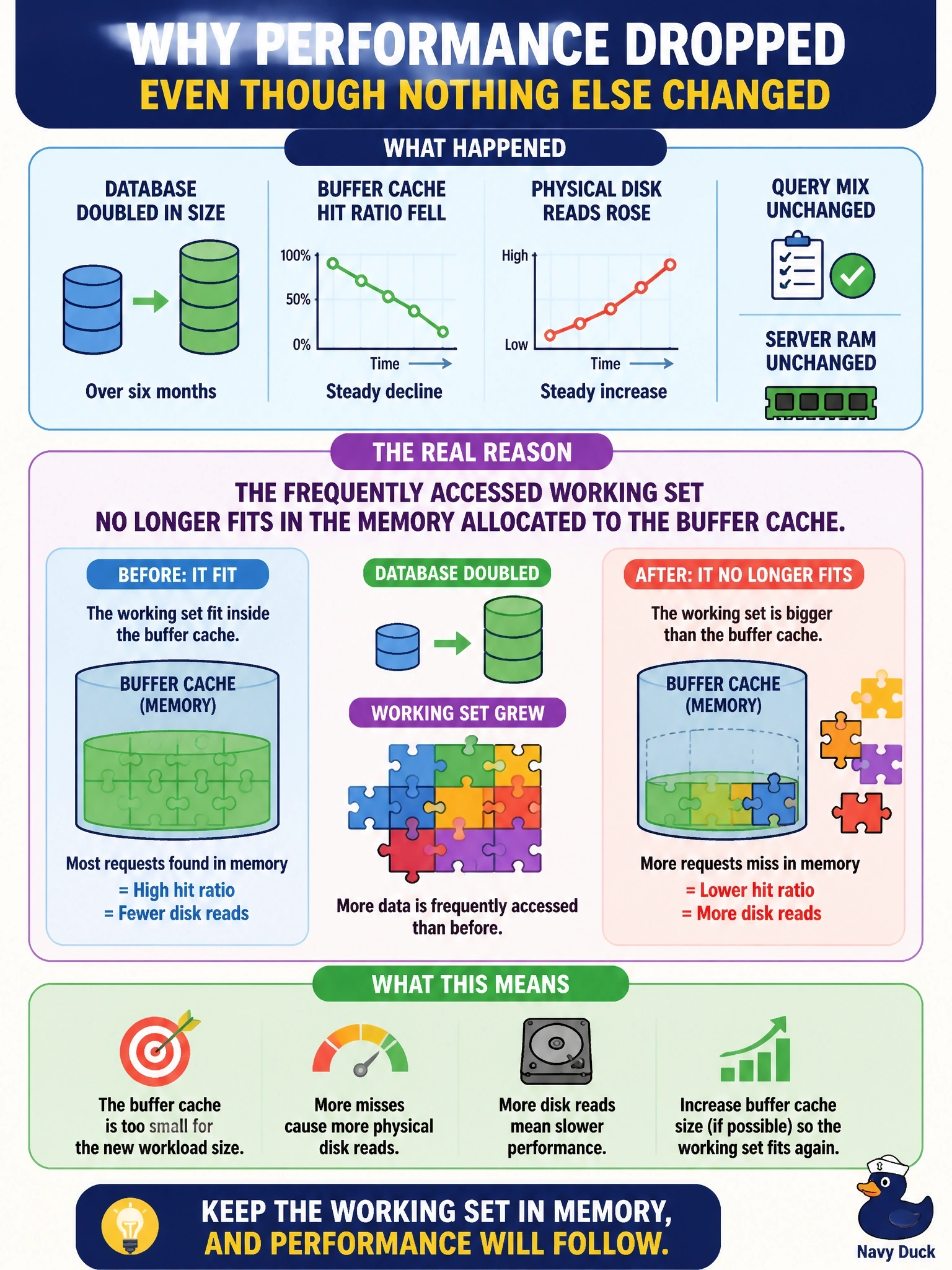
Short Explanation
Your buffer cache is a kitchen counter: everything you use often should sit there within reach. When the pile of ingredients doubles and the counter stays the same size, you're back in the pantry for every other item. That's exactly what a falling hit ratio and rising disk reads are telling you.
Full Explanation
The buffer cache holds recently and frequently accessed data pages in memory so that queries can avoid disk reads. When the working set, meaning the data actively used by the workload, grows larger than the memory available to the cache, pages are evicted before they are reused, the hit ratio falls, and physical reads increase. With RAM and query mix unchanged and data volume doubled, insufficient memory for the working set is the direct explanation. Remedies include adding memory, increasing the cache allocation if the host has headroom, archiving or partitioning cold data, or tuning queries and indexes so that fewer pages are needed. An undersized transaction log causes log growth events or failed transactions when it fills; it does not change how data pages are cached for reads. A connection pool that is larger than needed may hold idle sessions and some memory per session, but it does not explain a steady decline in cache efficiency tied to data growth. Client-to-server network delay affects how quickly results reach clients, but buffer cache misses and physical disk reads happen inside the server and are unaffected by network latency. Exam caveat: hit ratio is a supporting indicator; it should be read alongside page life expectancy, read latency and wait statistics. Operational check: trend data size, hit ratio and physical reads together, estimate the working set, and test a memory increase in non-production.