
A company plans to replace a fifteen-year-old database platform. Before selecting a product, the project lead wants a structured comparison of what the current system does today against what the business now requires, so missing capabilities can be listed. Which requirements-gathering activity is this?
Select an answer to reveal the explanation.
Short Explanation
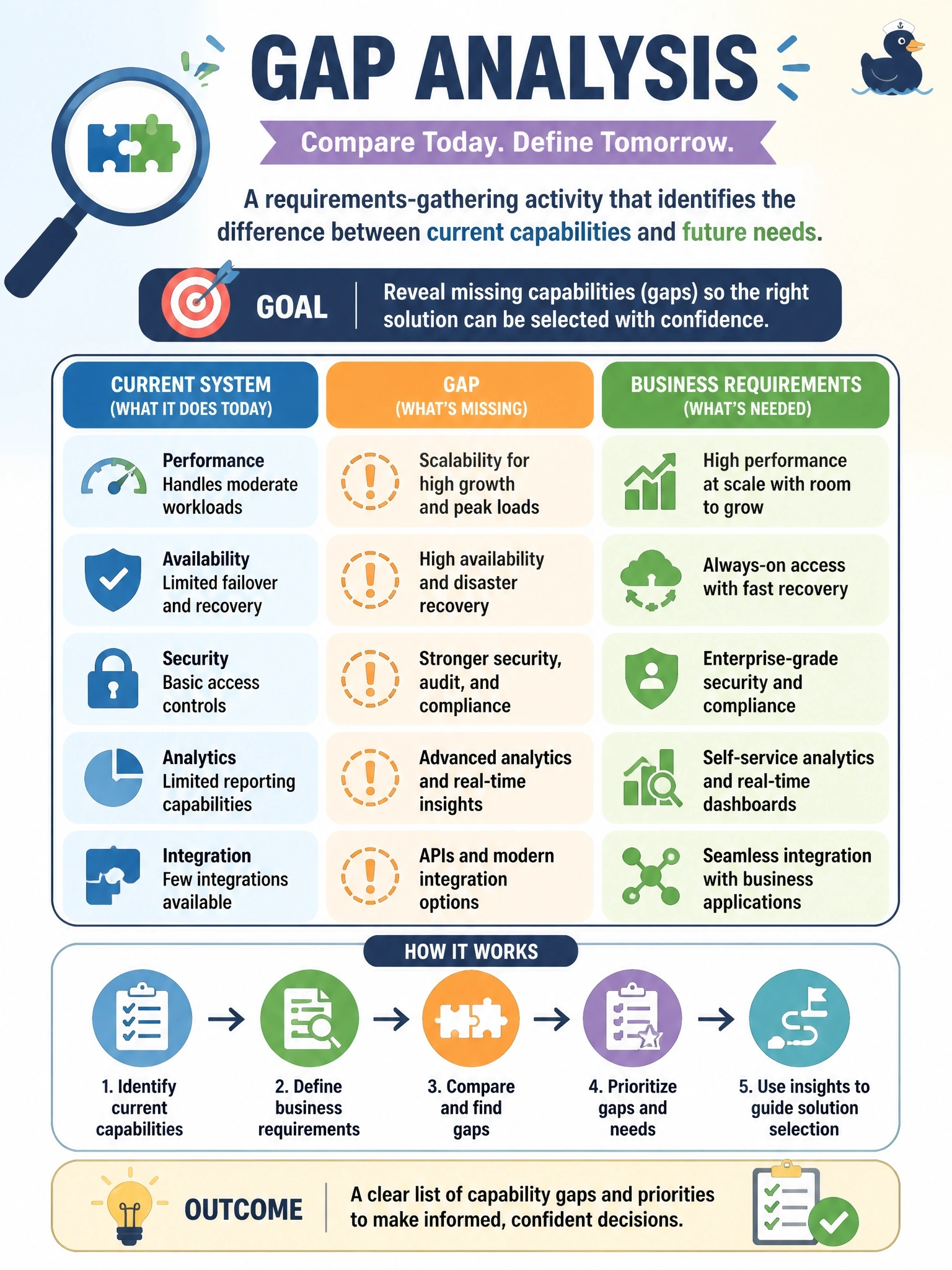
Picture two columns on a whiteboard: where you are and where you need to be. Whatever falls in between is the gap, and listing it is gap analysis. Don't mix it up with resource projection, which forecasts how much capacity you'll need, not which features are missing.
Full Explanation
Gap analysis compares the current state of a system with the required future state and records the differences: missing features, unmet performance or availability targets, compliance shortfalls and integration needs. In database planning it is an early requirements-gathering step, because the identified gaps become selection criteria for the replacement platform and feed scope, budget and migration planning. Resource projection is a different requirements activity that forecasts future capacity, such as storage, CPU, memory and IOPS, from current usage and growth trends; it sizes the new system rather than cataloguing missing capabilities. Regression testing happens much later, after changes are built, and checks that existing behavior still works; it cannot run before a product is even chosen. Schema compatibility testing also belongs to the testing phase and confirms that applications work with a new or changed schema, which presupposes that a design already exists. Exam caveat: gap analysis and resource projection are often done together, so focus on the verb in the scenario, compare capabilities versus forecast capacity. Operational check: produce a gap register listing each requirement, the current capability, the gap and its priority, and have business owners sign it off before vendor evaluation starts.