
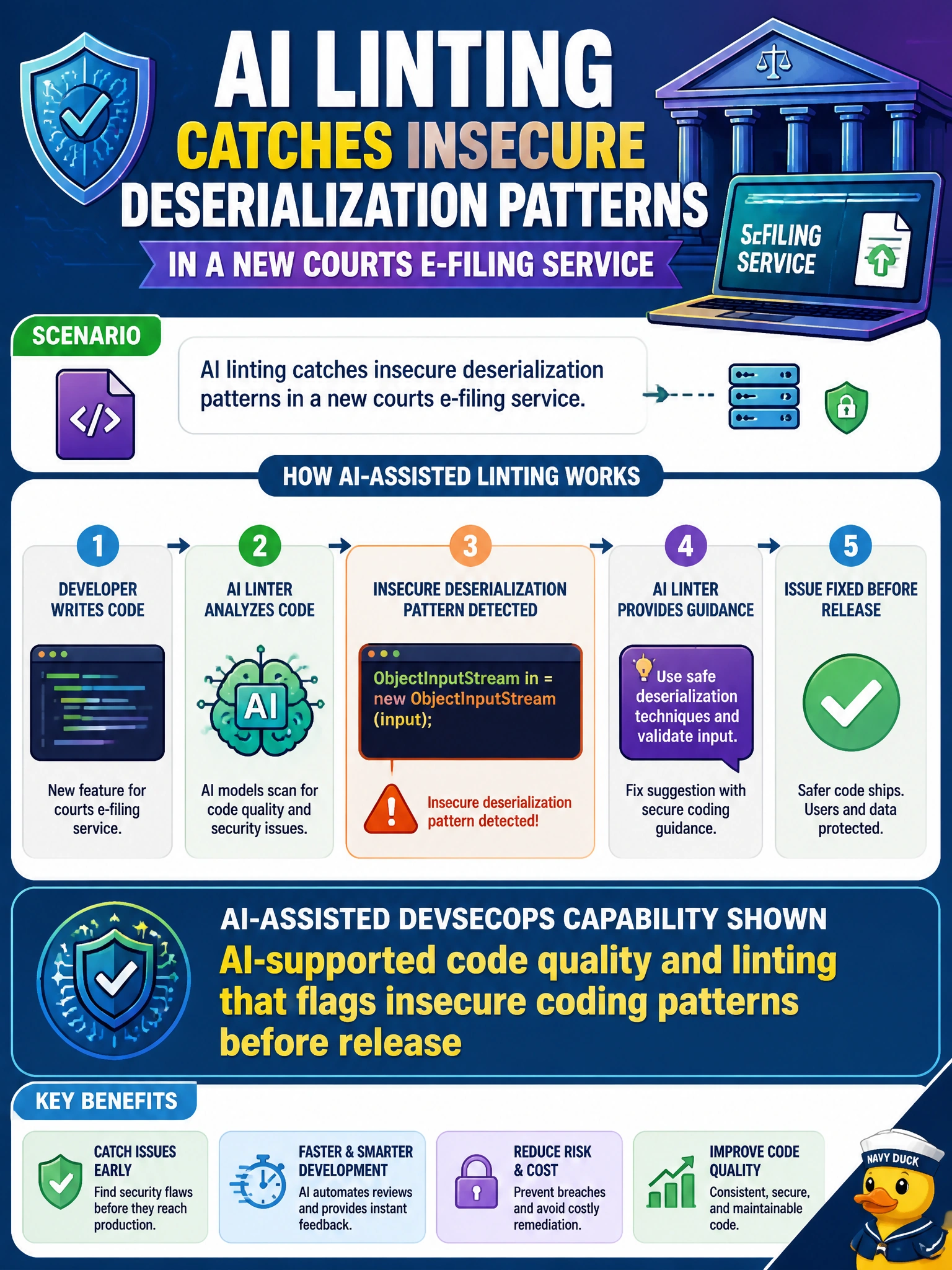
AI linting catches insecure deserialization patterns in a new courts e-filing service. What AI-assisted DevSecOps capability is shown?
Select an answer to reveal the explanation.
Short Explanation
The linter that spots sketchy deserialization is AI helping DevSecOps before courts go live. You won't catch insecure deserialization by blocking vulnerable base images, predicting exploit likelihood from runtime intel, or generating SBOM entries—it's not what this security linting does. Keep the scan in the pipeline.
Full Explanation
AI linting that catches insecure deserialization patterns in a new courts e-filing service shows AI-supported code quality and linting that flags insecure coding patterns before release because the control finds dangerous coding constructs during delivery. Deserialization flaws are high-impact in public-facing civic apps that accept complex applicant payloads. AI-assisted DevSecOps shifts detection left so courts services are less likely to ship known-bad patterns into production.
AI-assisted code quality and linting that blocks vulnerable base images during deployment fails because blocking vulnerable base images is a deployment-time container control and does not flag insecure deserialization patterns in application code before release. AI-driven code quality and linting that predicts exploit likelihood from runtime threat intel fails because runtime threat-intel prediction assesses exploitability from live data rather than flagging insecure coding constructs before release. AI-enhanced code quality and linting that generates SBOM entries for released dependencies fails because generating SBOM entries inventories released dependencies and does not identify insecure deserialization in pre-release code.
Exam caveat: a clean lint run is not a penetration test—business logic abuse, authz flaws, and misconfiguration can remain; courts e-filing still needs review and security testing appropriate to case-data sensitivity.
Operational check: enforce lint/SAST in the CI pipeline for the e-filing repo, fail builds on high-severity deserialization rules, track exceptions with expiry, and re-scan after dependency upgrades that introduce new serializers.
Prefer to study offline? Printable PDF study book + test engine ($7.50, unofficial). These questions stay free here.