
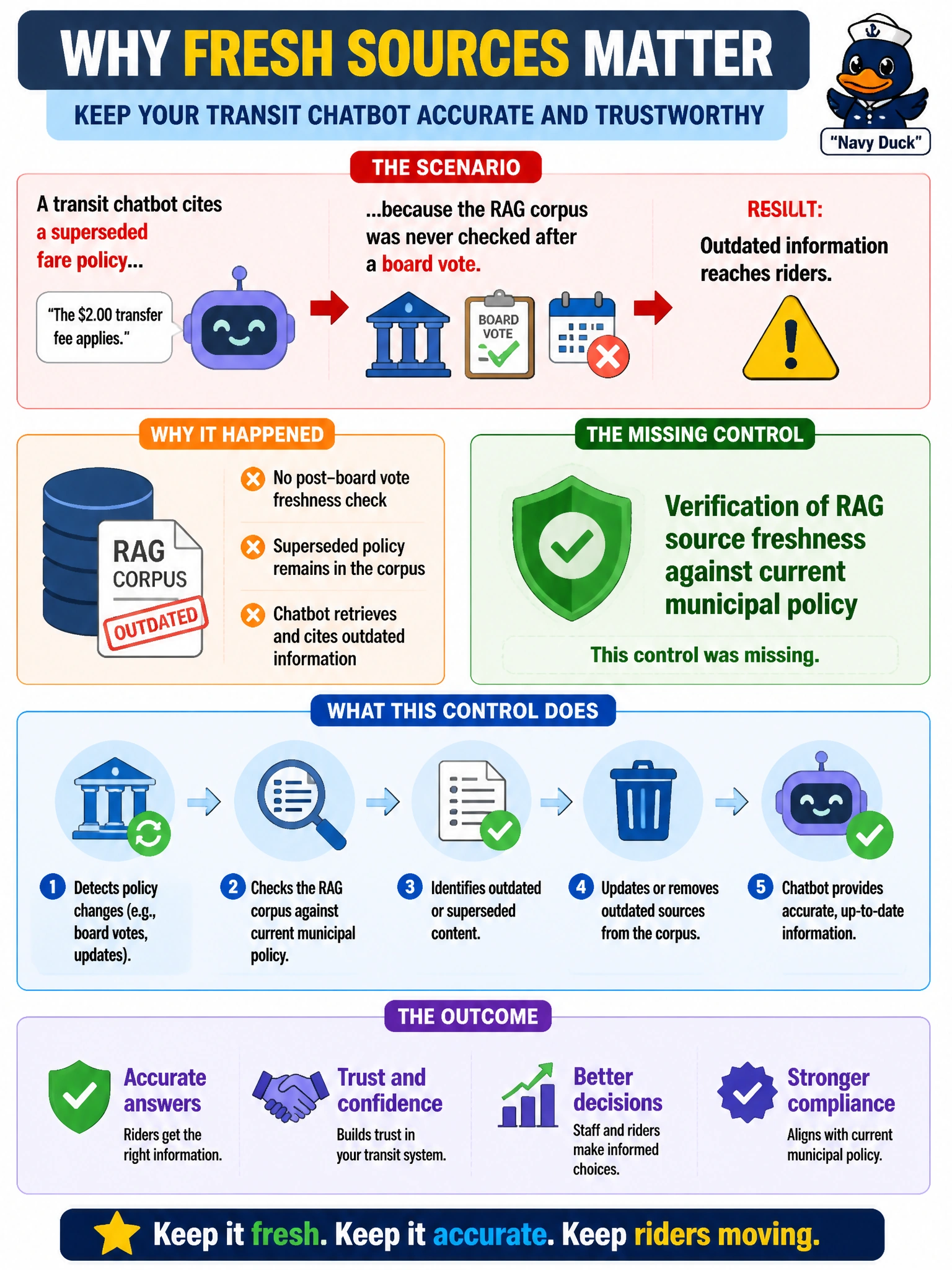
A transit chatbot cites a superseded fare policy because the RAG corpus was never checked after a board vote. Which control was missing?
Select an answer to reveal the explanation.
Short Explanation
If the board changes fares and nobody updates the RAG shelf, the bot keeps quoting last year's policy. Freshness verification is the control that catches stale civic sources.
Full Explanation
A transit chatbot citing a superseded fare policy because the RAG corpus was never checked after a board vote shows missing verification of RAG source freshness against current municipal policy. Freshness controls ensure retrieval indexes reflect the policies now in force, not obsolete board materials that mislead riders about fares. Validation of RAG chunk segmentation against current municipal policy fails because segmentation controls how fare documents are split for retrieval, not whether the documents in the corpus are fresh after the board vote. Authentication of RAG retriever access against current municipal policy fails because access authentication controls who can query the retriever, not whether the fare-policy documents in the RAG corpus are fresh. Monitoring of RAG citation formatting against current municipal policy fails because formatting checks citation style, not whether the cited fares reflect current policy after the board vote. Exam caveat: freshness checks need clear owners and effective dates; partial updates can leave conflicting fare PDFs both retrievable. Operational check: subscribe RAG maintainers to board policy changes, stamp each corpus document with effective and sunset dates, re-embed and smoke-test fare questions after each vote, and suppress superseded documents from retrieval.
Prefer to study offline? Printable PDF study book + test engine ($7.50, unofficial). These questions stay free here.