
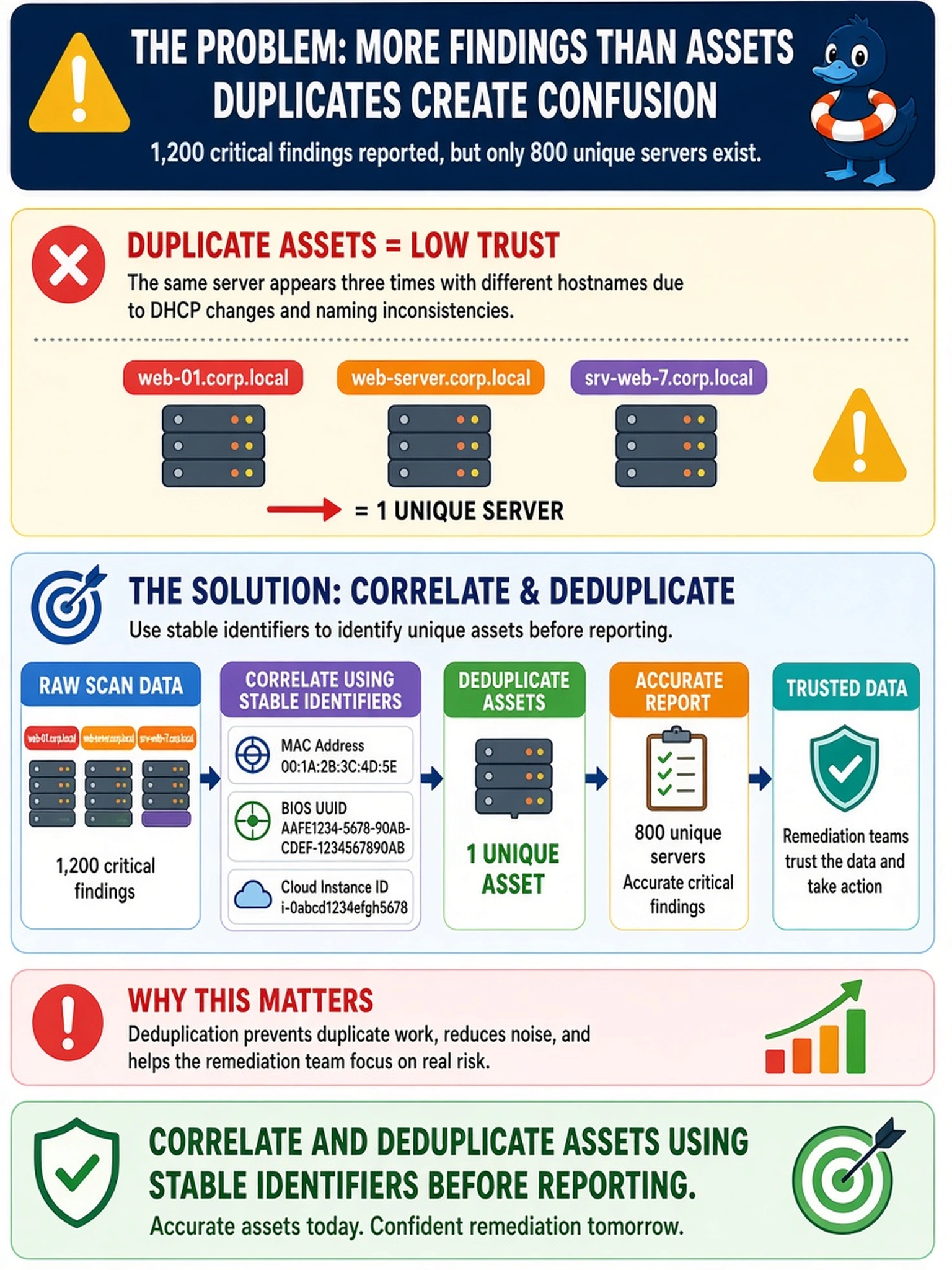
Your vulnerability scanner report lists 1,200 critical findings, but the asset inventory shows only 800 unique servers. The same server appears three times with different hostnames due to DHCP changes and naming inconsistencies. What is the most appropriate immediate action to ensure the remediation team trusts and acts on this data?
Select an answer to reveal the explanation.
Short Explanation
Think of your vulnerability data like a messy spreadsheet: if the same customer appears five times, your sales total is wrong. You can't fix the problem if you don't know who owns the asset. You need to clean the data first so the remediation team sees one real problem, not three ghosts.
Full Explanation
Accurate vulnerability management relies on asset integrity. When hosts appear multiple times due to DHCP leases or inconsistent naming, the scanner treats them as distinct entities, inflating the critical count. The correct approach is to correlate these entries using stable identifiers, such as MAC addresses or UUIDs, to deduplicate the asset list before generating reports. This ensures the remediation team receives a single, actionable ticket per unique asset. Increasing scanner timeouts addresses connectivity or depth issues, not asset identity duplication, and does not resolve the reporting discrepancy. Creating separate tickets for each hostname creates noise and duplicates workload, leading to alert fatigue and potentially missed remediation because the team sees fragmented data. Manually renaming hosts is an inefficient, temporary fix that does not address the root cause of inconsistent discovery methods or dynamic IP assignments, and it may break existing integrations or historical trend analysis. Exam caveat: Always prioritize data hygiene and asset correlation before interpreting volume-based metrics like total critical vulnerabilities. Operational check: Verify that your SIEM or vulnerability management platform is configured to normalize asset IDs across on-premises and cloud sources to prevent duplicate findings.