
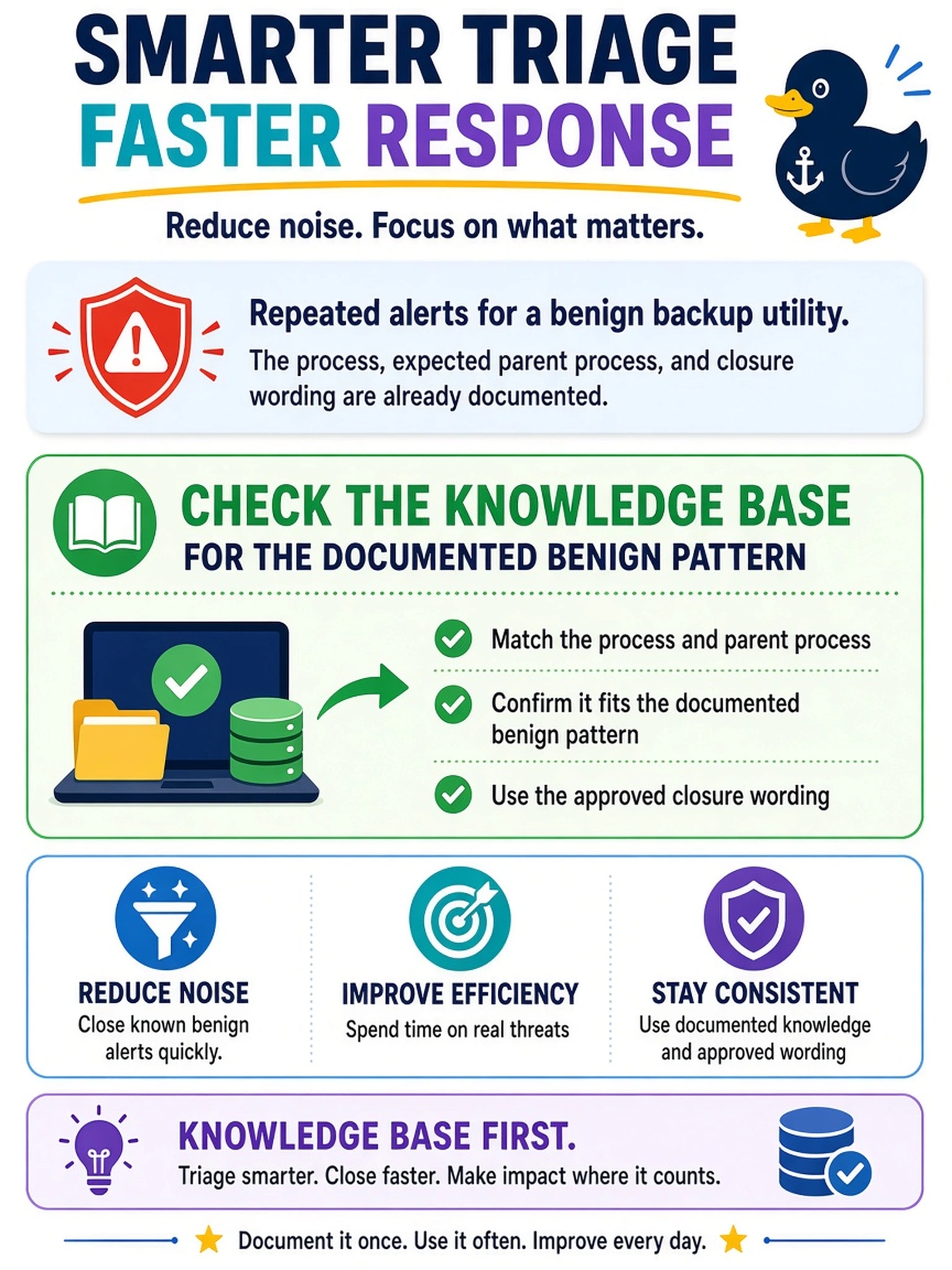
Your SOC receives repeated alerts for a benign backup utility. The team has already documented the process, expected parent process, and closure wording. What should the analyst do first to improve triage efficiency?
Select an answer to reveal the explanation.
Short Explanation
Think of the knowledge base as your team's memory, not just a filing cabinet. If you've already solved the same backup-utility alert, you don't have to reinvestigate it from scratch. Check the documented pattern first, then close or escalate based on what's already been accepted.
Full Explanation
Knowledge-base articles are operational artifacts, not just documentation. They capture known benign patterns, validated investigation steps, and approved response decisions so future analysts can triage faster without repeating the same manual work. When a repeat alert matches a documented pattern, the efficient action is to reference the article, verify the match, and use the approved closure or escalation guidance. This reuses institutional knowledge while preserving accountability. Suppressing all traffic from a utility before managerial approval reduces visibility and can hide abuse of the same process, so it is not the first efficient action. Escalating every matching alert to threat hunting consumes scarce investigative capacity and defeats the purpose of documenting a known benign pattern. Capturing a full forensic image before basic triage is disproportionate to a low-risk, repeat alert and delays containment or closure for cases that need it. Exam caveat: efficiency questions reward using validated process knowledge, not shortcutting controls or eliminating monitoring. Operational check: review knowledge-base entries for indicators, expected process lineage, benign rationale, approved closure wording, and a periodic review date.