
An analyst suspects a specific ransomware variant is active on a compromised endpoint. The EDR agent is offline, but the analyst has remote access to the file system and wants to identify infected files by matching known binary signatures against on-disk artifacts. Which tool is most appropriate for this task?
Select an answer to reveal the explanation.
Short Explanation
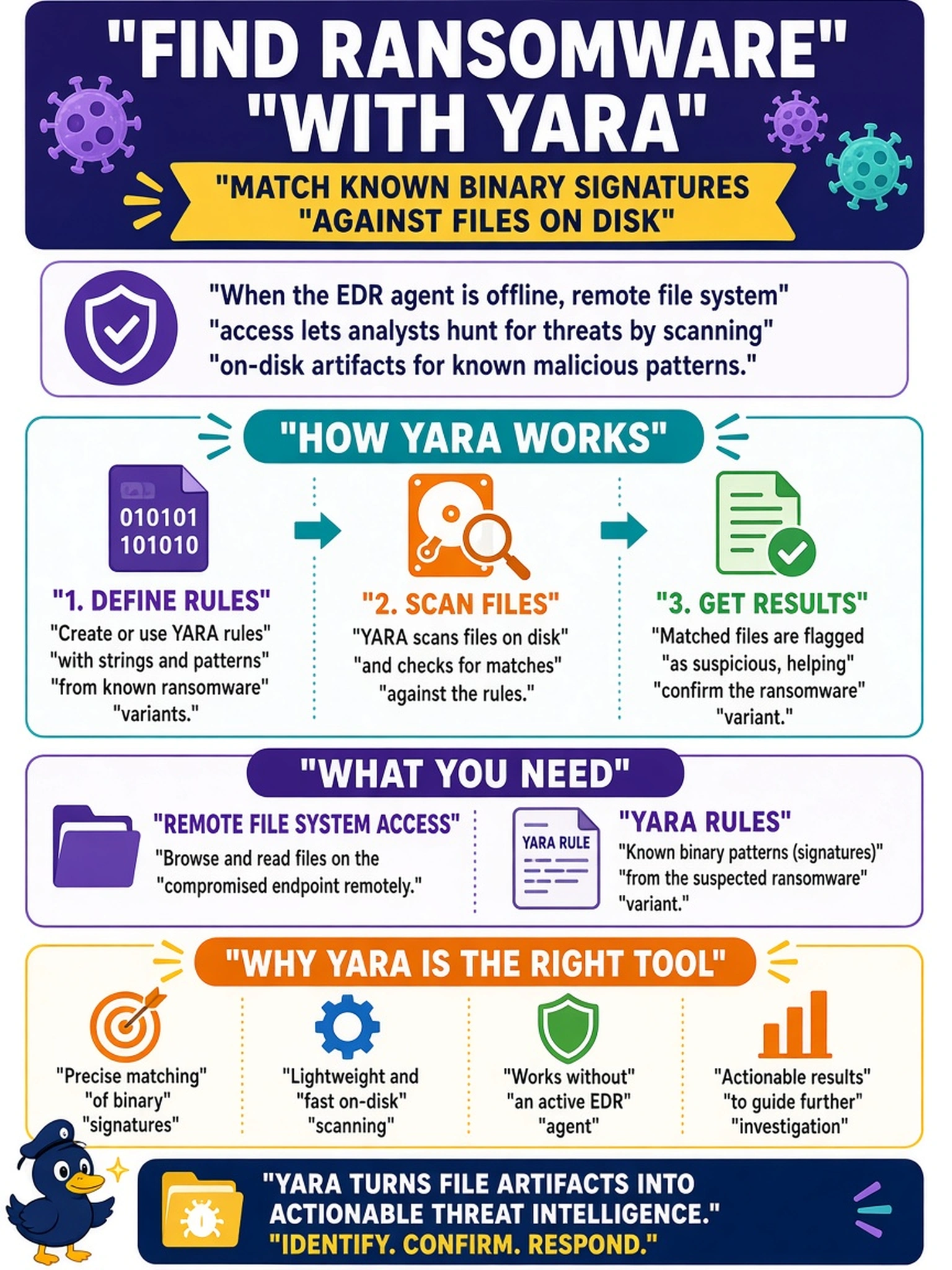
Think of YARA like a digital fingerprint scanner for files: if you've got known malware patterns, it hunts through disk or memory and flags matches. NetFlow, Wireshark, and Nmap only watch the network or map ports, so they won't inspect a file's innards for ransomware signatures. That's the trap—artifact discovery needs YARA, not traffic or port tools.
Full Explanation
YARA identifies files or memory artifacts by applying rules that match byte sequences, strings, or other file characteristics. It is appropriate when the analyst needs to search on-disk artifacts for known malware signatures, especially when endpoint telemetry is missing. The tool works by scanning file contents and returning matches based on pattern logic, not by observing network conversations or host availability. NetFlow summarizes flow records such as source, destination, ports, and volumes; it reveals traffic behavior but cannot inspect file bytes for a ransomware signature. Wireshark captures and decodes network packets, which helps analyze C2 or protocol anomalies, but it does not scan dormant files on a disk for malware patterns. Nmap discovers live hosts, open ports, and services through network probes, so it is suited to mapping exposure rather than performing binary artifact matching. Exam caveat: Do not confuse YARA with real-time antivirus prevention; it is a hunting and triage pattern-matching engine. Operational check: Update YARA rules from trusted threat intel feeds, then scan a small isolated sample set before broad deployment.