
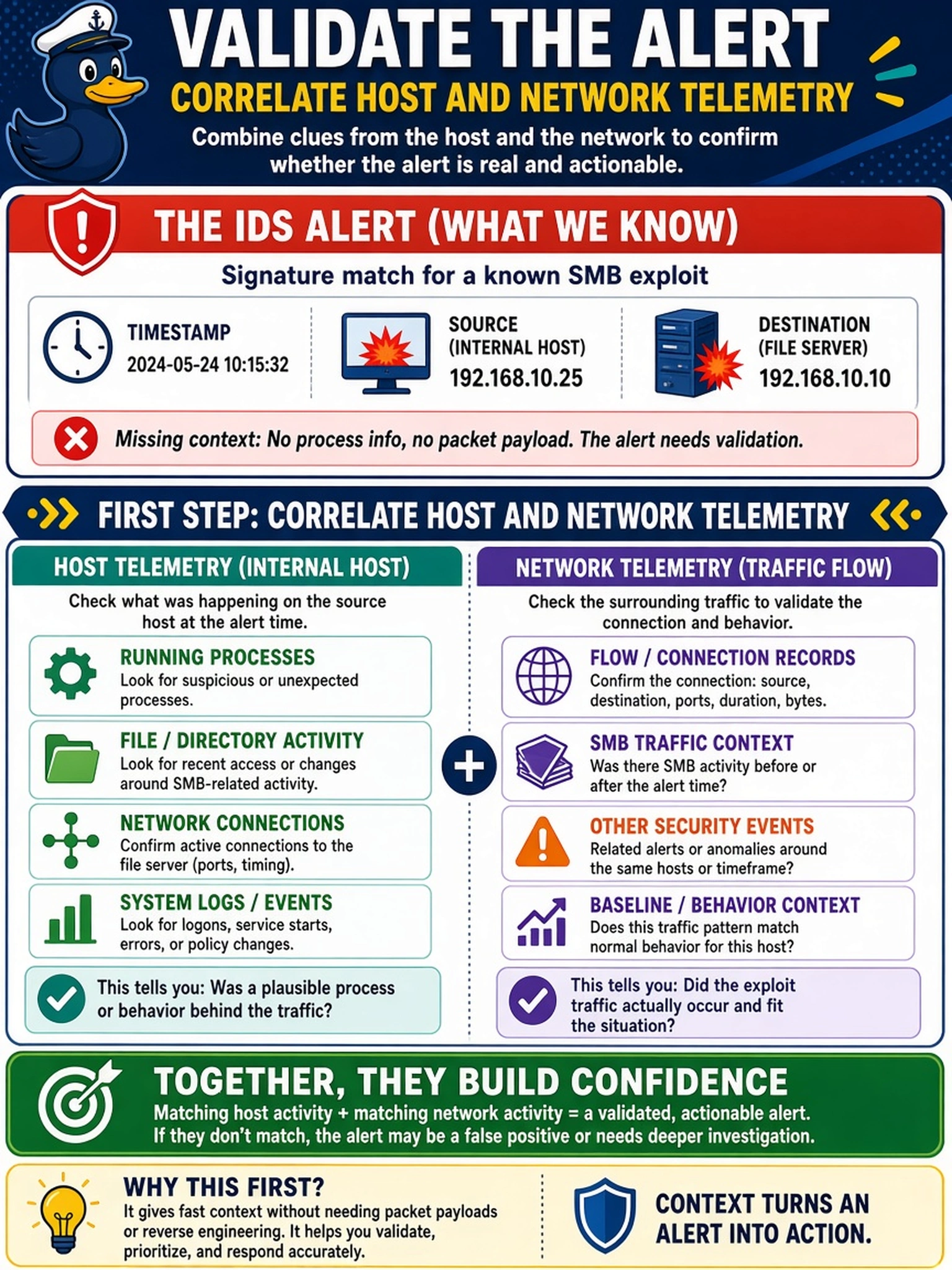
An IDS generates a signature alert for a known SMB exploit from an internal host to a file server. The alert includes timestamp and source/destination but no process or packet payload. What should the analyst do first to validate the alert?
Select an answer to reveal the explanation.
Short Explanation
Think of an IDS alert like a car alarm: it tells you something hit the window, not who did it. You validate it by pulling host and network telemetry to see if the process, packets, and outcomes actually match the signature. Don't rush to containment on a raw alert alone.
Full Explanation
IDS alerts are useful for spotting known exploit patterns, but a signature match is only an indicator, not proof of compromise. The analyst should correlate the alert with supporting telemetry such as EDR process trees, host logs, NetFlow, and packet captures to verify whether the expected payload, command-and-control behavior, or file change actually occurred. This establishes whether the alert represents true positive, false positive, or benign activity. Treating the alert as confirmed malware skips validation and can cause unnecessary containment or missed root cause. Escalating for immediate containment based solely on the IDS alert bypasses triage and may disrupt legitimate traffic when signatures are noisy. Ignoring the alert until another signature matches creates detection debt, because one alert may be the only evidence of reconnaissance or a low-noise attack. Exam caveat: CS0-004 expects analysts to validate detections with context before taking action. Operational check: pivot from the alert timestamp and source/destination to SIEM logs, EDR process events, and packet captures within the alert window.