
Open-data API pods are rolled out gradually. How should new instances receive traffic only when ready?
Select an answer to reveal the explanation.
Short Explanation
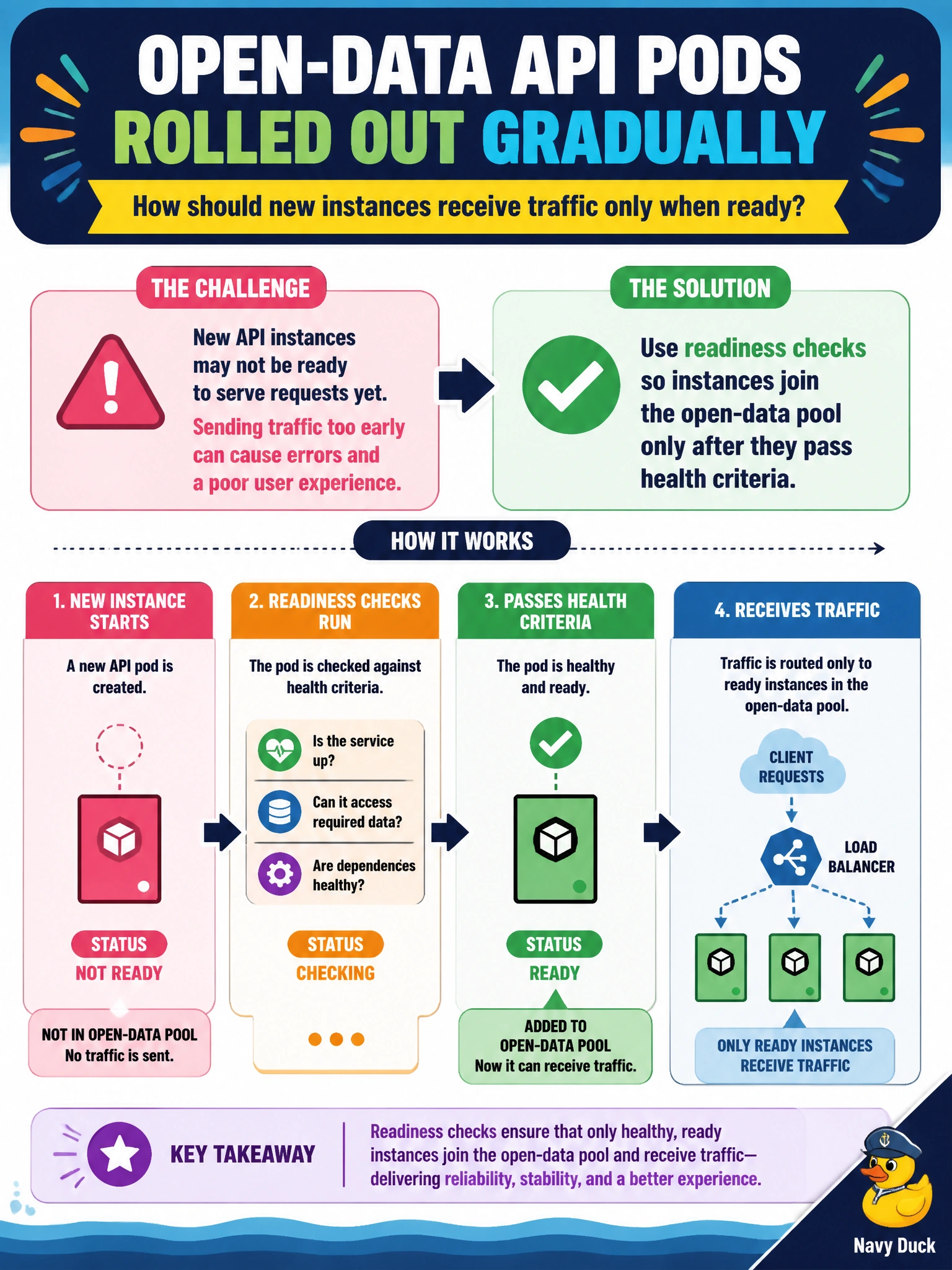
Readiness probes are the "API window opens only when the open-data clerk is actually at the desk" check. Instant traffic on a half-booted pod dumps citizens into an empty window.
Full Explanation
Readiness checks gate whether an instance may receive traffic. During gradual rollout of open-data API pods, new instances should join the serving pool only after they pass readiness criteria (process up, dependencies reachable, warm-up complete). That prevents half-booted pods from answering citizen and developer API calls with connection errors during a rolling update.
Sending traffic immediately on container start with no readiness probe fails by concept because start ≠ ready; cold pods will drop requests. Marking every pod Ready permanently in the load balancer regardless of probe results fails by bypassing health signals and forcing unhealthy endpoints into the pool. Disabling probes and relying on citizen complaints to detect failed starts fails because production users become the health check—unacceptable for a municipal open-data API.
Exam caveat: readiness (traffic admission) differs from liveness (restart when wedged). A pod can be alive yet not ready. Rolling updates should combine readiness with batch controls so capacity counts only Ready instances. Know which probe protects users from premature traffic.
Operational check: deploy a new open-data revision with a readiness probe that fails until warm-up completes; confirm the endpoints are not in the load balancer during that window. Break the probe condition in a test environment and confirm the pod never receives traffic while failing readiness.