
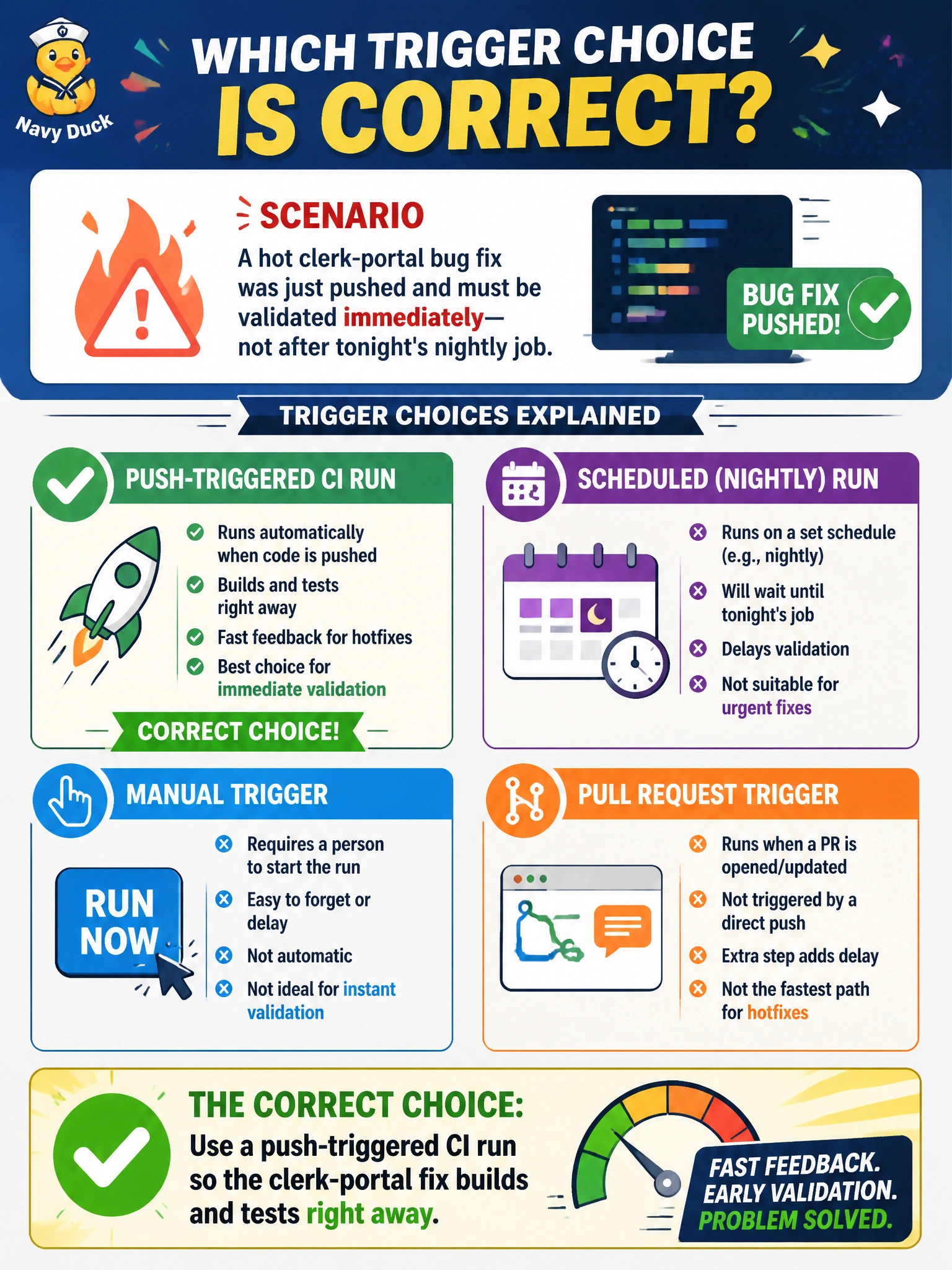
A hot clerk-portal bug fix was just pushed and must be validated immediately—not after tonight's nightly job. Which trigger choice is correct?
Select an answer to reveal the explanation.
Short Explanation
When a hot clerk-portal fix lands, you want push-triggered CI to ring the doorbell and start building and testing right away. The nightly schedule is an overnight sweep, so you shouldn’t make citizens wait for tonight’s broom.
Full Explanation
A push-triggered CI run is correct because it builds and tests the hot clerk-portal fix as soon as the change lands, giving you immediate feedback before wider promotion. Unlike a clock-based nightly job, it responds to the individual push rather than waiting for a scheduled time. When citizens may use the portal during business hours, an overnight sweep leaves a defect unvalidated for too long. Deferring validation to the nightly schedule fails because it ignores the urgency of the fix and may leave the bug in use all day. Disabling all triggers and validating only during the next fiscal-year freeze fails because it removes continuous validation and stretches feedback beyond operational usefulness. Relying solely on a monthly schedule that ignores individual pushes fails for the same conceptual reason as waiting for the nightly run: a time-based trigger does not start work when the hot fix lands. Exam caveat: scheduled triggers can still serve periodic full suites, dependency refreshes, or dormant branches; the distinction is to match the trigger to the urgency, so an immediate fix calls for a push trigger rather than waiting for the clock. Practical check: push the fix and confirm that a CI run starts within normal webhook latency and exercises the relevant tests, rather than waiting for the nightly cron. In a non-production experiment, disabling push triggers should delay feedback until the schedule, demonstrating the failure mode to avoid.