
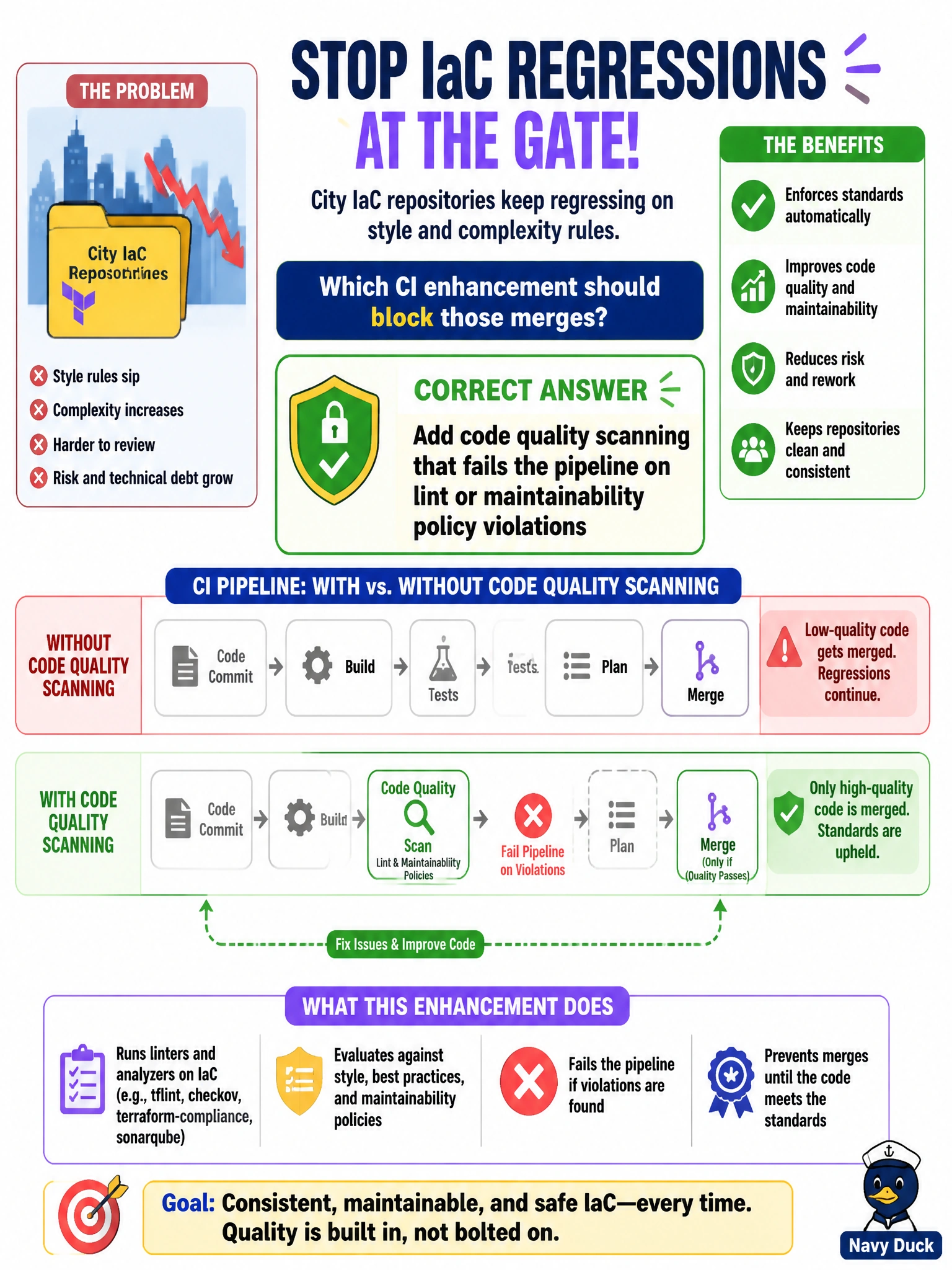
City IaC repositories keep regressing on style and complexity rules. Which CI enhancement should block those merges?
Select an answer to reveal the explanation.
Short Explanation
Quality scanning is the grammar check before the city IaC memo goes public—style and complexity rules catch messy changes early. Waiting until production is grading the essay after it already shipped.
Full Explanation
Code quality scanning is a CI pipeline enhancement that enforces lint and maintainability policies before merge. City IaC repositories that keep regressing on style and complexity rules should fail the pipeline when those policy violations appear, so messy Terraform or related automation cannot land unnoticed. The correct enhancement works because IaC is production-affecting code for municipal infrastructure; consistent style and bounded complexity improve reviewability and reduce unsafe copy-paste patterns that create divergent environments across departments.
Removing linting so authors never see style feedback fails because silence guarantees regression—without a gate, formatting and complexity debt accumulate until reviews become guesswork. Accepting any formatting as long as the Terraform plan exits zero fails conceptually: a clean plan does not mean readable, reviewable, or maintainable code; plan success and quality policy are different controls. Deferring all quality checks until after production deploy completes fails because the right time to block maintainability violations is pre-merge, not after citizens already depend on the applied infrastructure.
Exam caveat: tune rules to the team's IaC standards and phase severity—start by failing on high-impact rules (security lints, mandatory tags) so the gate is respected rather than broadly ignored. Operational check: introduce a deliberate lint violation in a city IaC PR, confirm the quality scan fails the pipeline, fix the violation, confirm green, and keep quality scan results visible in the PR checks list for reviewers.