
A clerk workstation needs a disk-cleanup script: sometimes an admin watches it live, sometimes it must run overnight unattended. Which local-execution distinction matters?
Select an answer to reveal the explanation.
Short Explanation
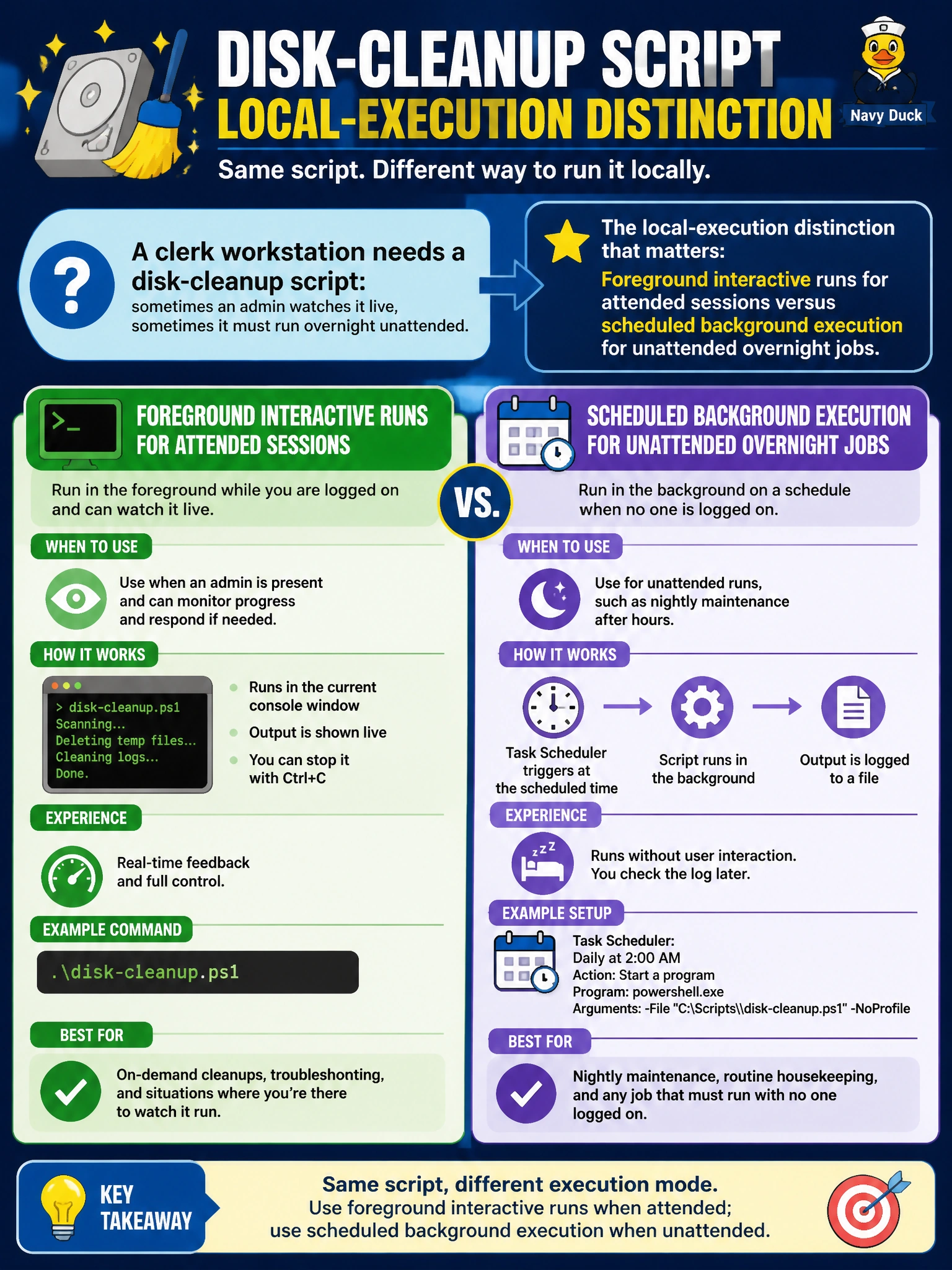
Foreground is you watching the washer; background is the timer that runs laundry at 2 a.m. Clerk disk cleanup needs both patterns: attended foreground when an admin is present, scheduled background overnight. Forcing GUI clicks for every night job does not scale.
Full Explanation
Clerk workstation disk-cleanup automation needs two local-execution modes: foreground interactive runs when an administrator is attending the session, and scheduled background execution when the job must run overnight unattended. Foreground mode supports observation, prompts, and safe intervention; background mode (Task Scheduler, cron, or a service account job) supports unattended maintenance windows without requiring a live GUI click. Distinguishing those modes prevents forcing overnight work to wait on an interactive desktop that nobody is watching.
Always requiring an interactive GUI click even for overnight jobs fails because unattended schedules cannot satisfy a human click dependency and the job will simply not run. Running cleanup only when a citizen is booked at the counter fails on concept and privacy/ops sense—maintenance should not be coupled to constituent appointments. Disabling local scripts entirely in favor of mailing files to a vendor fails the local-execution requirement and introduces slow, opaque third-party handling for routine disk cleanup.
Exam caveat: background jobs still need least-privilege service identities, logging, and success/failure monitoring; "unattended" does not mean "unobserved forever." Foreground is for attended troubleshooting or one-off supervised runs.
Operational check: run the cleanup interactively under admin observation once to validate behavior, schedule the same script overnight under a service context, confirm logs show success without GUI prompts, and remove any design that blocks overnight execution on a required click or citizen booking signal.