
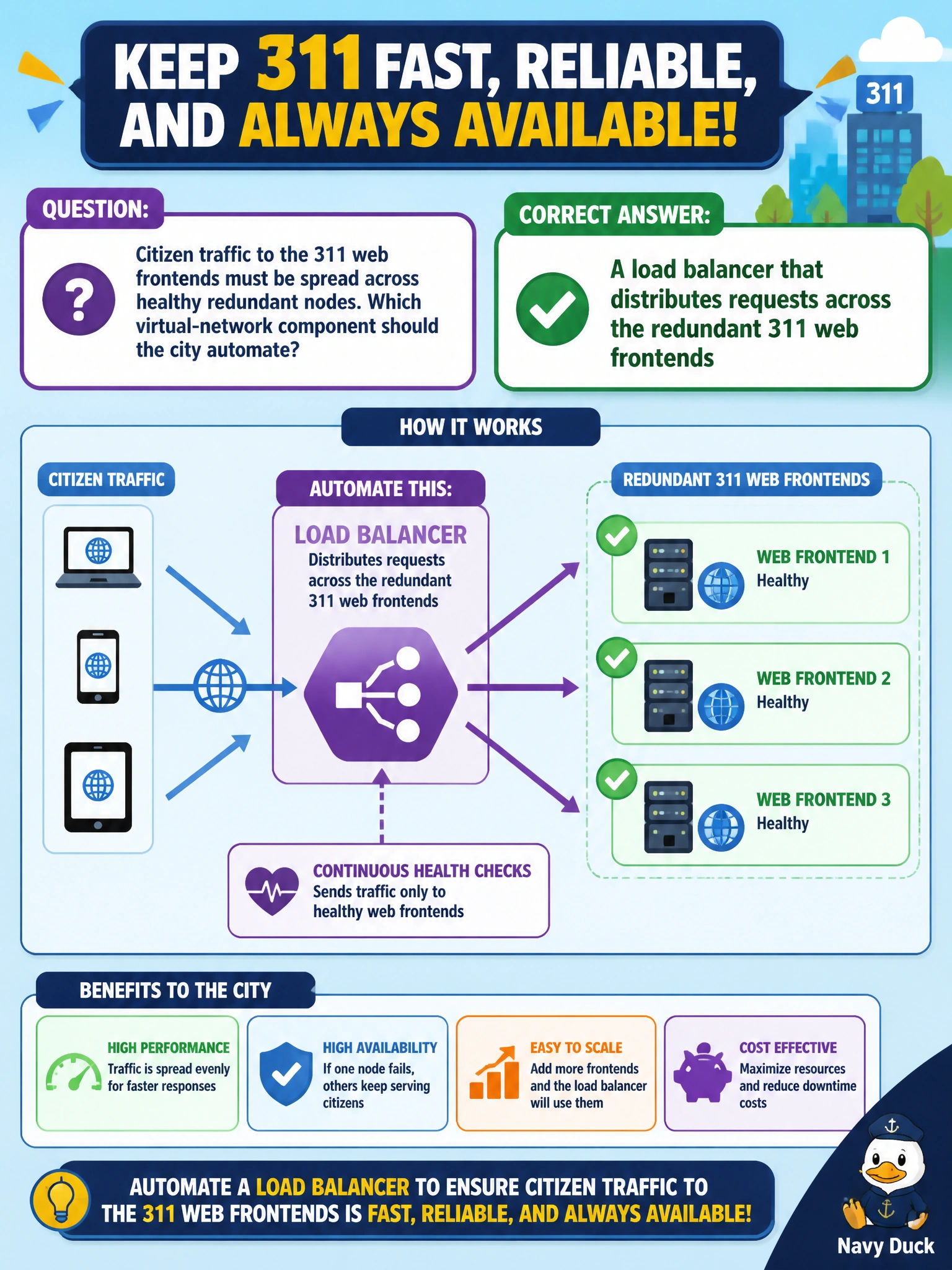
Citizen traffic to the 311 web frontends must be spread across healthy redundant nodes. Which virtual-network component should the city automate?
Select an answer to reveal the explanation.
Short Explanation
A load balancer is the traffic cop at city hall's front door—sending citizens to whichever window is open instead of one forever-busy clerk. Automating an LB across 311 frontends keeps the portal up when a node fails. Hosts files and hand-edited DNS are not how you run citizen-facing scale.
Full Explanation
Citizen traffic to redundant 311 web frontends should be terminated on a load balancer that distributes requests across healthy pool members. Automating that virtual-network component gives the city a single stable VIP or frontend address while capacity and redundancy live behind it. Modern load balancers also integrate health checks so failed nodes leave rotation, which is exactly how municipal portals stay available when individual web nodes crash, deploy badly, or fail readiness probes.
A single static hosts-file entry on every citizen laptop fails because the city does not control citizen endpoints at scale, hosts files do not provide health-aware distribution, and client-side static mapping cannot track municipal infrastructure changes. Manual round-robin DNS edited by help desk after each outage fails on operational concept: human DNS edits are slow, error-prone, cache-delayed, and not a substitute for an automated load-balancing plane. Directing citizen browsers to a database primary for HTML rendering fails both architecture and security: databases are not web frontends, exposing them to citizens collapses tiers, and HTML delivery belongs on the web tier behind controlled ingress.
Exam caveat: DNS can still point the public name at the load balancer, and you may still use multiple availability zones; the component that actively distributes across redundant frontends is the load balancer. Do not confuse "having two servers" with "having automated distribution and failover."
Operational check: resolve the 311 hostname to the load-balancer address, generate test traffic and confirm distribution or failover when one frontend is stopped, verify unhealthy members are removed from the pool, and ensure no public path targets database listeners for citizen HTML.