
A water utility needs config management to remember which packages must exist on SCADA jump hosts across applies. What concept does that require?
Select an answer to reveal the explanation.
Short Explanation
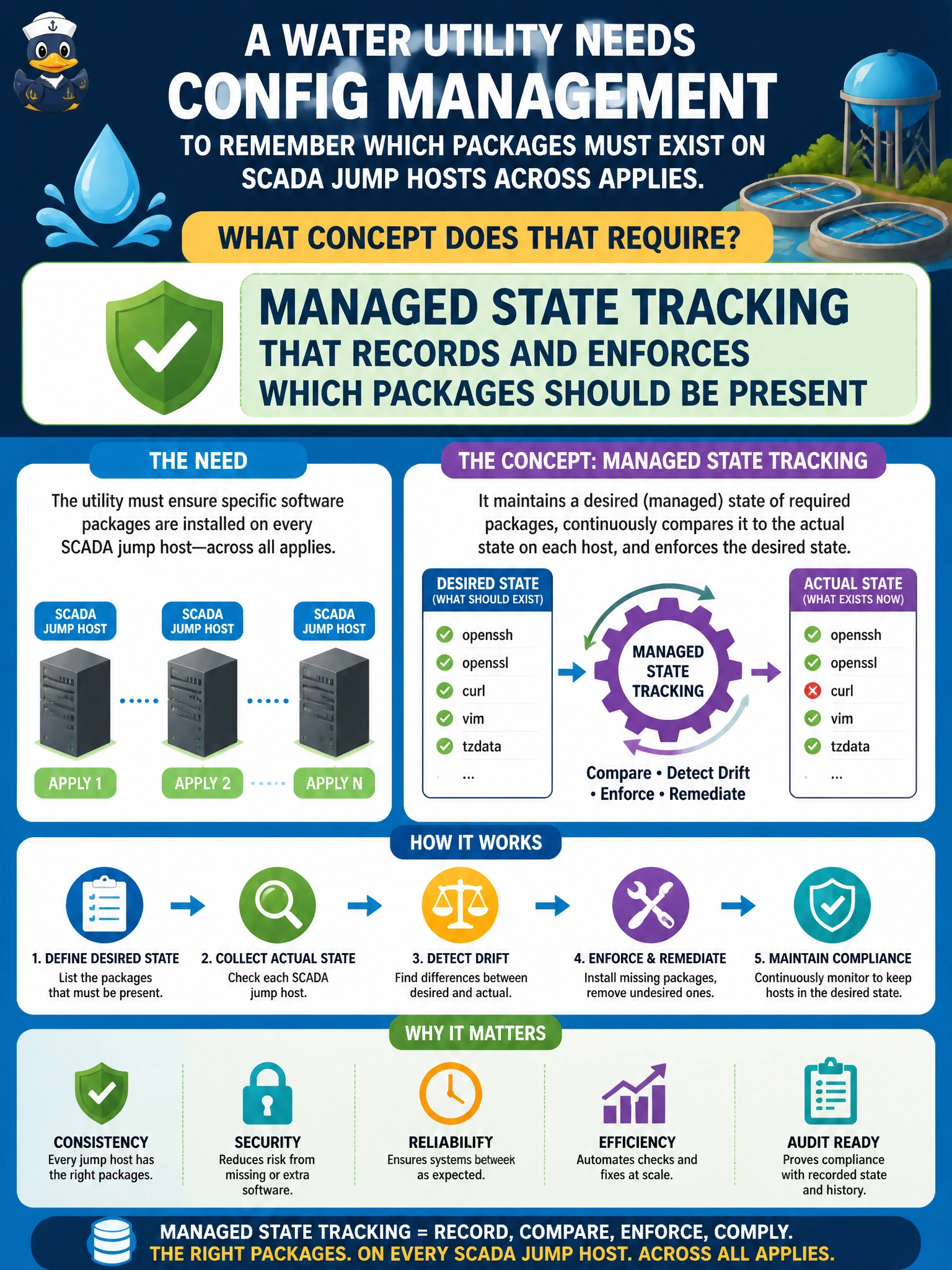
State management is the utility's shopping list that the system keeps checking—flour stays in the pantry, not just 'someone bought it once.' Jump-host packages need that remembered desired set. Sticky notes and one-shot shell installs forget.
Full Explanation
Utility jump hosts that must keep a defined package set present require managed state tracking: the configuration system records which packages should be installed (and often versions) and continuously enforces that inventory. State management turns “someone installed tcpdump once” into “tcpdump is present on every jump host according to policy,” surviving rebuilds, accidental removals, and partial manual fixes.
Manual sticky notes on each chassis listing last week’s RPM set are not enforceable state; they drift as soon as a technician installs a debugging tool. Disabling package inventories so agents never report installed software removes visibility needed for compliance and forensics. One-time shell installs with no record in the configuration system recreate the snowflake problem the municipal platform is trying to escape.
Exam caveat: ensure-present is not identical to ensure-latest. Pinning versions may be required for change control on jump hosts that bridge sensitive networks. State tracking also implies deciding what must be absent (unauthorized compilers, old admin tools). Exam options that celebrate one-time installs ignore convergence after reboot or image refresh.
Operational check: declare the approved jump-host package list in config management, remove a required package on a canary host, converge, confirm it returns, and audit that unauthorized packages are removed or alerted per policy. Export inventory reports for change-advisory evidence.