
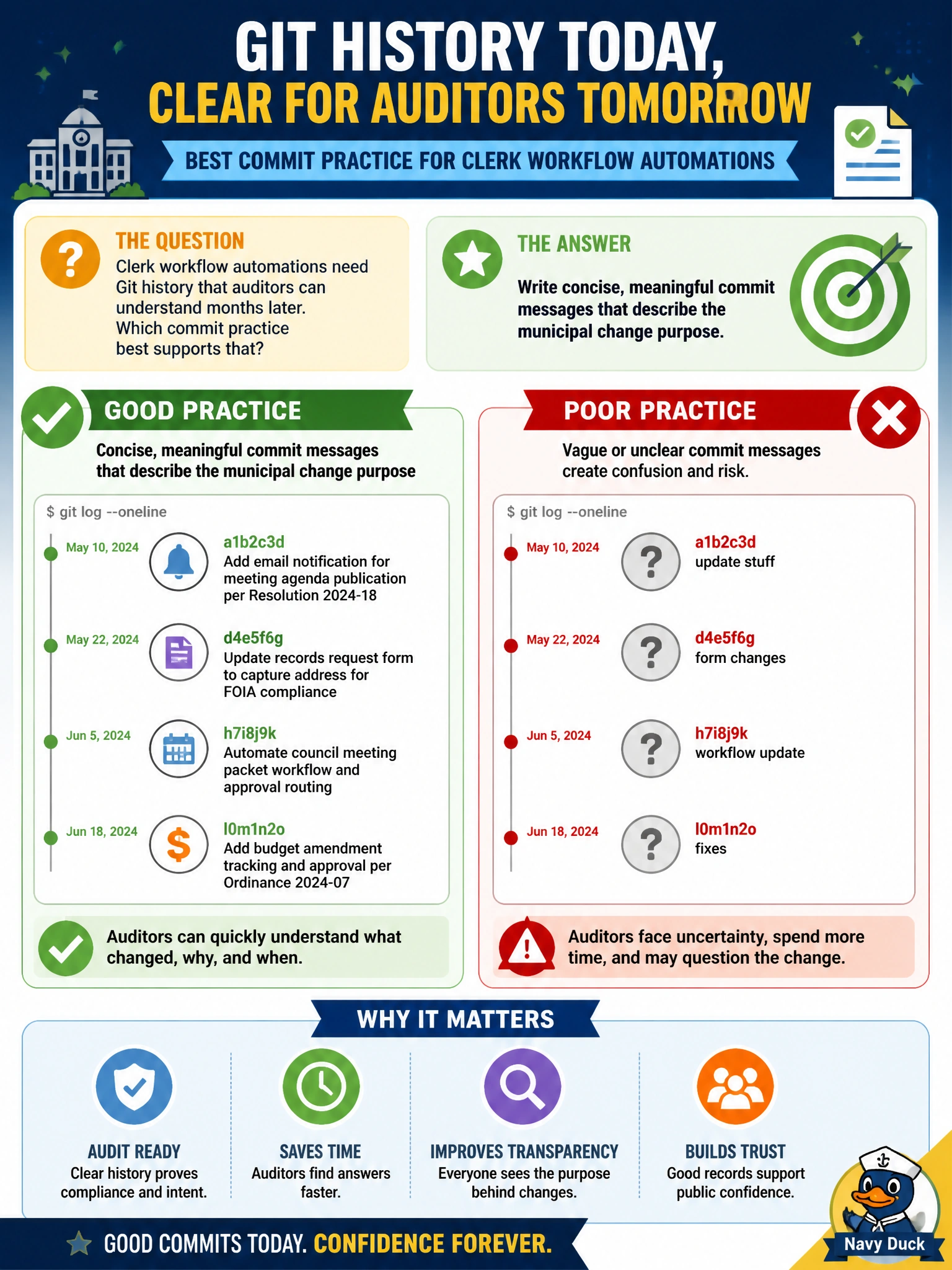
Clerk workflow automations need Git history that auditors can understand months later. Which commit practice best supports that?
Select an answer to reveal the explanation.
Short Explanation
Good commit messages are like clear notes on a clerk’s file jacket — future you (and the auditor) can see why the workflow changed without decoding ‘x’ and ‘misc’.
Full Explanation
Clerk workflow automations need Git history that auditors can understand months later. Concise, meaningful commit messages that describe the municipal change purpose—what changed and why—give reviewers, auditors, and on-call engineers a readable narrative when bisecting regressions or reconstructing who authorized a workflow tweak. Good messages turn the log into an operational timeline rather than noise.
Single-letter messages like x save keystrokes but destroy audit value and make blame/bisect sessions guesswork. Leaving messages empty so Git somehow substitutes a hostname is not how commit messaging works and yields opaque history. Squashing years of history into one misc commit before each audit erases the chronological evidence auditors need and can hide problematic intermediate states.
Exam caveat: meaningful does not mean novels; subject-plus-brief-body tied to ticket IDs is enough. Operational check: sample recent clerk-automation commits, confirm messages state purpose without secrets, and ensure an auditor can map a merge to a change request from the log alone. Prefer imperative subject lines tied to clerk workflow tickets (for example, “Fix docket sync retry for closed cases”) so six-month-later audits do not depend on tribal knowledge of who was on call.