
A new virtual machine cannot be created because the host has almost no datastore space left. Which requirement is blocking it?
Select an answer to reveal the explanation.
Short Explanation
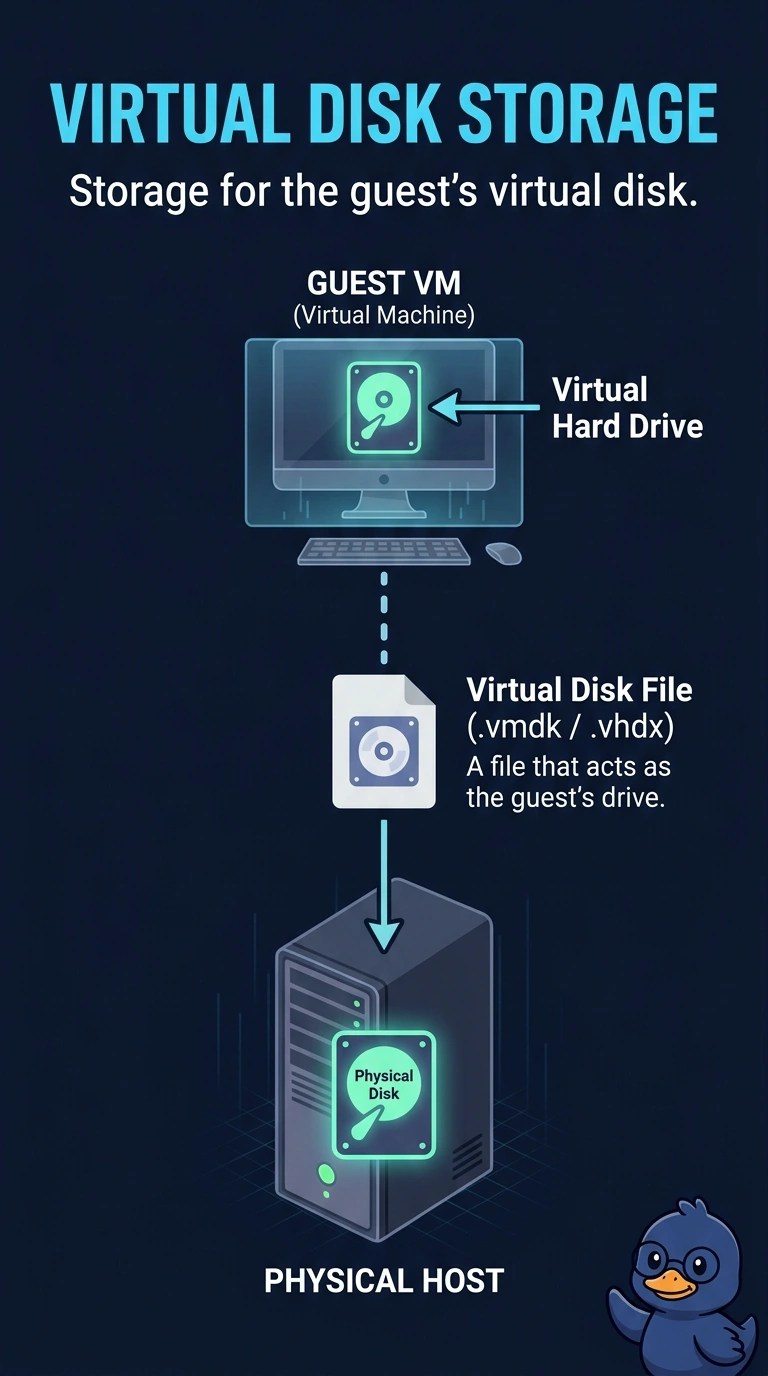
You need room on the host’s datastore for the guest’s disk, and the datastore is nearly full. Storage for the virtual disk is what blocks creation; a TPM stores keys, and a loopback plug tests a network port rather than holding files.
Full Explanation
A virtual machine’s disk is stored on the host’s datastore. Because that datastore is almost out of space, the host cannot create the guest’s virtual disk, so storage is the requirement blocking the new machine. Without disk space, the guest has nowhere to install an operating system. The claim that nothing is needed ignores the full datastore. A TPM stores keys; it is not the virtual disk the guest boots from. A loopback plug tests a network port and does not hold a guest’s files. Exam caveat: memory and CPU can also prevent a guest from being created, but this question specifically identifies a full datastore, making storage the limit. Practical check: record datastore free space, free space or add storage, create the guest, and confirm its virtual disk file appears; compare the free space before and after creation. Leave datastore headroom so the guest can grow its disk later.