
An application runs only on an older operating system. The shop keeps that older system as a guest on a current host. Which approach is that?
Select an answer to reveal the explanation.
Short Explanation
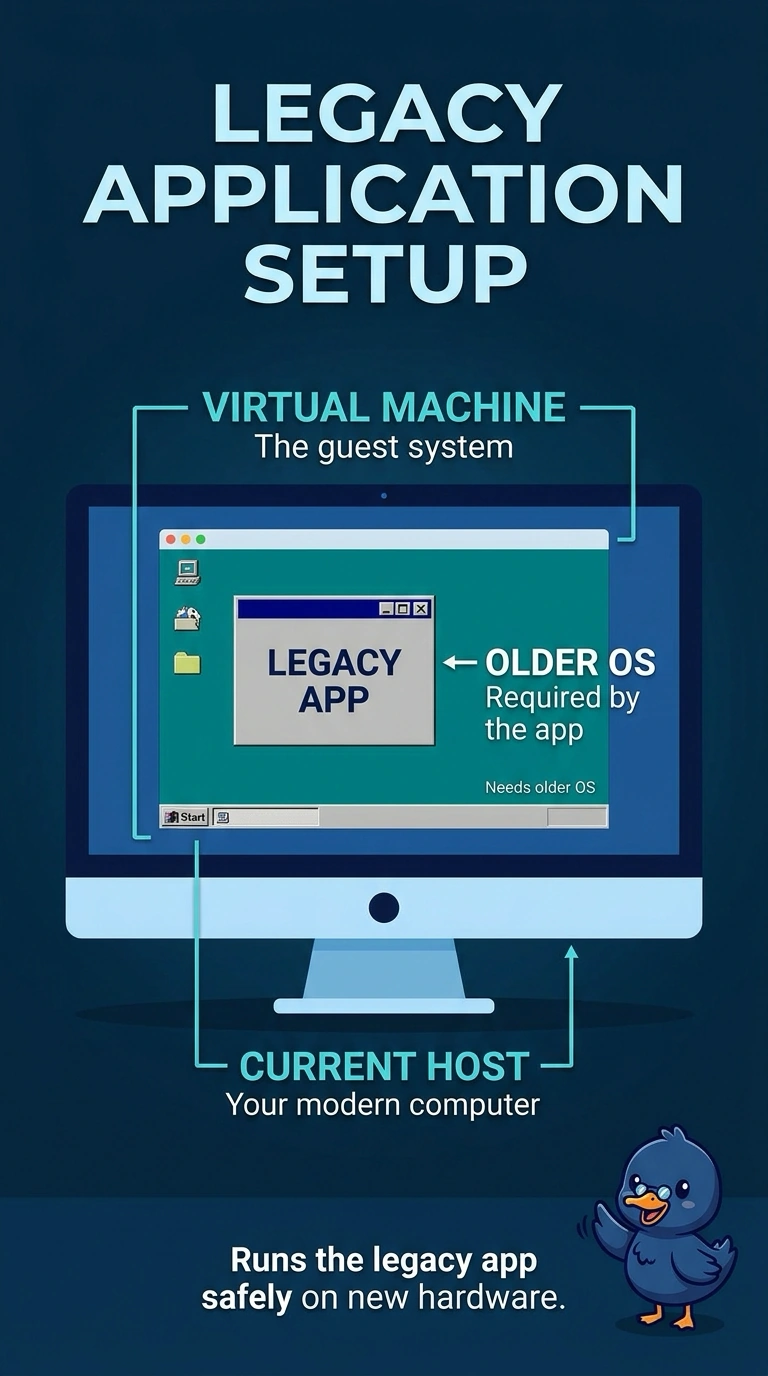
The old application gets an old operating system in a guest room on a new host. You are using a virtual machine for that legacy application. A container that shares the new kernel, a finished website, and a disk mirror do not provide the older system.
Full Explanation
A virtual machine can run an older guest operating system on a current host, which is how a legacy application keeps the system it requires. A container shares the host kernel. It does not provide the older operating system's kernel, so the legacy installer will not see the system it needs. Software as a service would mean the vendor offers the application in the browser. This application only runs on the older operating system, so it is not already a web app. A RAID mirror duplicates disks. It does not run a second operating system. Exam caveat: the guest still needs a valid license for the older operating system, and it should stay off the production network if the old system cannot be patched. Operational check: start the guest, install or open the legacy application, and confirm the current host's desktop is unchanged. Keep the old guest off the production network if it cannot be patched. Open the legacy application inside the guest and leave the host's current desktop alone. Snapshot the guest before anyone changes the legacy application.