
The internet provider's cable at a house is coaxial, and the office router needs Ethernet. Which device converts that provider handoff?
Select an answer to reveal the explanation.
Short Explanation
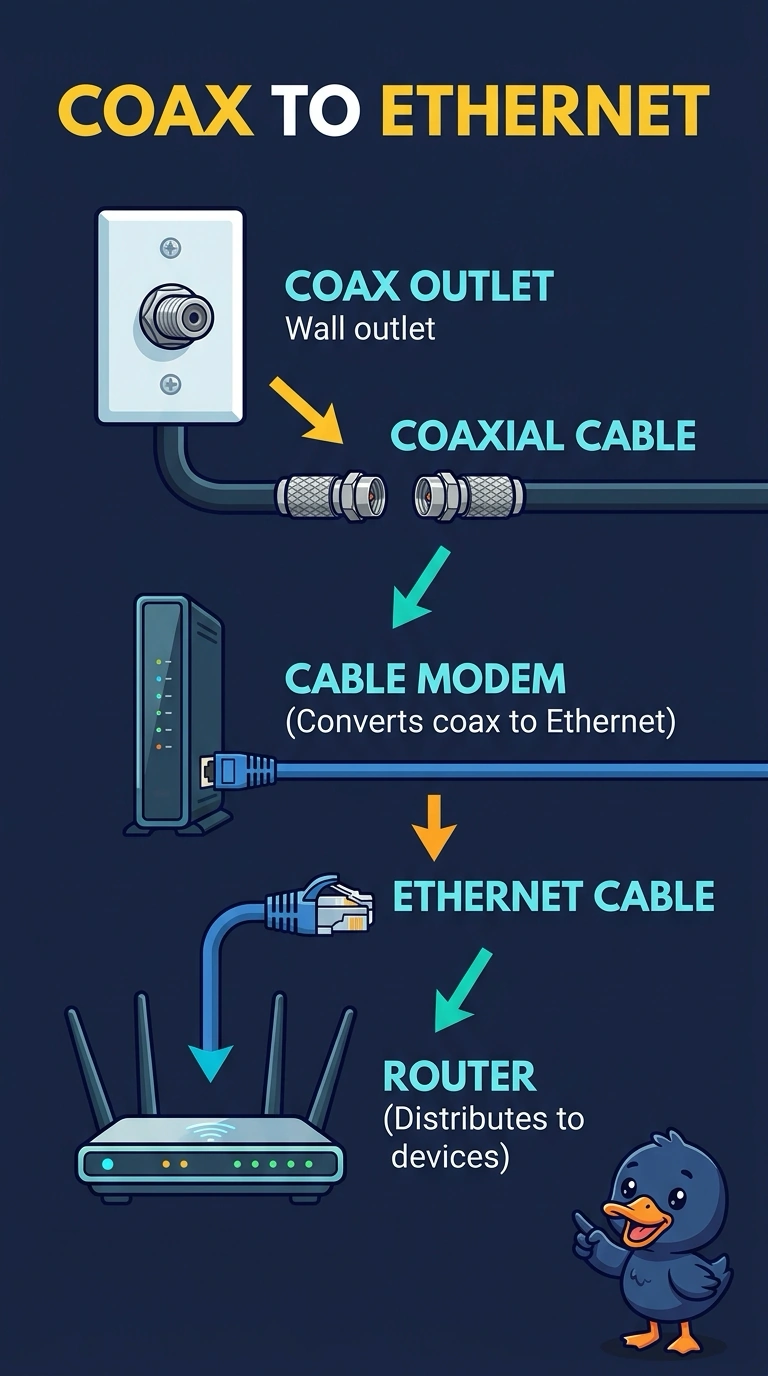
The provider's pipe is the round coax, and the router speaks Ethernet. You put a cable modem between them. A fiber terminal, a phone-line modem, and a jack field do not convert that coax.
Full Explanation
A cable modem terminates the provider's coaxial service and presents Ethernet to the router. Coax in and Ethernet out is that device. An optical network terminal terminates fiber, not coaxial television cable. A DSL modem terminates a phone-line service. It is the wrong converter for a coax drop. A patch panel terminates twisted-pair runs. It does not convert coax to Ethernet. Exam caveat: the modem has to be the one the provider will provision. A retail modem on the wrong standard will not come online. Operational check: connect the coax to the modem, the modem's Ethernet port to the router, and confirm the router receives an address from the provider. Confirm the router receives an address from the provider through the modem. Power-cycle the modem once if the router does not receive an address on the first try. Label the coax, the modem, and the router so the handoff is obvious.