
A technician wants to test a switch port by sending its transmit signal back into its receive side. Which tool does that?
Select an answer to reveal the explanation.
Short Explanation
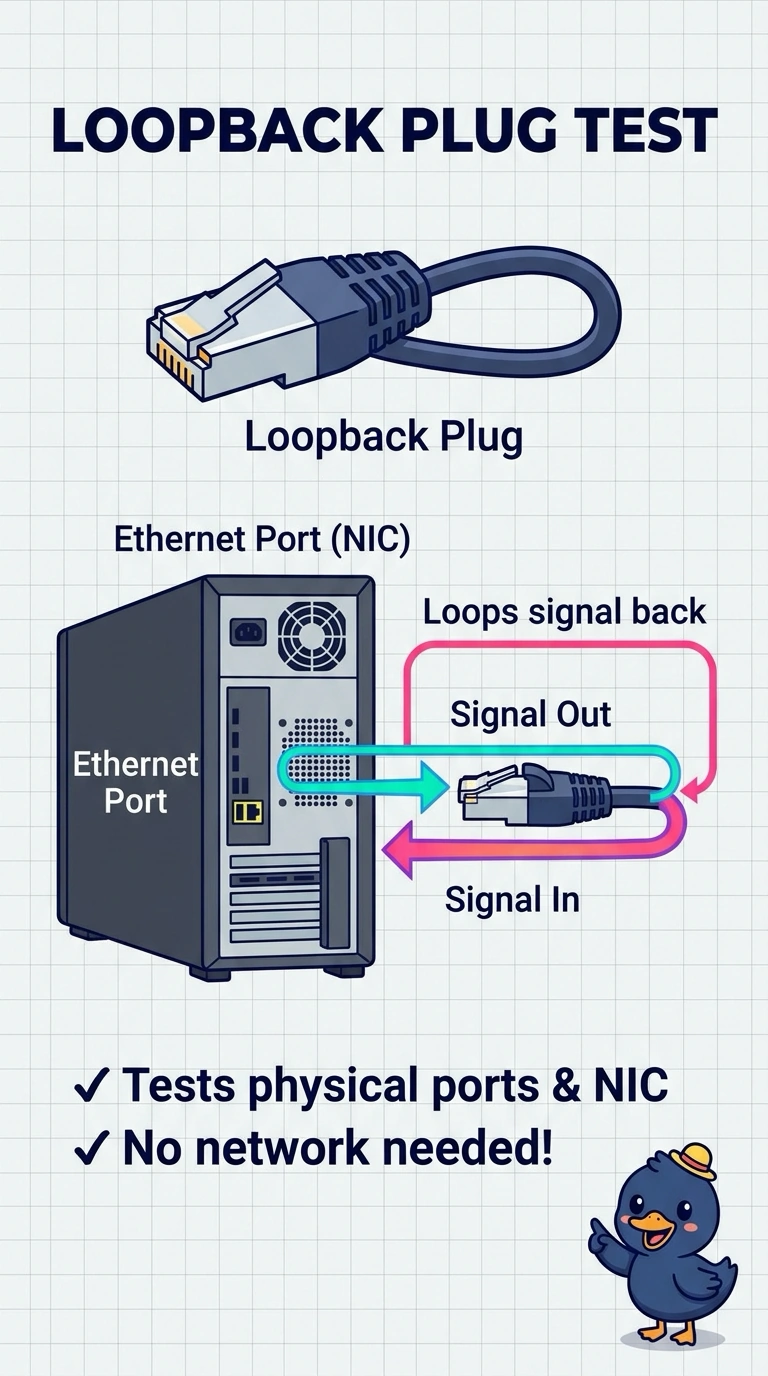
You fold the port's output back into its input so the switch can hear itself. That fold is a loopback plug. A tone box, a crimp tool, and a punchdown tool do not close a port on itself.
Full Explanation
A loopback plug connects a port's transmit path back to its receive path so you can test the port without a cable run to another device. That is the tool for this test. A tone generator puts an analog tone on a pair so a probe can find the cable. It does not loop a switch port. A crimper fastens a modular plug. It is not left in a port as a test. A punchdown tool seats conductors into a jack. It is not a plug the switch can transmit into. Exam caveat: a successful loopback tells you the port can send and receive. It does not prove a cable across the building. Test the cable separately if the far end is the complaint. Operational check: insert the loopback plug, confirm the port shows a link, and remove the plug when the test is done. Remove the loopback plug when the link test is finished. Confirm the port link drops when the plug is removed. Label the loopback plug so it is not left in a live port.