
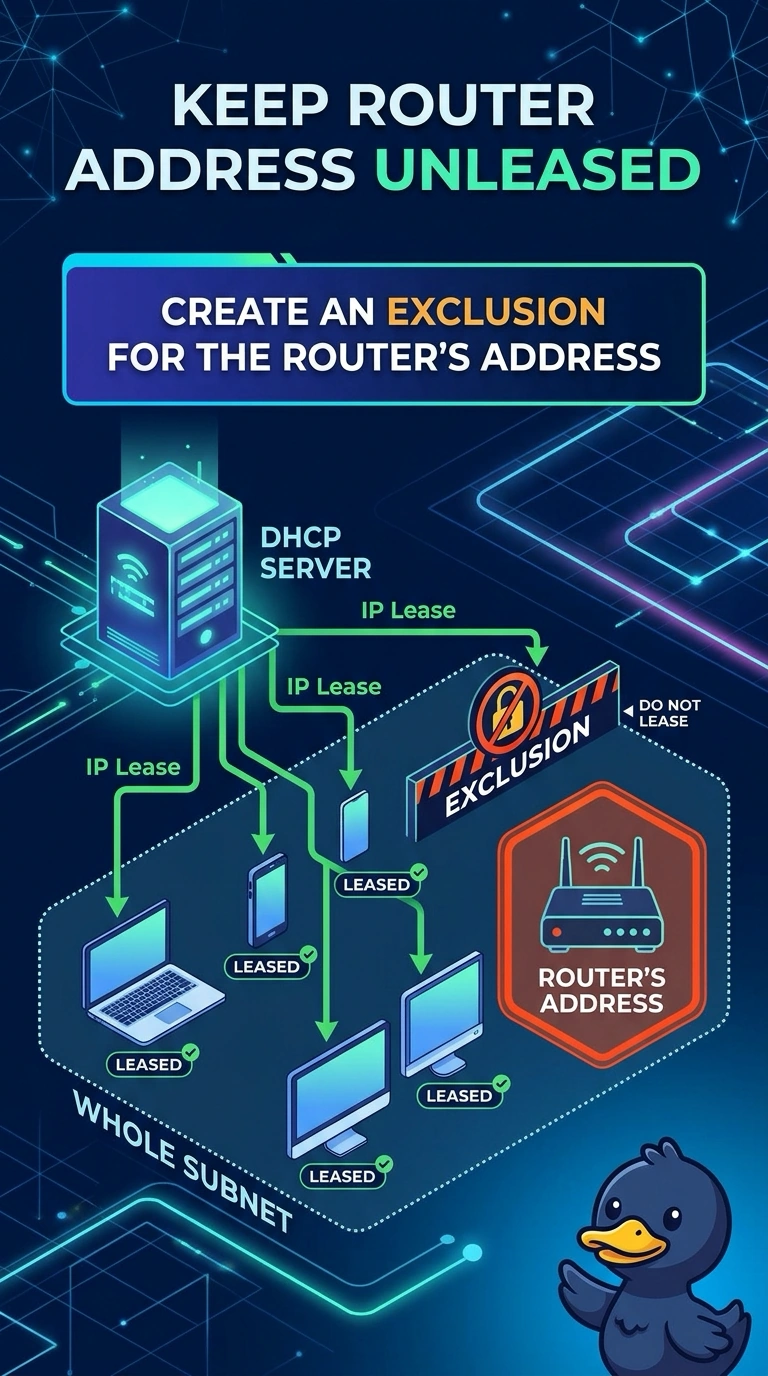
A DHCP scope covers the whole subnet, including the address already configured on the router. The server must never lease that address. Which DHCP feature prevents the lease?
Select an answer to reveal the explanation.
Short Explanation
One chair in the room is already taken by the router, and the address clerk must not seat anyone else there. You exclude that address from the scope. A reservation with nobody's name on it, a mail record, and a longer timer do not keep the clerk from handing out the router's chair.
Full Explanation
An exclusion removes an address from the pool DHCP is allowed to lease. The router's address sits inside the subnet and is already in use, so an exclusion is what stops the server from offering it. A reservation binds an address to a MAC address and is how a client receives a chosen lease. A reservation with no MAC address does not describe a block, and it is not how you protect a device that is not a DHCP client. An MX record names a mail host in DNS. It has no effect on which addresses DHCP may lease. A longer lease time only changes how long a client keeps an address it was given. It does not remove the router from the pool. Exam caveat: exclude the router's address and any other static hosts before the scope goes live. A conflict after the fact is harder to untangle. Operational check: show the exclusion, request a lease from a test client several times, and confirm the router address is never offered. Request several leases from a test client and write down each offer so the router address is shown as absent.