
A layout application sends PostScript, and the shop printer must accept that page-description language. Which printer capability is required?
Select an answer to reveal the explanation.
Short Explanation
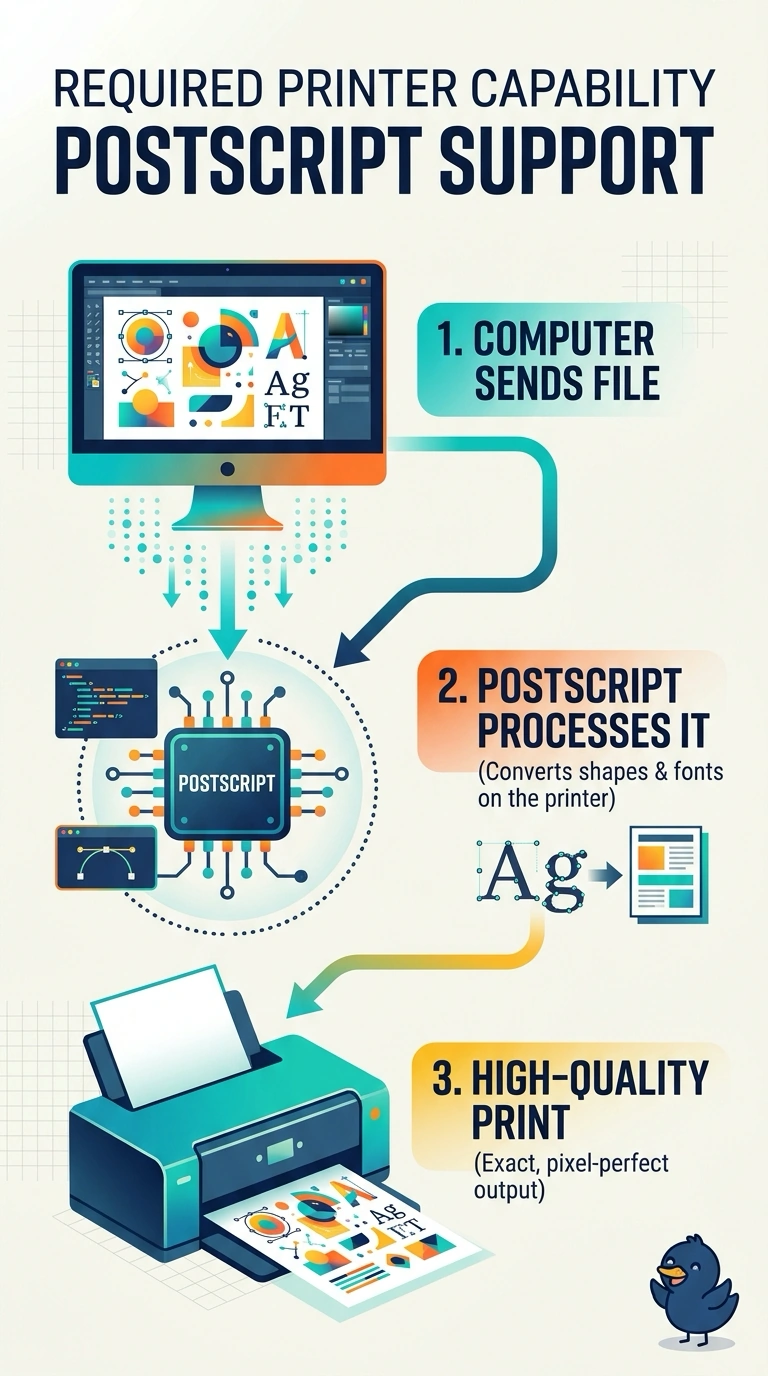
The layout application speaks a particular page-description language, so you need a printer that speaks it too. PostScript support lets the printer interpret the job. A host-based printer that cannot accept PostScript, automatic duplex, and a larger tray do not interpret it.
Full Explanation
PostScript is a page-description language, so when a layout application sends PostScript, the printer—or a path that handles the job—must accept it. PostScript support is the required capability because it lets the printer interpret the page instructions. A host-based printer that cannot accept PostScript is the opposite of the requirement and will not print the job correctly. Automatic duplex prints on both sides of the paper; it is not the PostScript language and does not interpret the job. A larger tray holds more paper, but it does not interpret PostScript either. Exam caveat: a print server may translate a language, so the printer itself needs PostScript support only if the shop has no translator. Practical check: send a one-page PostScript job and compare the output with the layout, including whether the fonts embedded by the application appear correctly. Record the result on the ticket; if the fonts are wrong, confirm that the application embedded them in the job.