
A desktop needs a spinning hard drive that can seek faster than the slow archive drive already on the shelf. Which drive characteristic matters?
Select an answer to reveal the explanation.
Short Explanation
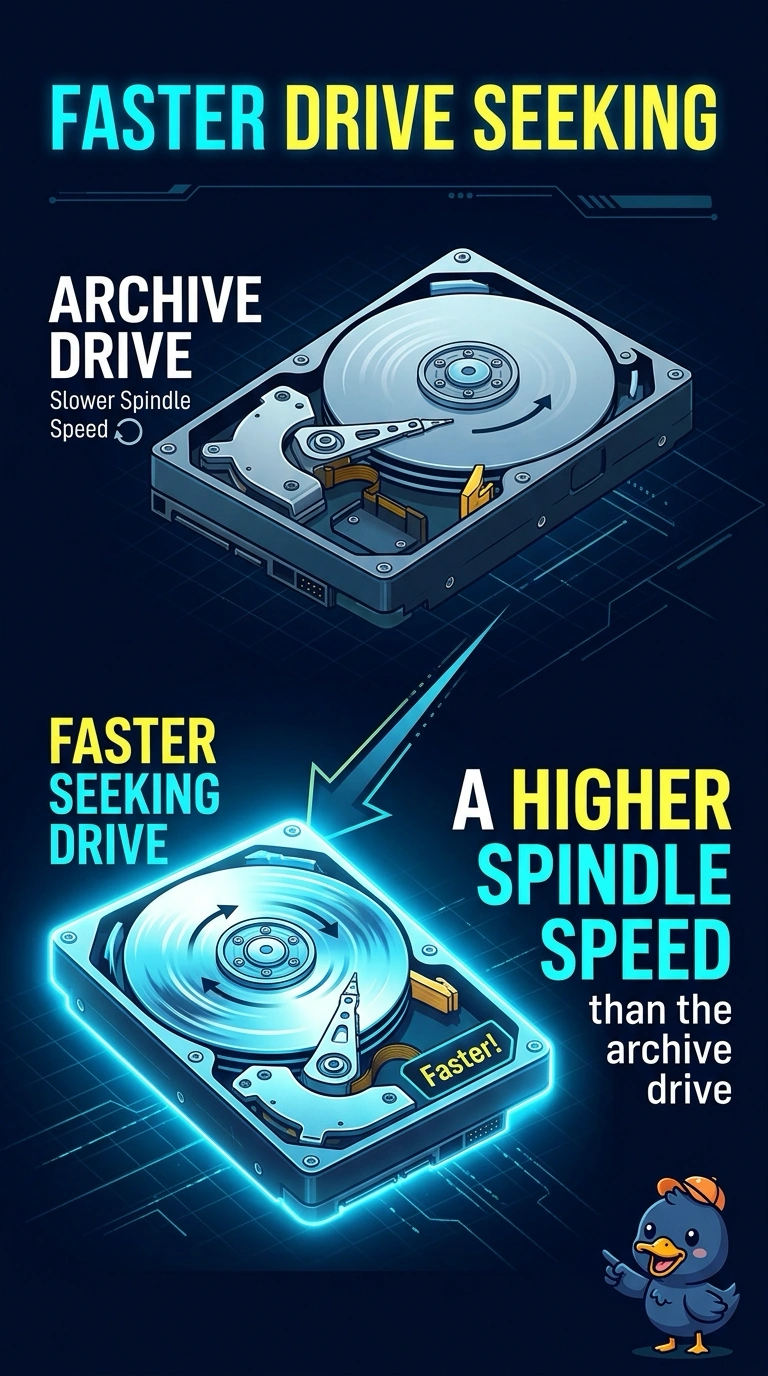
You want the platters to turn faster so the heads can reach data sooner than on the slow archive drive. Choose a higher spindle speed; an optical disc is removable, a SODIMM is memory, and a lower spindle speed will not seek faster.
Full Explanation
Spindle speed is how fast the platters turn, and a higher speed generally seeks and reads faster than a slow archive drive. That is the characteristic the desktop needs. An optical disc is removable media; being removable does not make it a faster hard drive. A SODIMM is memory, not a spinning drive. A lower spindle speed is the slow archive class the desktop is trying to beat, so choosing it for faster seeks reverses the relationship. Exam caveat: a solid-state drive avoids the spindle entirely and is faster still. This stem asks for a spinning drive, so compare spindle speed within that family. Operational check: confirm the new drive is the faster spinning model allowed by the manual, install it, and compare a large read on the new drive with the same read on the archive drive. Record the result on the ticket before closing the call, and do not install the archive drive in the fast bay by mistake.