
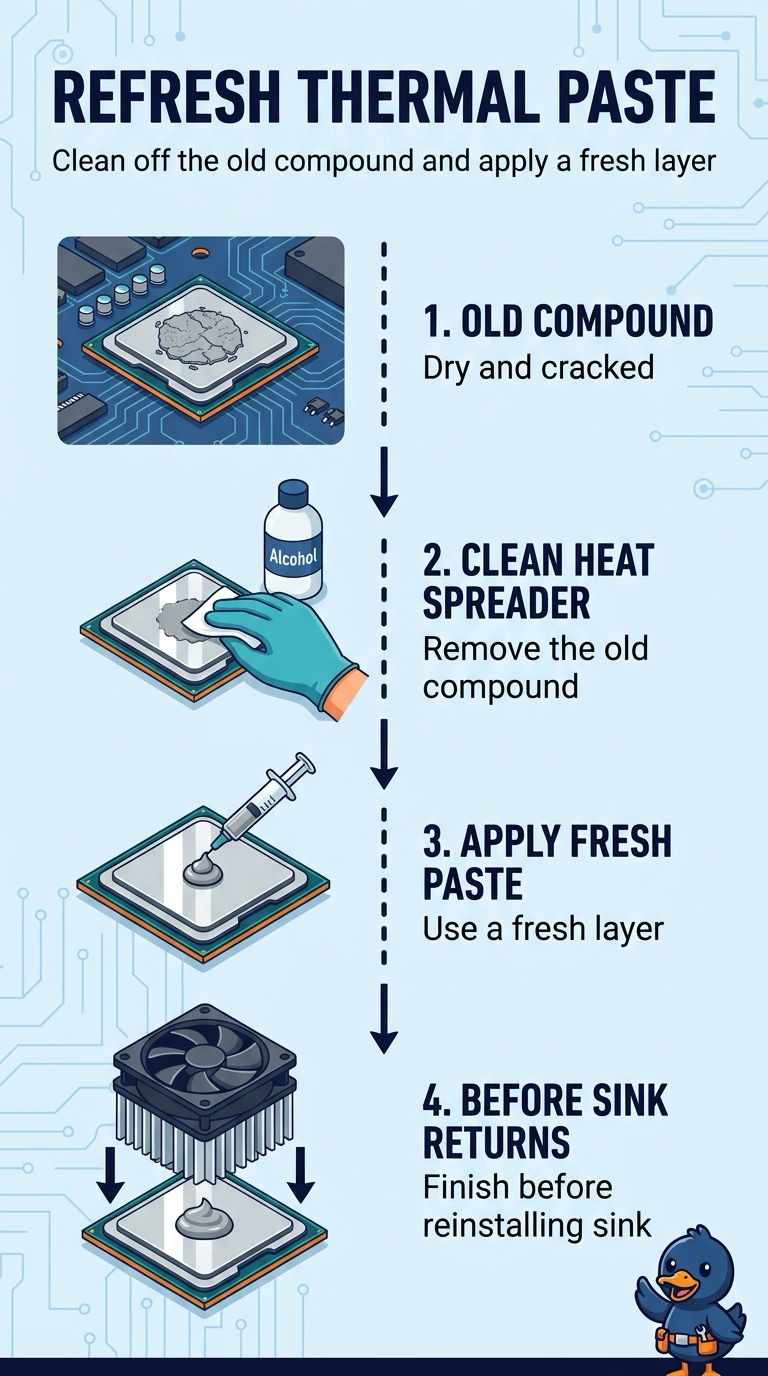
A technician removed a processor's heat sink. The old compound on the heat spreader is dry and cracked. What should be done before the sink goes back on?
Select an answer to reveal the explanation.
Short Explanation
The heat sink and the processor need a fresh smear of compound the way two pipes need fresh tape at a joint. You clean off the dry paste and apply a new layer. A security chip, a boot signature check, or extra fans do not fill the gap the cracked compound is leaving.
Full Explanation
Thermal paste fills the tiny gaps between the processor heat spreader and the heat sink so heat can move. Dry, cracked compound left in place insulates instead. Clean it off and apply a fresh layer before the sink is remounted. A TPM stores keys and measurements. Enabling it does not replace thermal compound. Secure Boot checks signatures on boot files. It does not sit between the processor and the sink. Extra case fans move air through the chassis. They do not repair a dried interface, and remounting the sink on cracked compound leaves the original problem. Exam caveat: use a small, even amount. A paste bridge onto the socket or the board is a mess you do not want, and the sink has to be tightened evenly so the die is covered. Operational check: remount the sink, boot, and watch the processor temperature under load to confirm it stays in the range the cooler managed when it was new. Boot and watch the temperature for several minutes under load before you close the ticket. Tighten the sink evenly so one corner is not lifted off the paste.